
Description
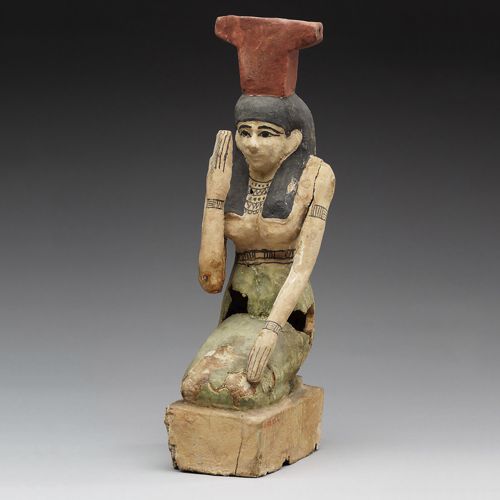
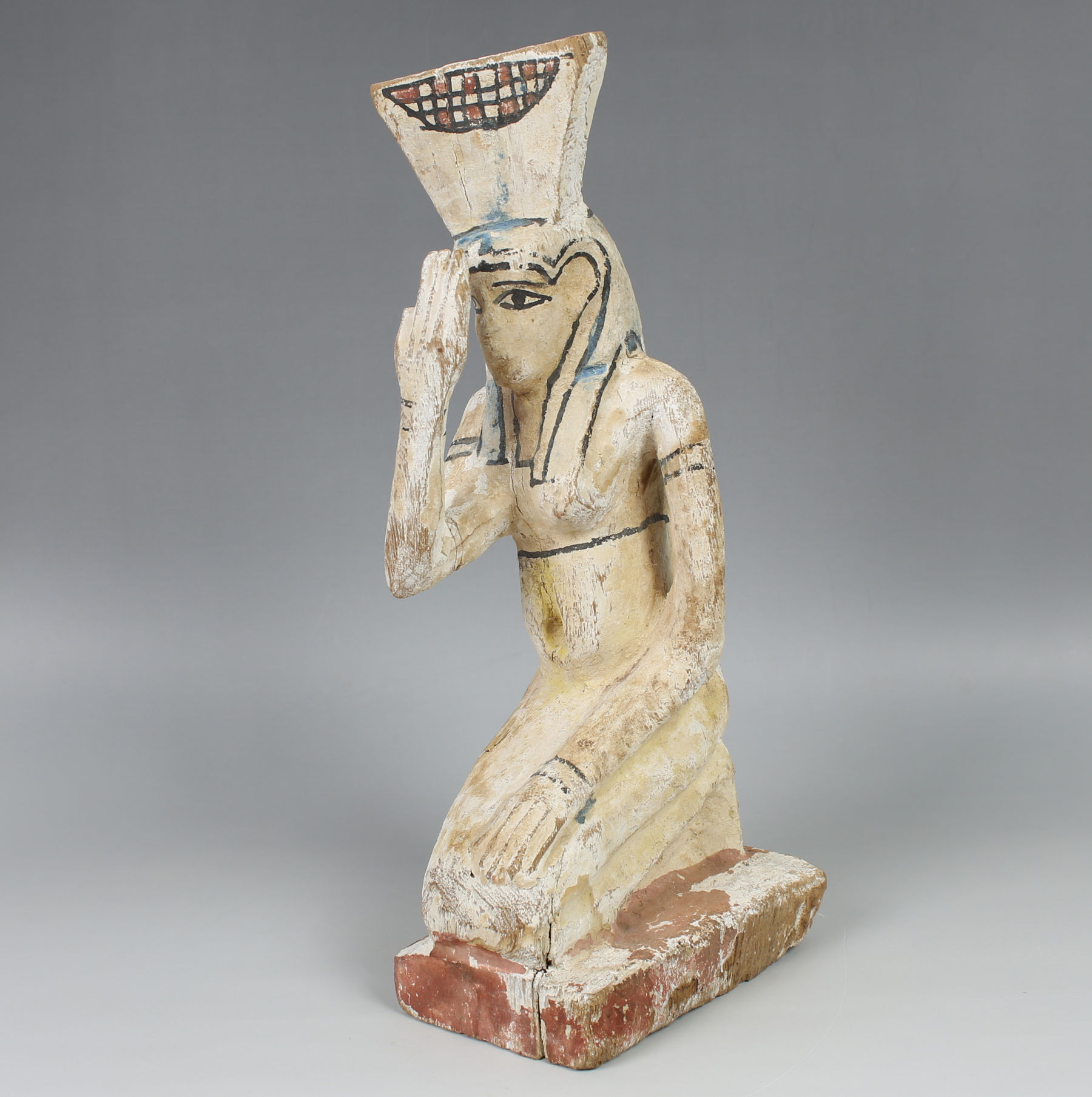
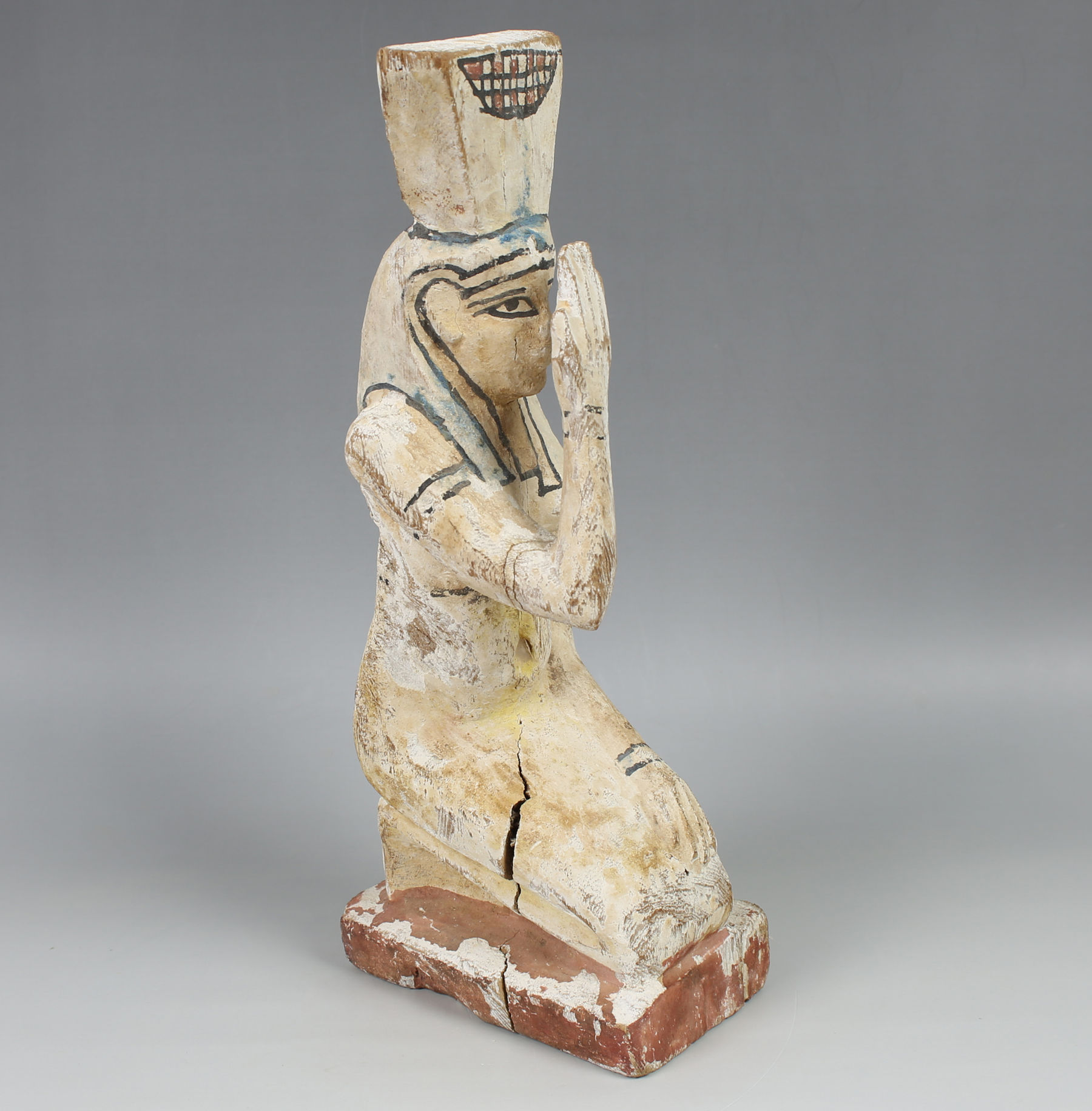
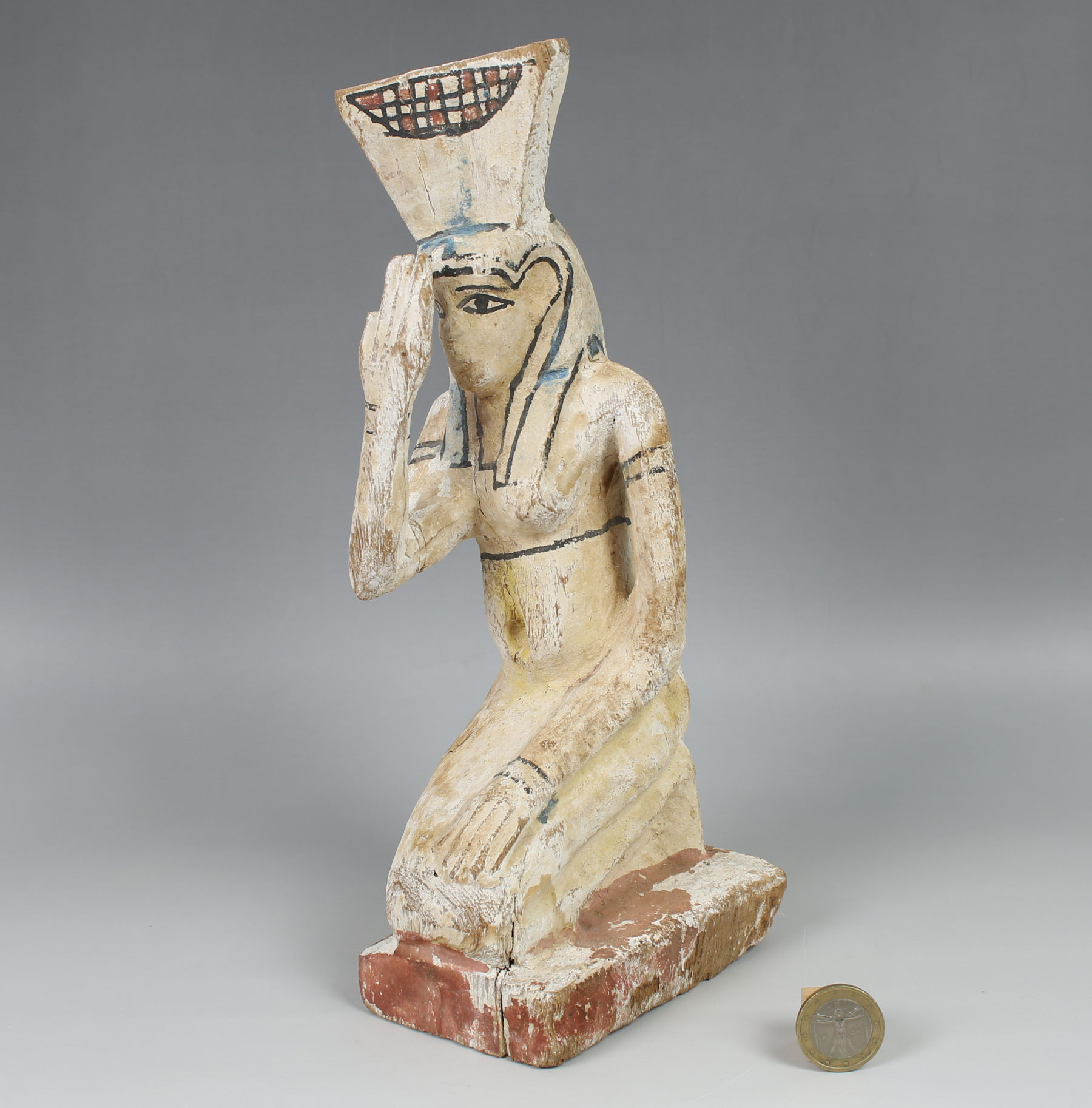
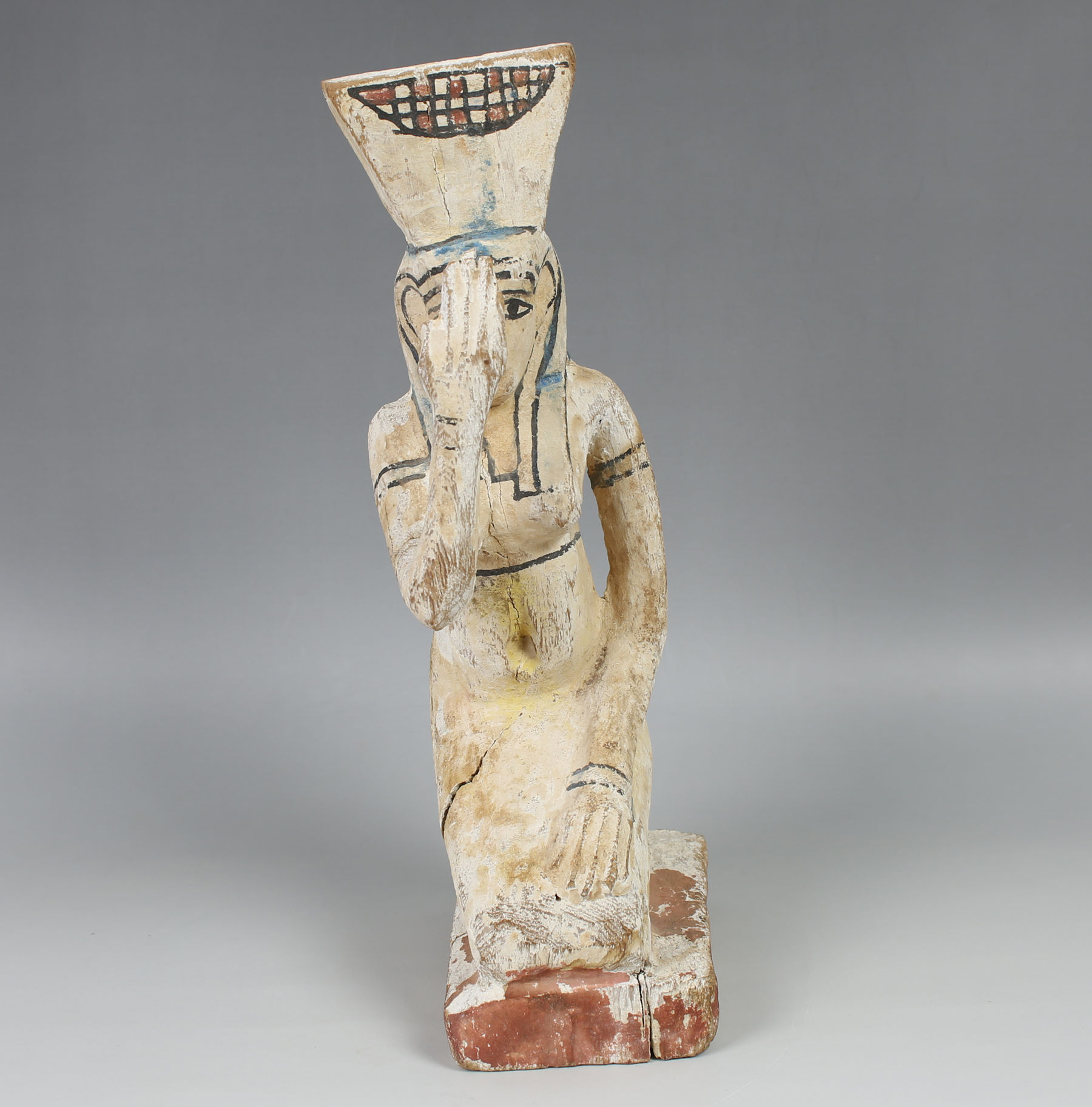
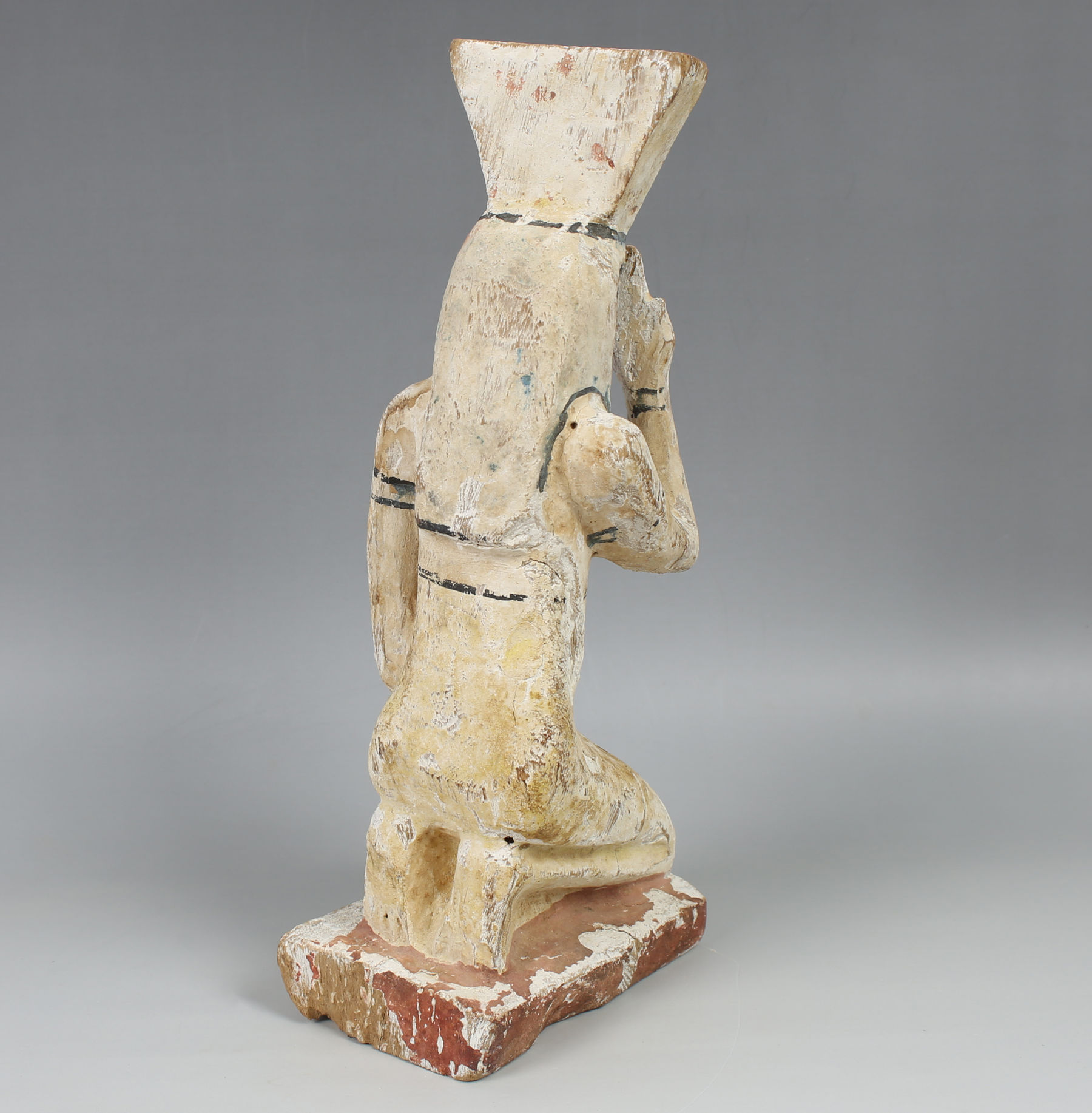
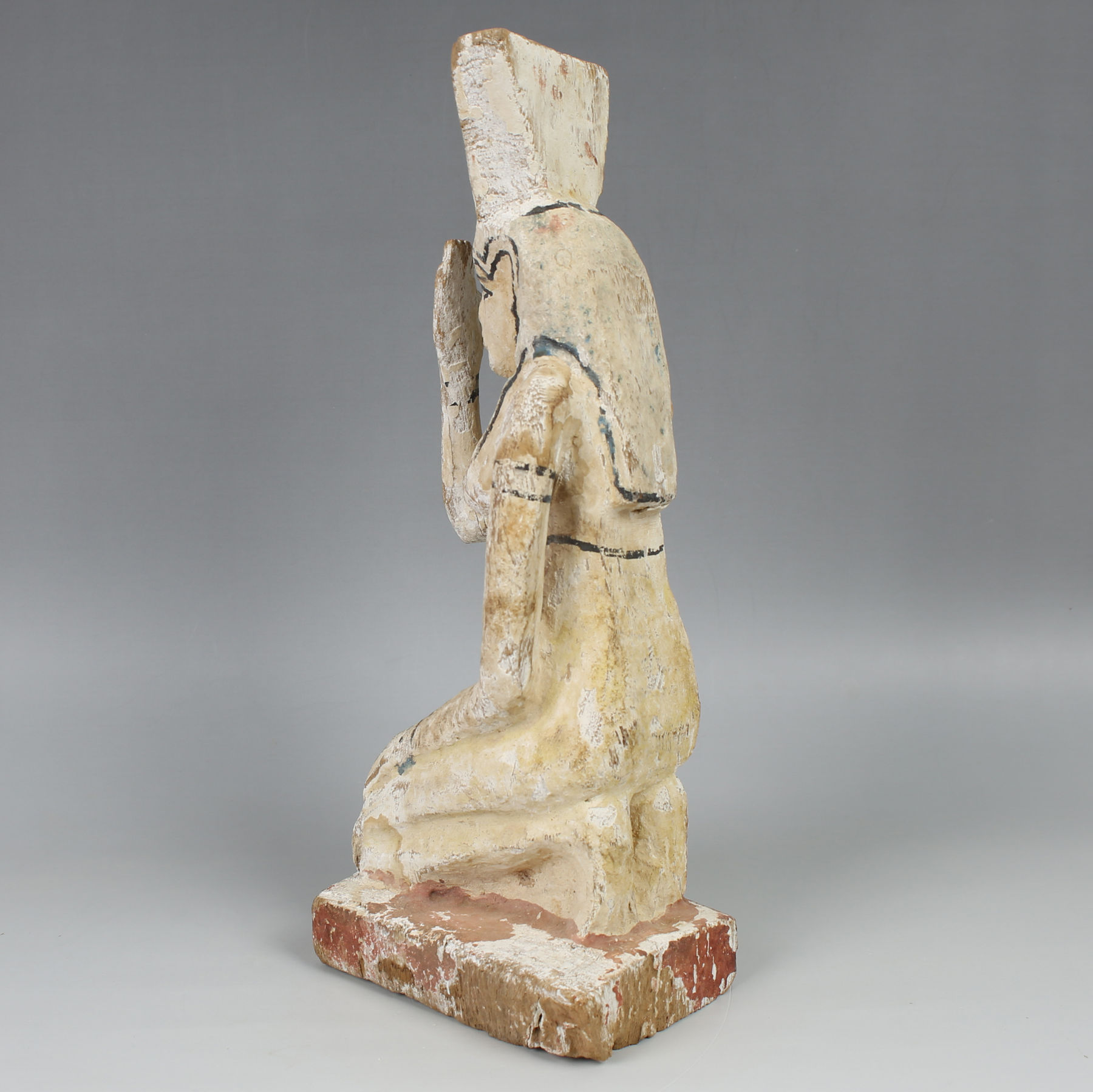
| ITEM | Statuette of mourning Nephthys |
| MATERIAL | Wood and gesso |
| CULTURE | Egyptian, Ptolemaic period |
| PERIOD | 4th – 1st Century B.C |
| DIMENSIONS | 270 mm x 90 mm x 105 mm |
| CONDITION | Good condition |
| PROVENANCE | Ex Dutch private collection, J.D., acquired in 2020’s from Dutch antiquities dealer. |
During the Ptolemaic Period (305–30 BCE), Nephthys — sister of Isis, Osiris, and Seth — retained her traditional role as a funerary goddess and divine mourner. Known as Nebet-Het in Egyptian, meaning “Lady of the Enclosure,” she was closely associated with death, protection, and the transitional moment between life and the afterlife. Together with her sister Isis, she was one of the two divine mourners who lamented the death of Osiris and magically reassembled his body. In the Ptolemaic era, when Egyptian religion was increasingly formalized and ritualized, depictions of Mourning Nephthys became common on temple walls, sarcophagi, and funerary papyri, underscoring her importance in securing resurrection for the deceased.
Iconographically, Nephthys was often shown standing or kneeling at the head of the bier, arms raised in a gesture of lamentation, or with her hands placed upon her head in the traditional mourning pose. In Ptolemaic art, she frequently appears paired with Isis, who would stand at the foot of the bier, creating a balanced, protective composition. Their presence was not merely symbolic but magical: together they invoked the rebirth of Osiris — and by extension, of every deceased person who hoped for eternal life. These representations were carved or painted in temples dedicated to Osiris and in private tombs to assure the deceased’s safe passage into the afterlife.
Textually, the Ptolemaic period saw the continued use and adaptation of funerary liturgies that invoked Nephthys. The so-called Lamentations of Isis and Nephthys were recited during temple rituals and funerary ceremonies, calling upon the god to rise and live again. These chants were thought to be powerful enough to reawaken the dead, reinforcing Nephthys’ role as both mourner and reviver. Her voice, paired with that of Isis, was the ritual key to transforming death into new life. In magical papyri of the period, Nephthys could also appear as a protective deity invoked against evil forces that might endanger the deceased’s soul.
The persistence of Mourning Nephthys in the Ptolemaic period illustrates how traditional Egyptian religious concepts survived and even flourished under foreign rule. While Greek influence introduced new artistic styles and theological syncretism, the role of Nephthys as mourner and protector of the dead remained unchanged, showing the resilience of Egyptian funerary belief. For Ptolemaic Egyptians — both native and Hellenized — Nephthys was a guarantor of cosmic order, ensuring that death was not an end but a transition. Her image standing at the head of the coffin symbolized continuity with millennia-old traditions and provided comfort that the deceased would join Osiris in the eternal cycle of rebirth.