
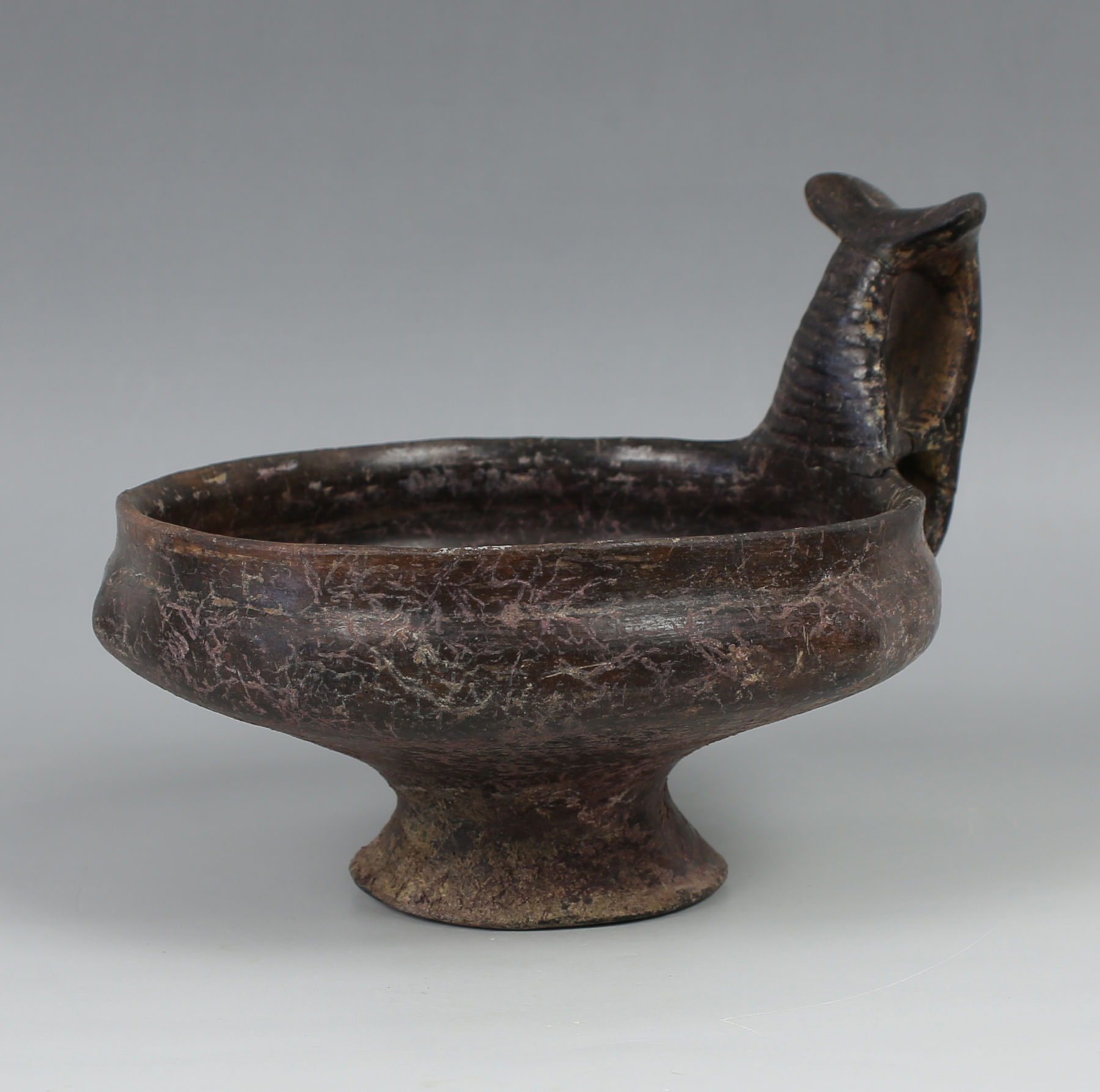
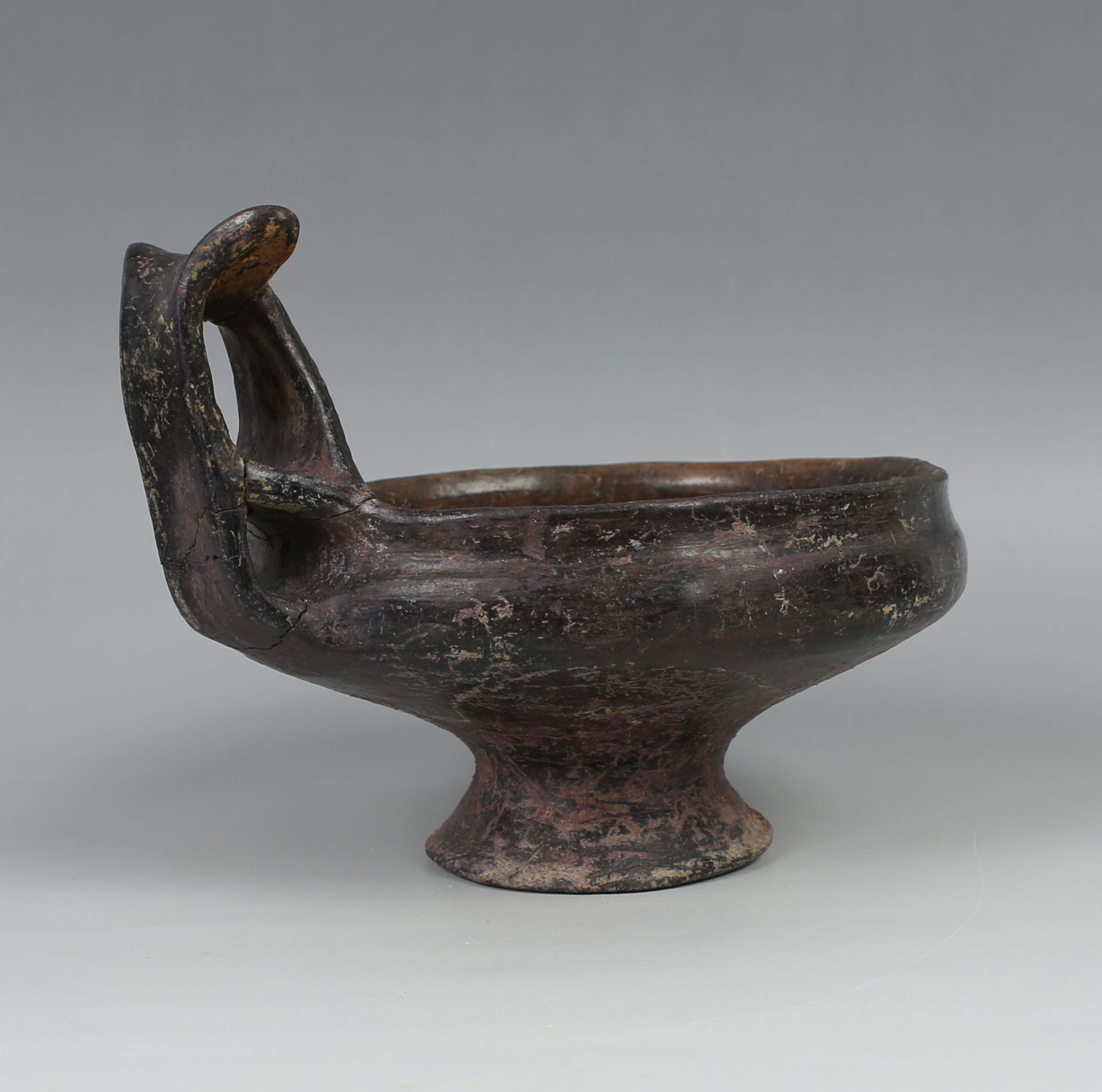
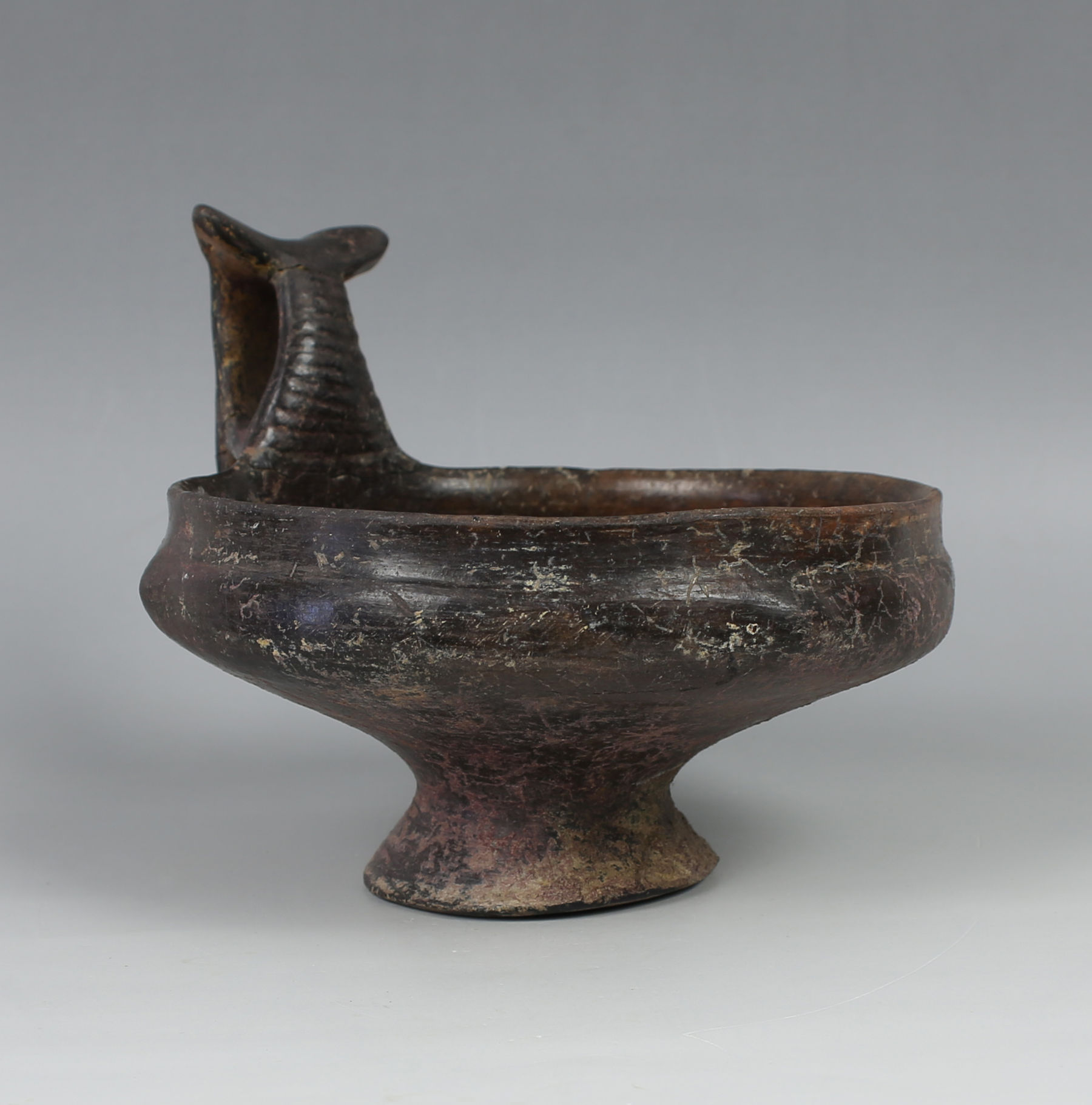
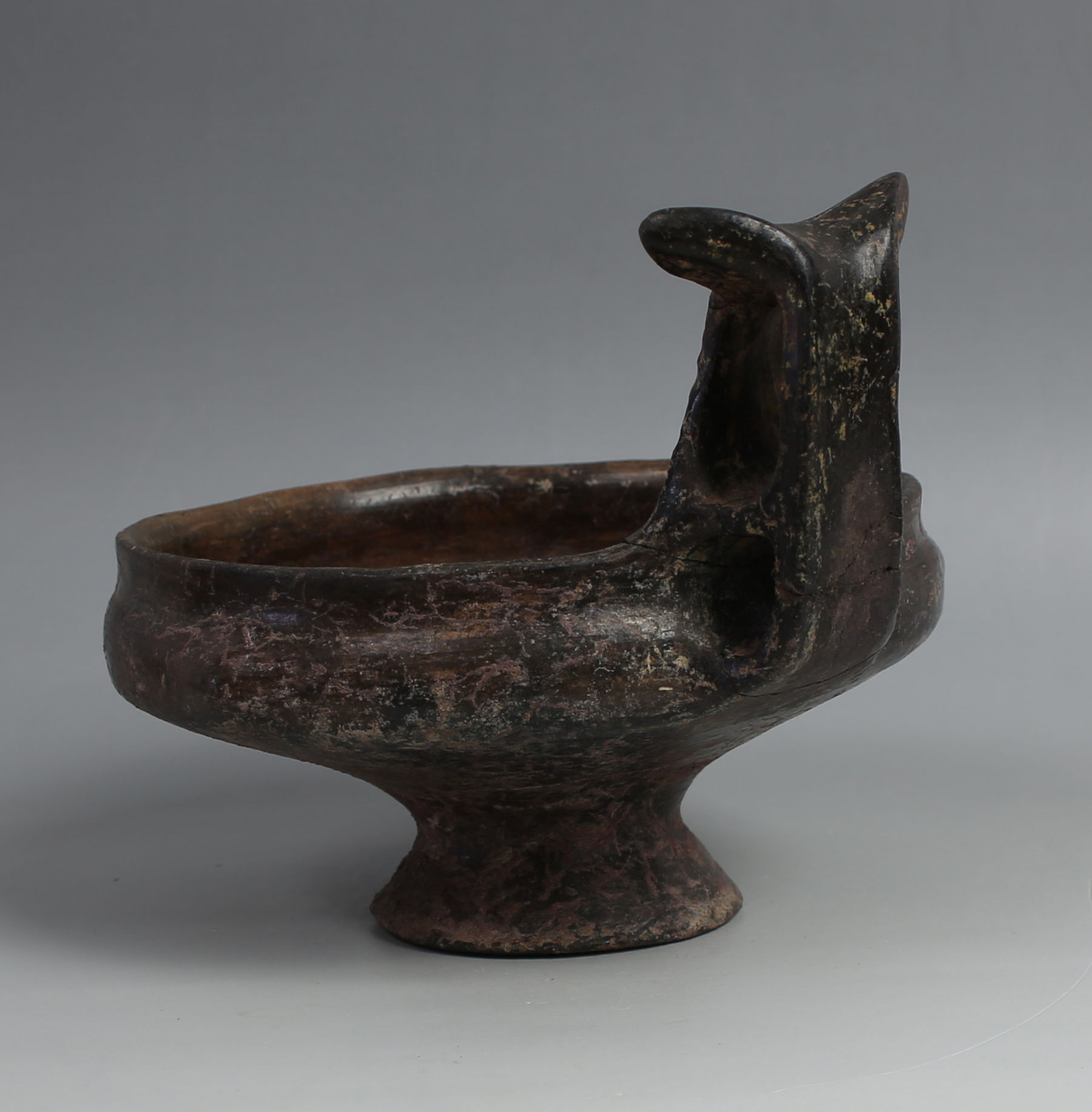
Description
| ITEM | Kyathos |
| MATERIAL | Pottery, Bucchero-ware |
| CULTURE | Etruscan |
| PERIOD | 8th – 7th th Century B.C |
| DIMENSIONS | 115 mm x 146 mm |
| CONDITION | Good condition, repaired |
| PROVENANCE | Ex German private collection, W.F., Munich, acquired before 2000s |
The kyathos was a distinctive Etruscan drinking vessel, recognizable by its deep, round bowl and its tall, vertical handle that often rose well above the rim. This shape made it ideal as a dipper or ladle for serving wine from a larger mixing vessel (krater) during banquets and symposia. The Etruscans adopted the form from Greek prototypes but developed their own variations, especially in bucchero ware — the glossy black ceramic characteristic of Etruscan pottery. The kyathos reflects the central role of communal wine drinking in Etruscan society, where banquets were important social and even political gatherings.
Decoration on Etruscan kyathoi varied depending on material and function. Bucchero examples might feature incised or relief decoration, sometimes with friezes of animals, floral patterns, or mythological scenes. Painted ceramic versions, particularly those influenced by Attic pottery, could show more elaborate figurative imagery. Some bronze kyathoi have been found as well, suggesting use in elite settings and possibly in ritual contexts. The elegant, high handle was not just practical but also aesthetically striking, giving the kyathos a distinctive silhouette that made it a favorite form for Etruscan artisans.
Kyathoi have been discovered in domestic spaces, sanctuaries, and especially in tombs, where they were deposited as grave goods. Their presence in burials underscores the importance of the banquet as a symbol of status and continuity into the afterlife.