
Description
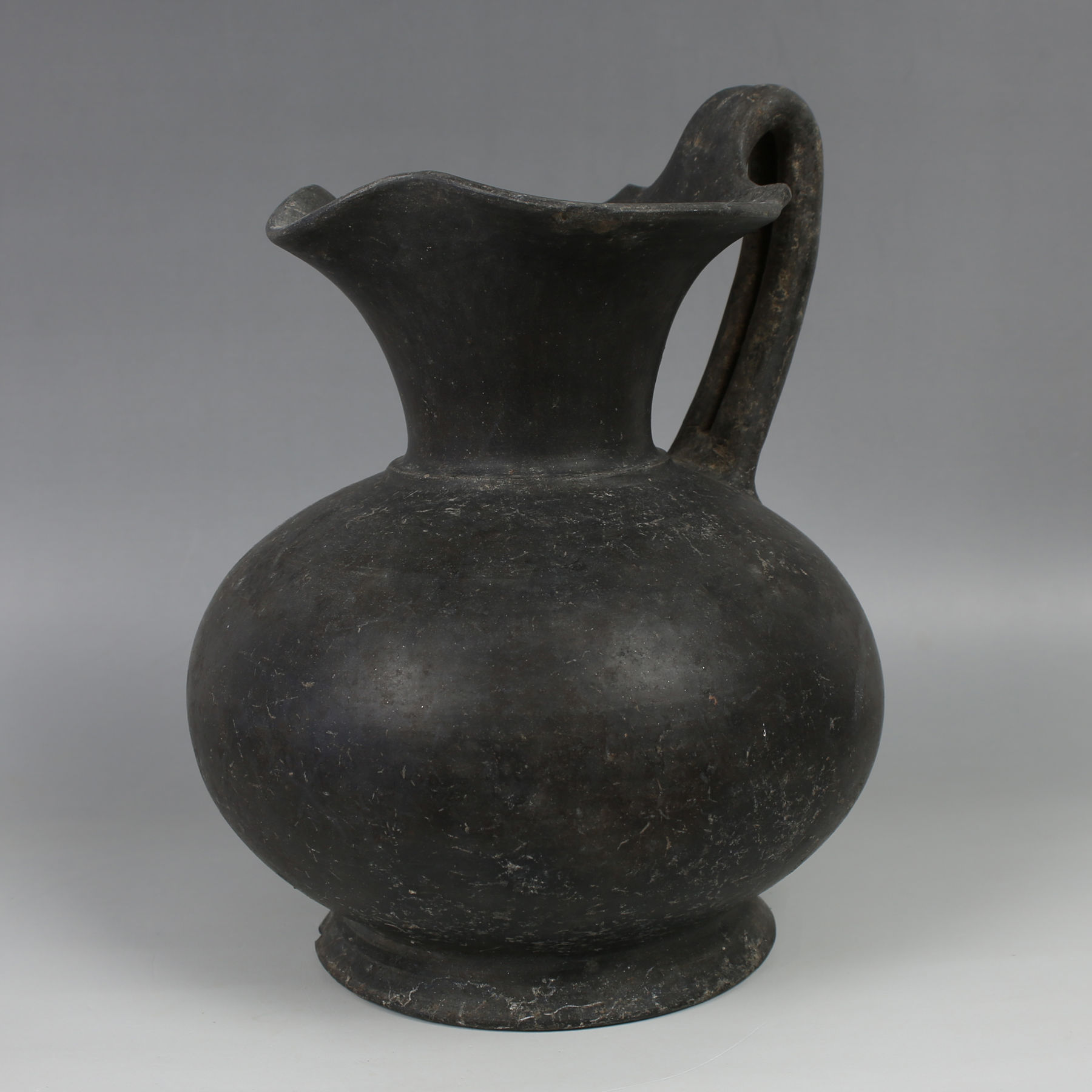
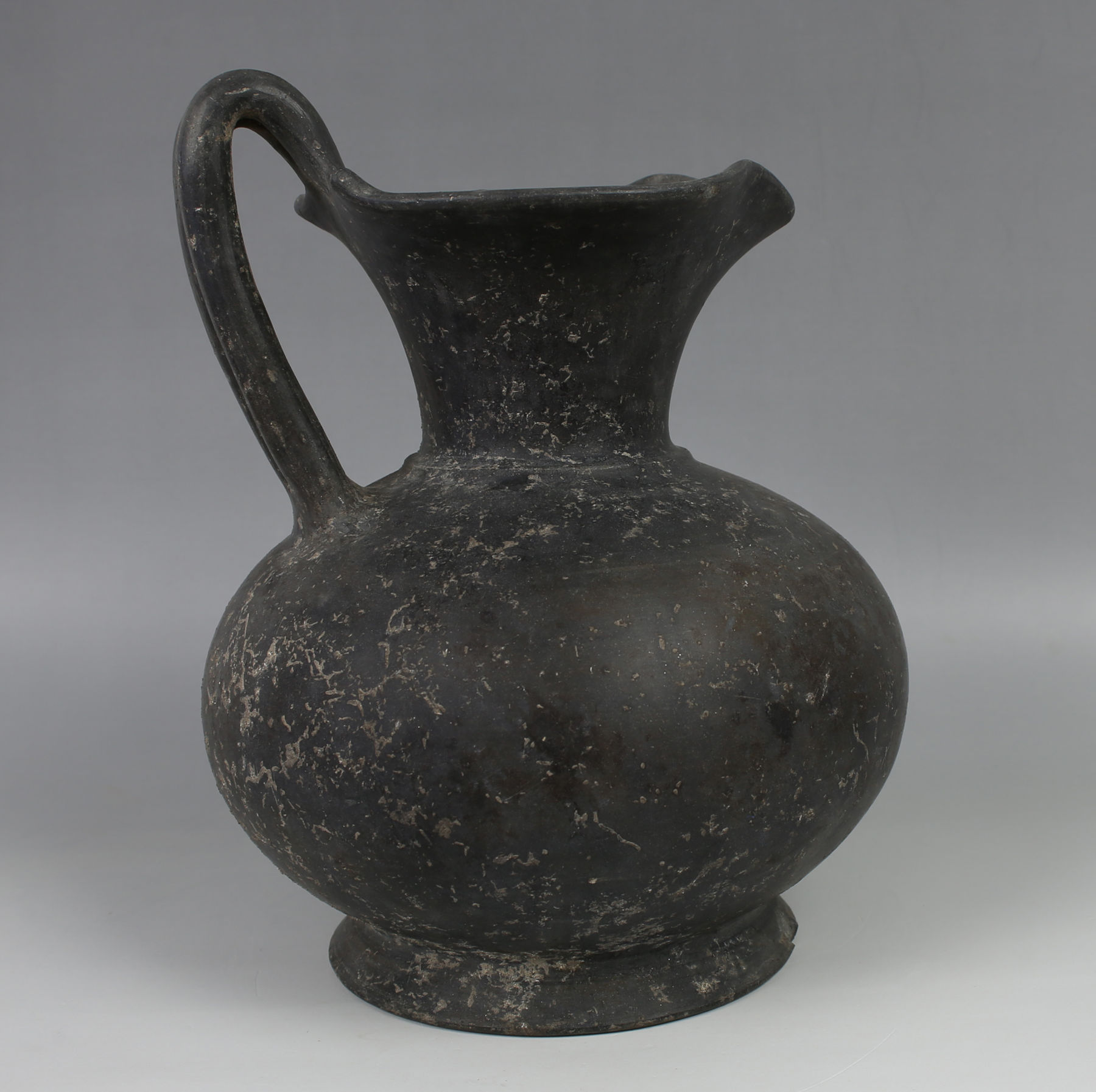
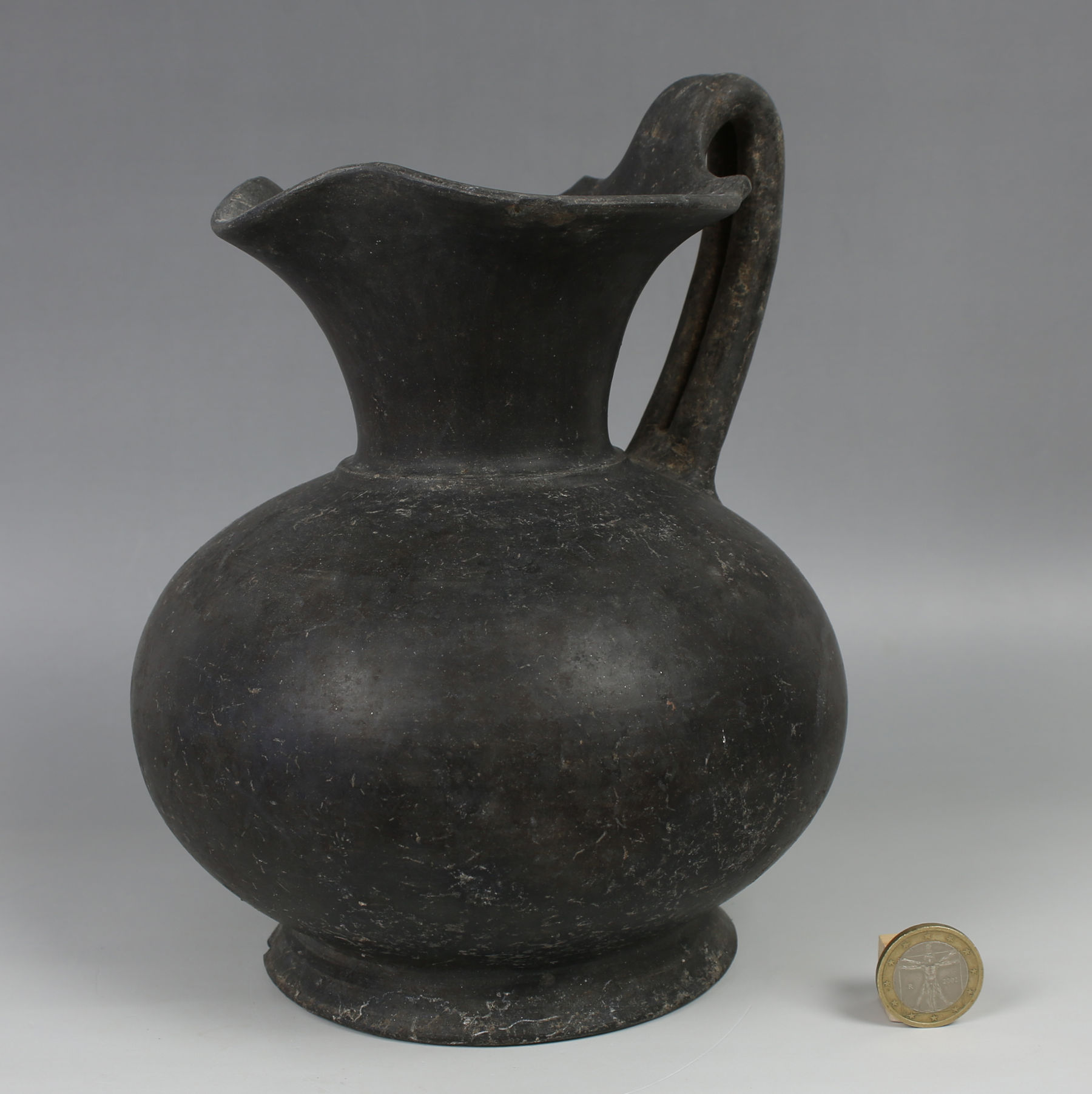
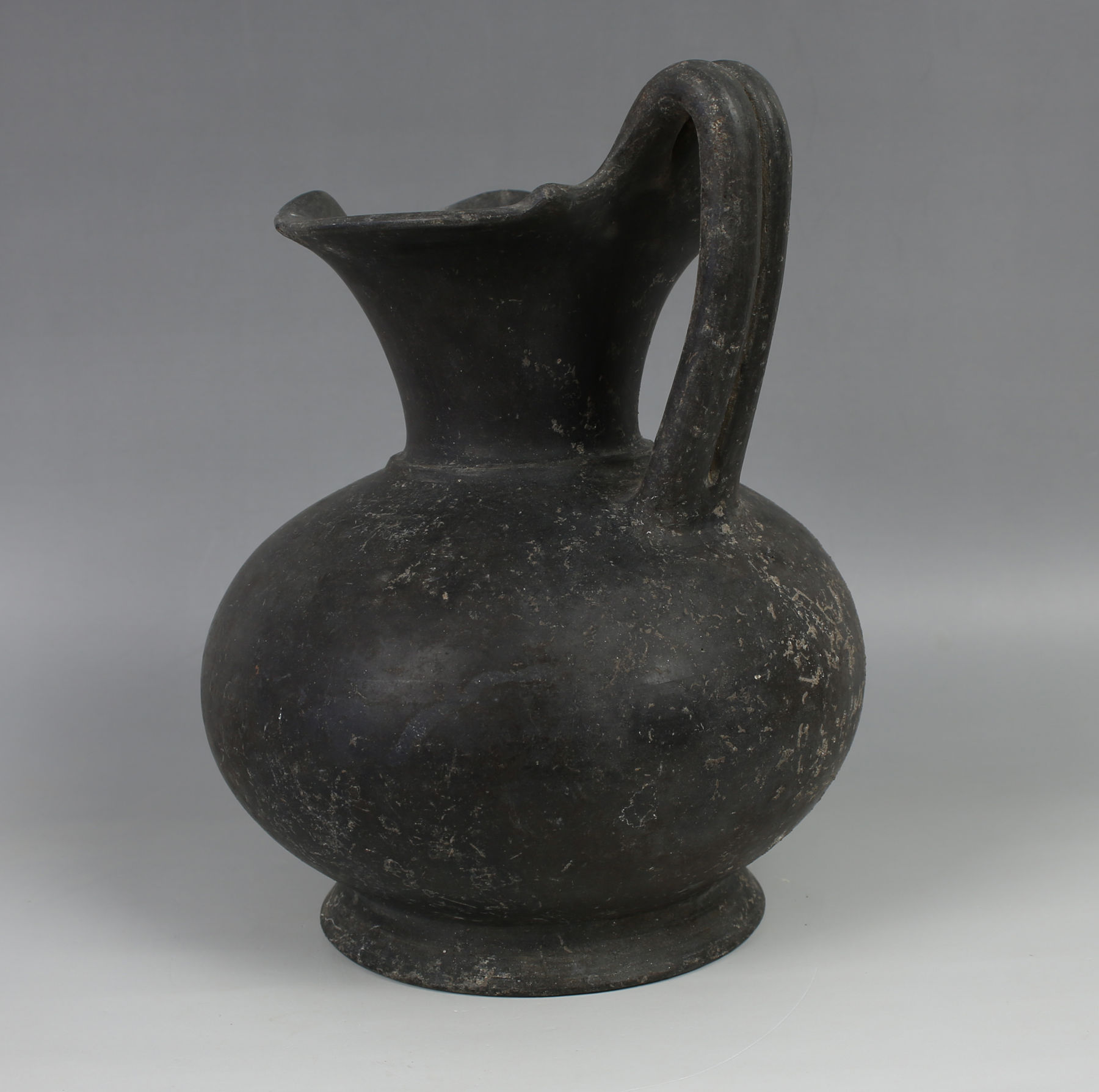
| ITEM | Oinochoe |
| MATERIAL | Pottery, Bucchero |
| CULTURE | Etruscan |
| PERIOD | 7th – 6th Century B.C |
| DIMENSIONS | 205 mm x 170 mm |
| CONDITION | Good condition |
| PROVENANCE | Ex European private collection, Ex H.A.C. Kunst der Antike (1984), Ex German private collection, Dr. K.D., Frankfurt (1978) |
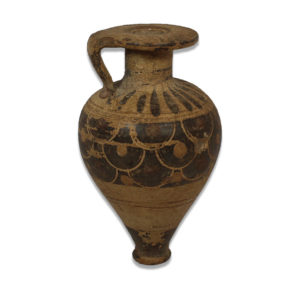
The oinochoe was a wine jug widely used by the Etruscans, adapted from Greek prototypes but often given a uniquely Etruscan twist in form and decoration. Typically, it featured a rounded or trefoil mouth for controlled pouring, a single handle, and a slender or bulbous body. Its primary function was to pour wine — often mixed with water — into smaller drinking vessels during banquets or ritual libations. Like the kyathos and chalice, the oinochoe was a key element of the Etruscan dining set, reflecting their love of convivial gatherings and their participation in the Mediterranean symposium culture.
Etruscan oinochoai (plural) were crafted in a variety of materials, including bronze, bucchero, and painted ceramic. Bronze examples were often elegant and finely worked, sometimes with incised or repoussé decoration, suggesting use in elite households or sanctuaries. Bucchero oinochoai often had refined shapes with glossy black surfaces, occasionally embellished with relief bands or molded ornamentation. Painted ceramic examples — especially those influenced by Greek black-figure or red-figure styles — could display mythological scenes, daily life, or banqueting imagery, emphasizing the vessel’s role in feasting rituals.