
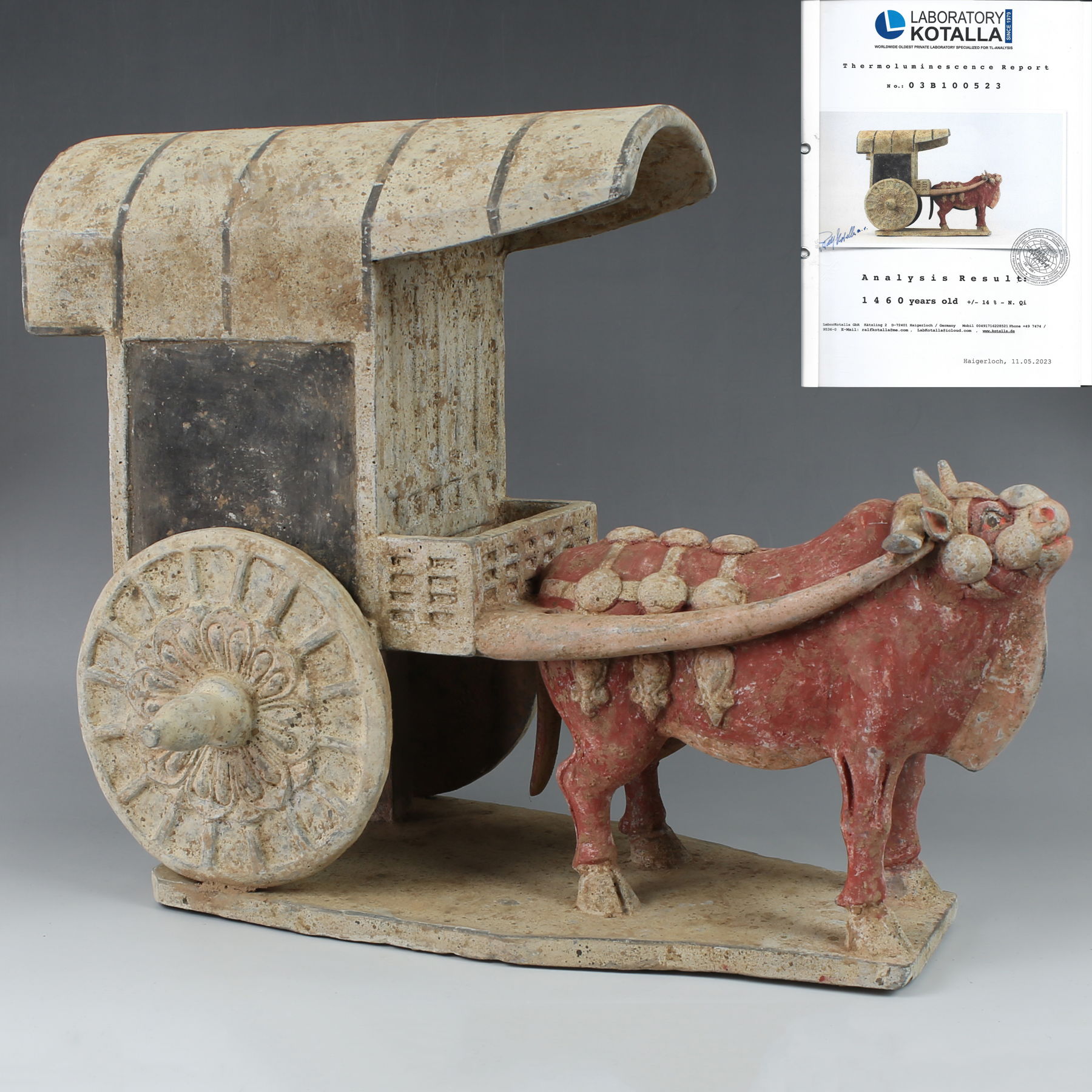
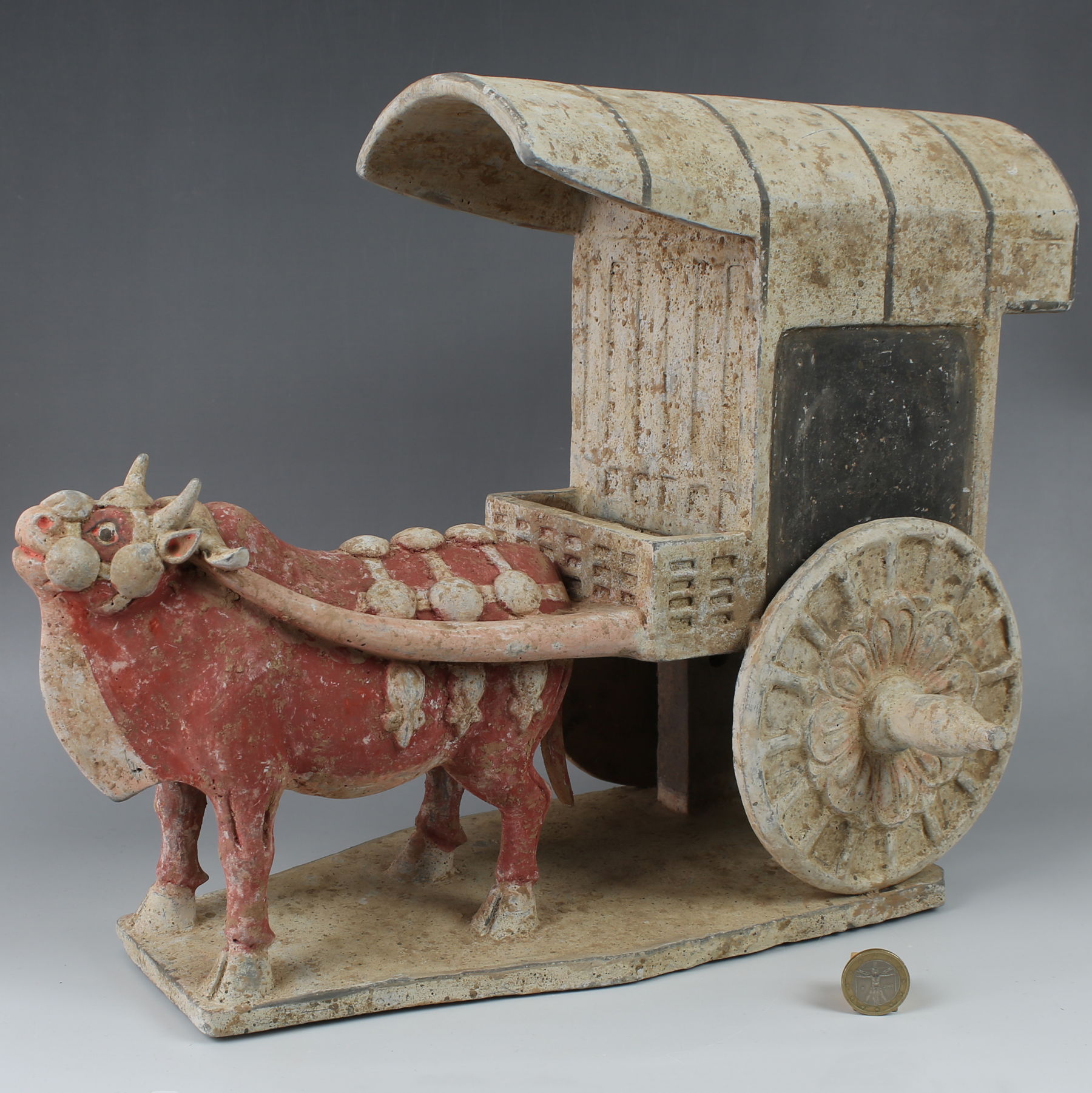
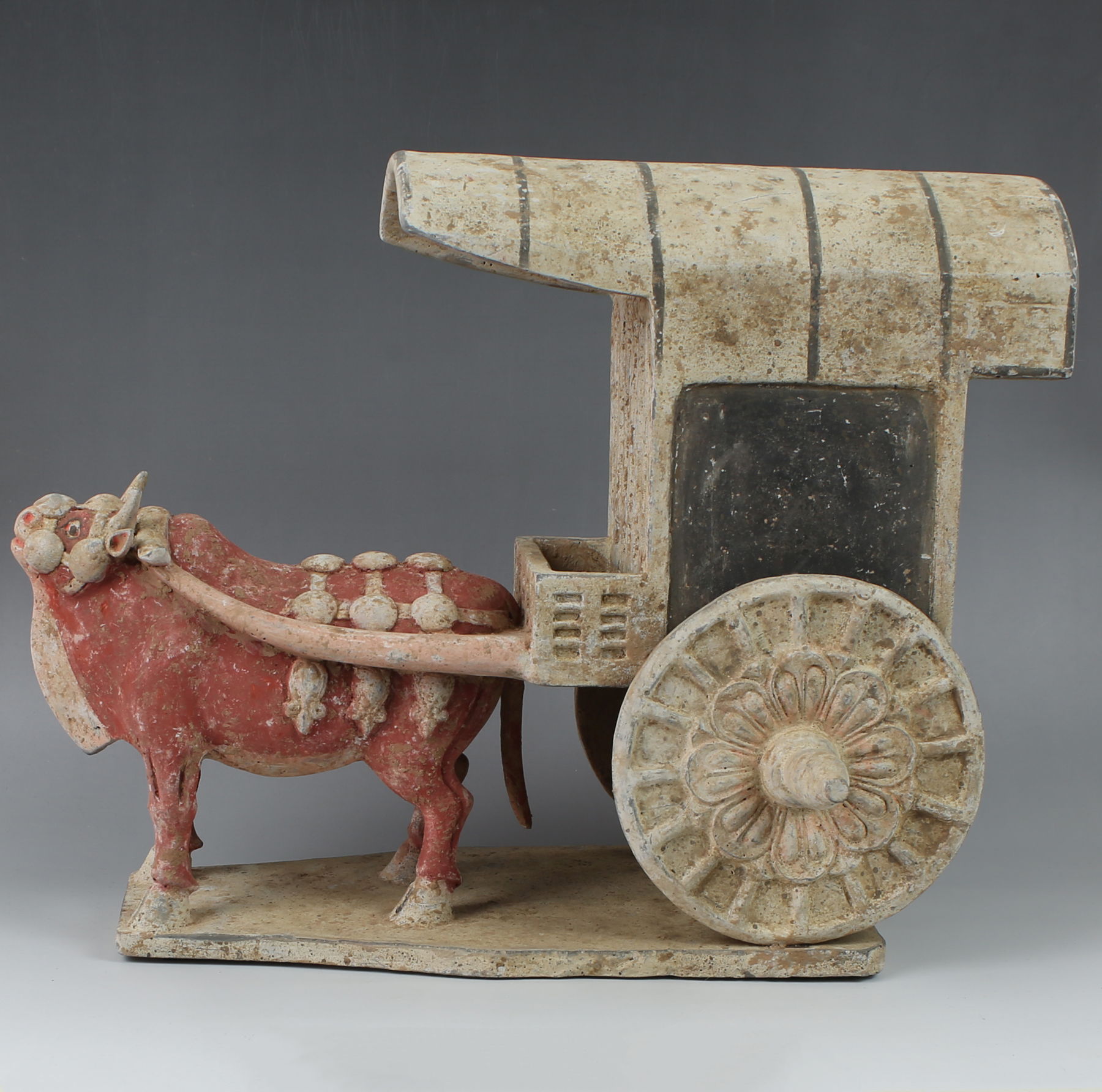
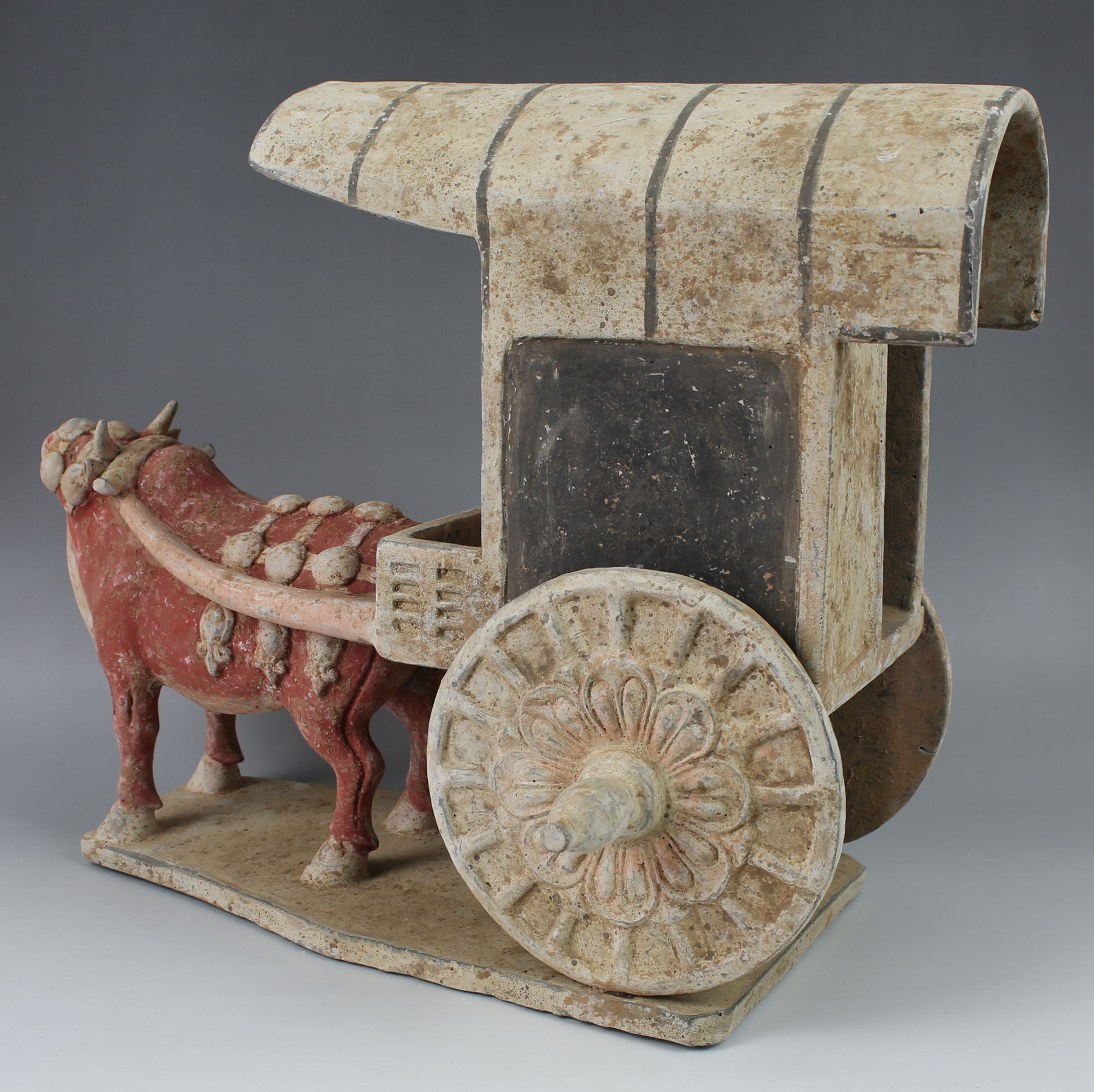
Description
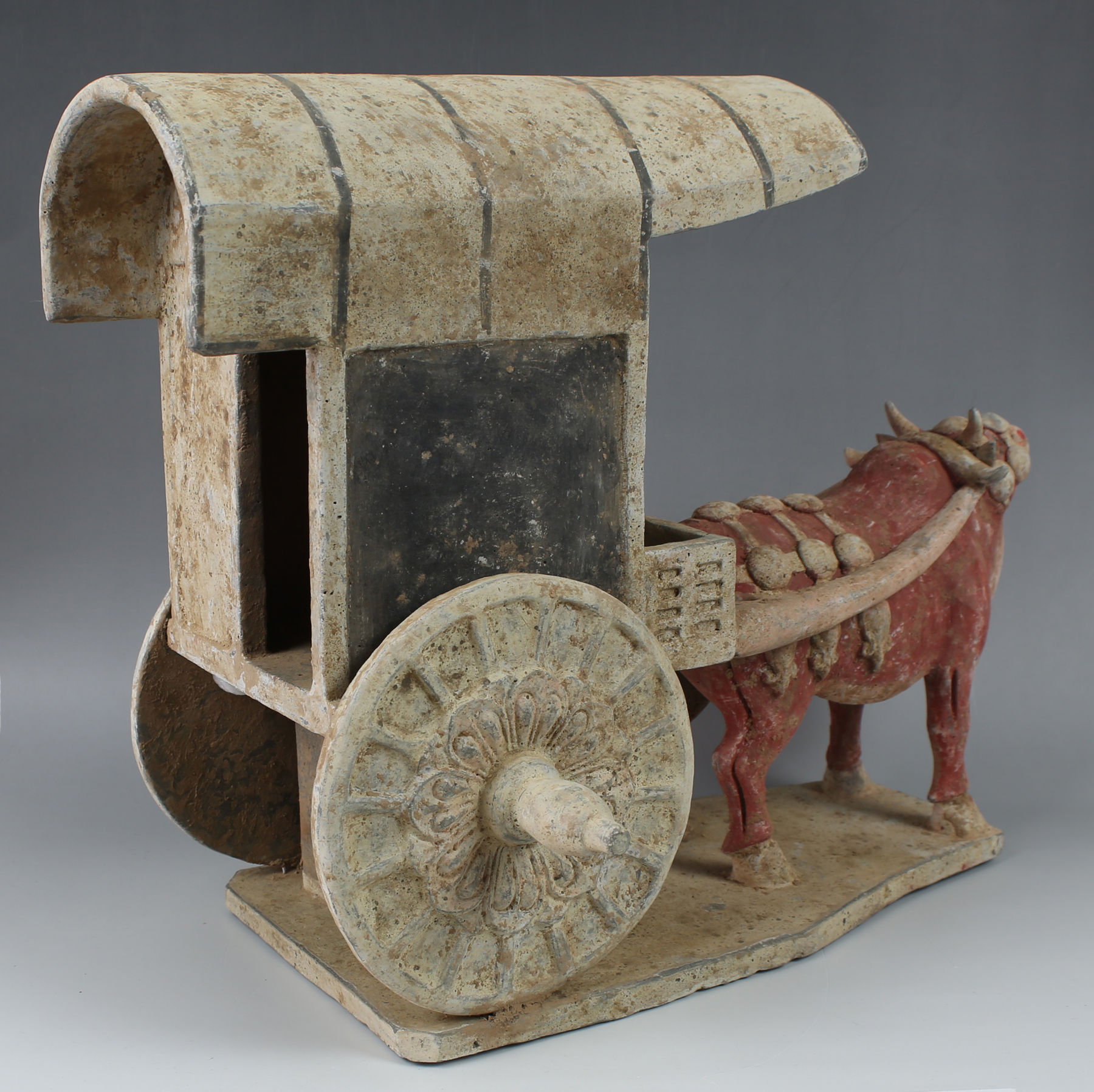
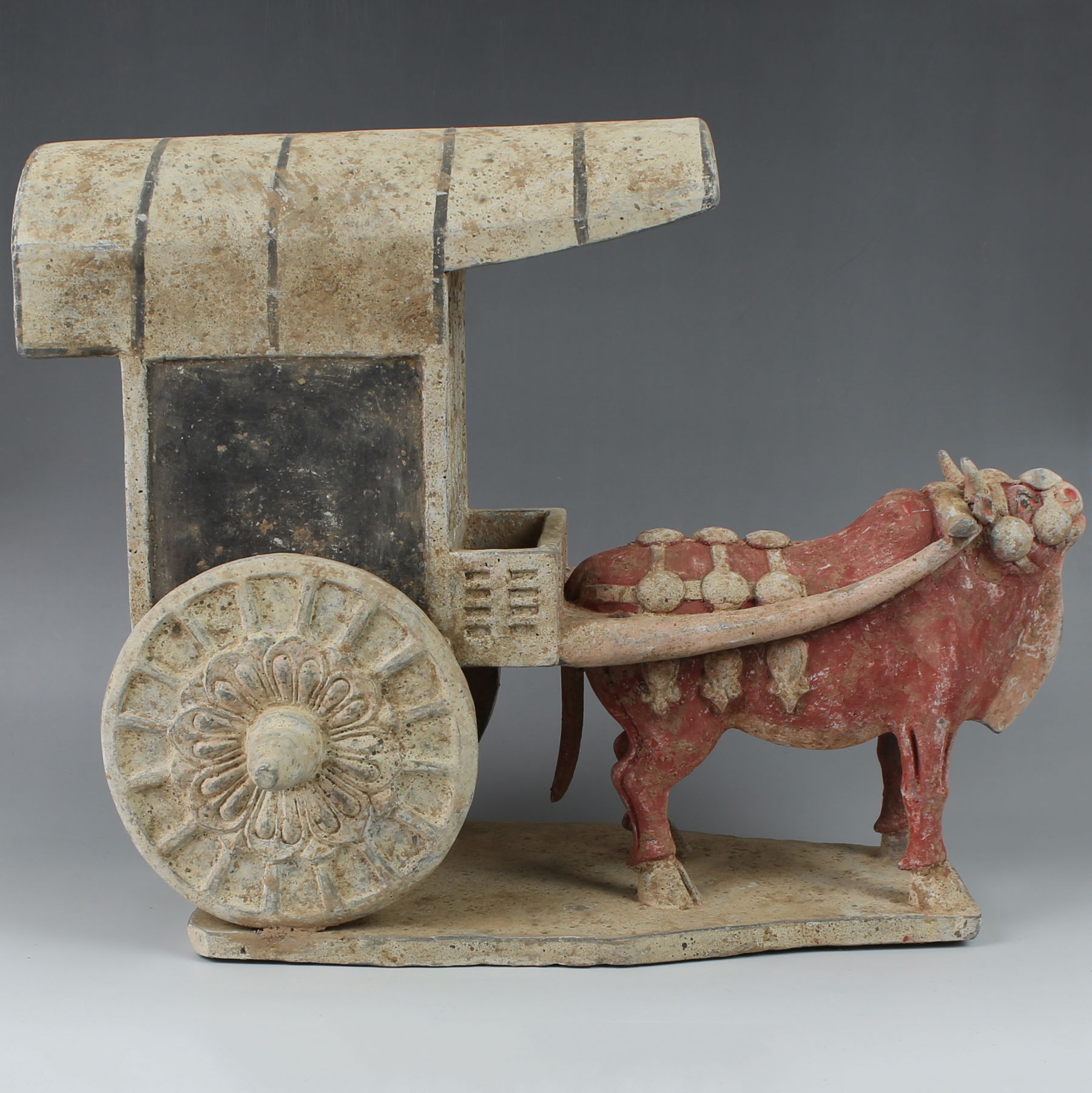
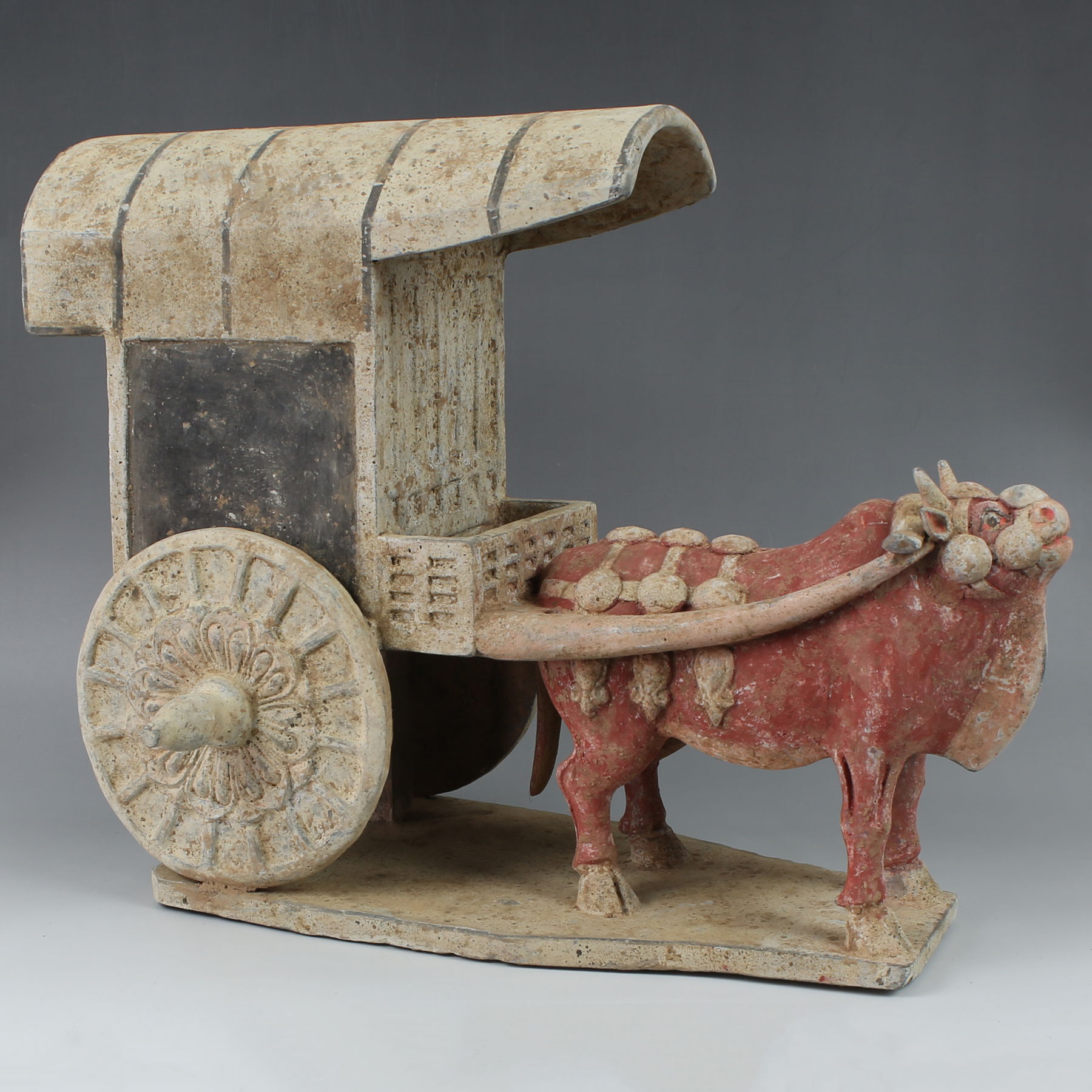
| ITEM | Ox cart diorama |
| MATERIAL | Pottery |
| CULTURE | Chinese, Northern Qi Dynasty |
| PERIOD | 550 – 577 A.D |
| DIMENSIONS | 305 mm x 155 mm x 393 mm |
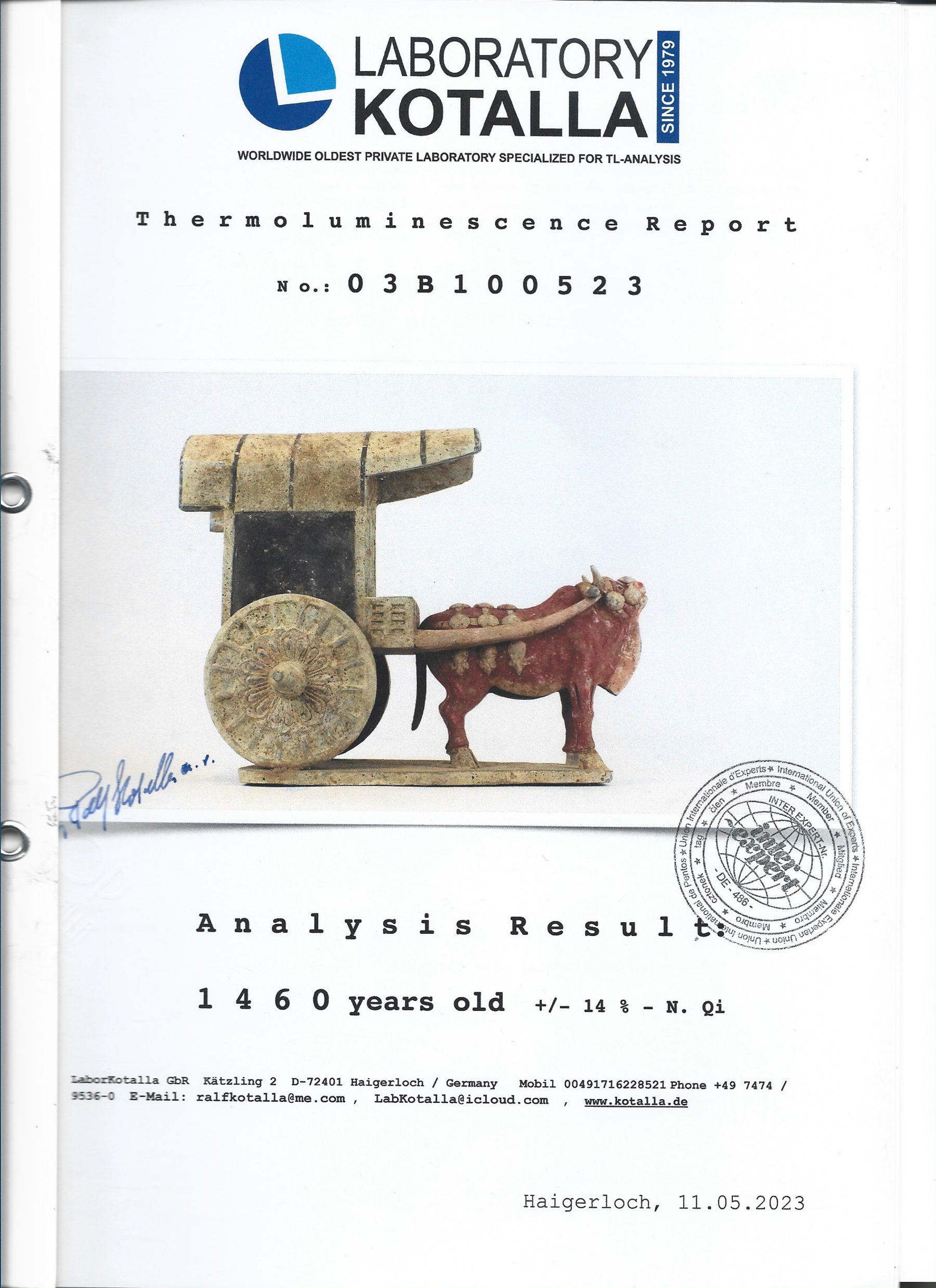
| CONDITION | Good condition. Includes Thermoluminescence test by Laboratory KOTALLA (Reference: 03B100523) and Old Certificate of Authenticity from a Dutch gallery |
| PROVENANCE | Ex Belgian private collection, acquired before 1990s |
The Northern Qi Dynasty (550–577) was a brief but culturally explosive period in Chinese history, ruling over the northeastern region during the tumultuous Northern and Southern Dynasties era. Despite its political instability and the notorious reputation of its ruling Gao family for violence and eccentricity, the dynasty served as a vital bridge between the Han and Tang dynasties. Its capital, Ye, became a thriving cosmopolitan center where the elite combined Xianbei nomadic traditions with Han Chinese administration, creating a unique social fabric that fostered rapid innovation in both technology and the arts.
Artistically, the Northern Qi is most celebrated for its distinct transformation of Buddhist sculpture. Moving away from the heavy, linear drapery of the earlier Northern Wei, Northern Qi artists developed a “minimalist” and “columnar” style influenced by Indian Gupta models. Statues from this period—many of which were discovered in the famous Longxing Temple hoard—feature serene, oval faces with “wan” smiles and thin, diaphanous robes that cling to the body like silk. This era also saw the creation of the magnificent Xiangtangshan Caves, where imperial patronage led to the carving of massive limestone Buddhas and intricate relief sculptures that reflected a deep, sophisticated spirituality.
The dynasty’s legacy extends into the decorative arts and architecture, marking the precursor to the “Chinese Renaissance” of the Tang. Northern Qi ceramics saw the birth of white-bodied wares and the early use of green and yellow glazes, which would eventually evolve into the iconic Tang sancai (three-color) pottery. Furthermore, the dynasty was a pioneer in defensive engineering, conscripting millions of laborers to build and repair over 400 kilometers of the Great Wall. This combination of aesthetic refinement and massive infrastructural projects ensures that, despite its short twenty-seven-year duration, the Northern Qi remains one of the most artistically influential periods in East Asian history.