
Description
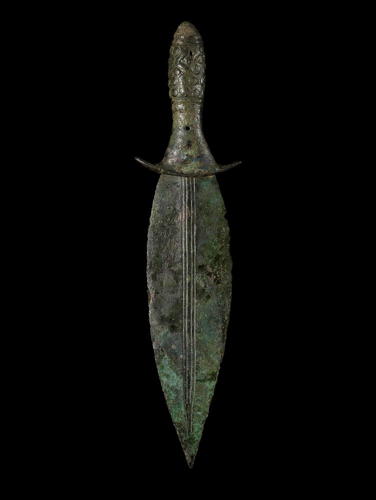
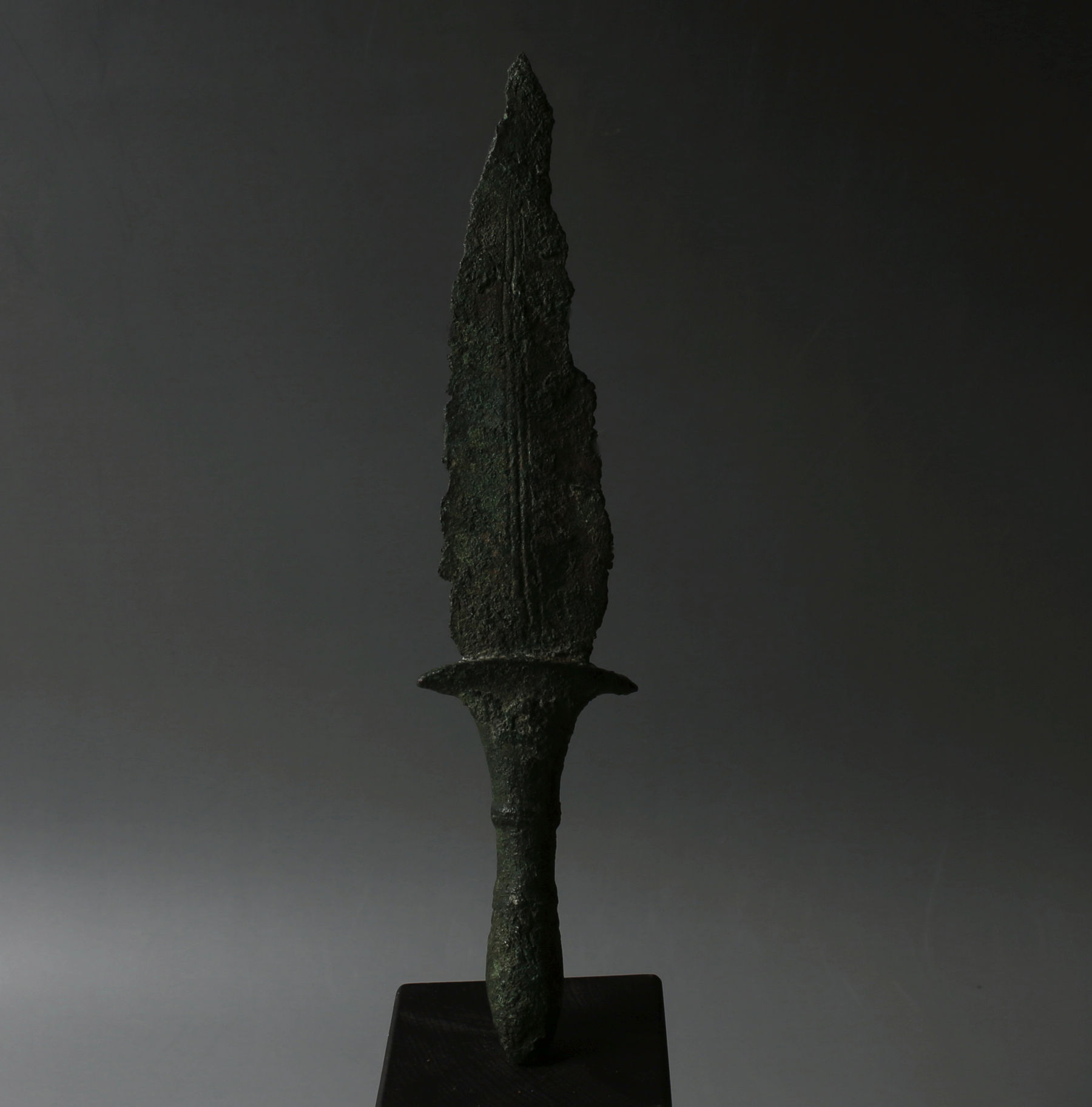
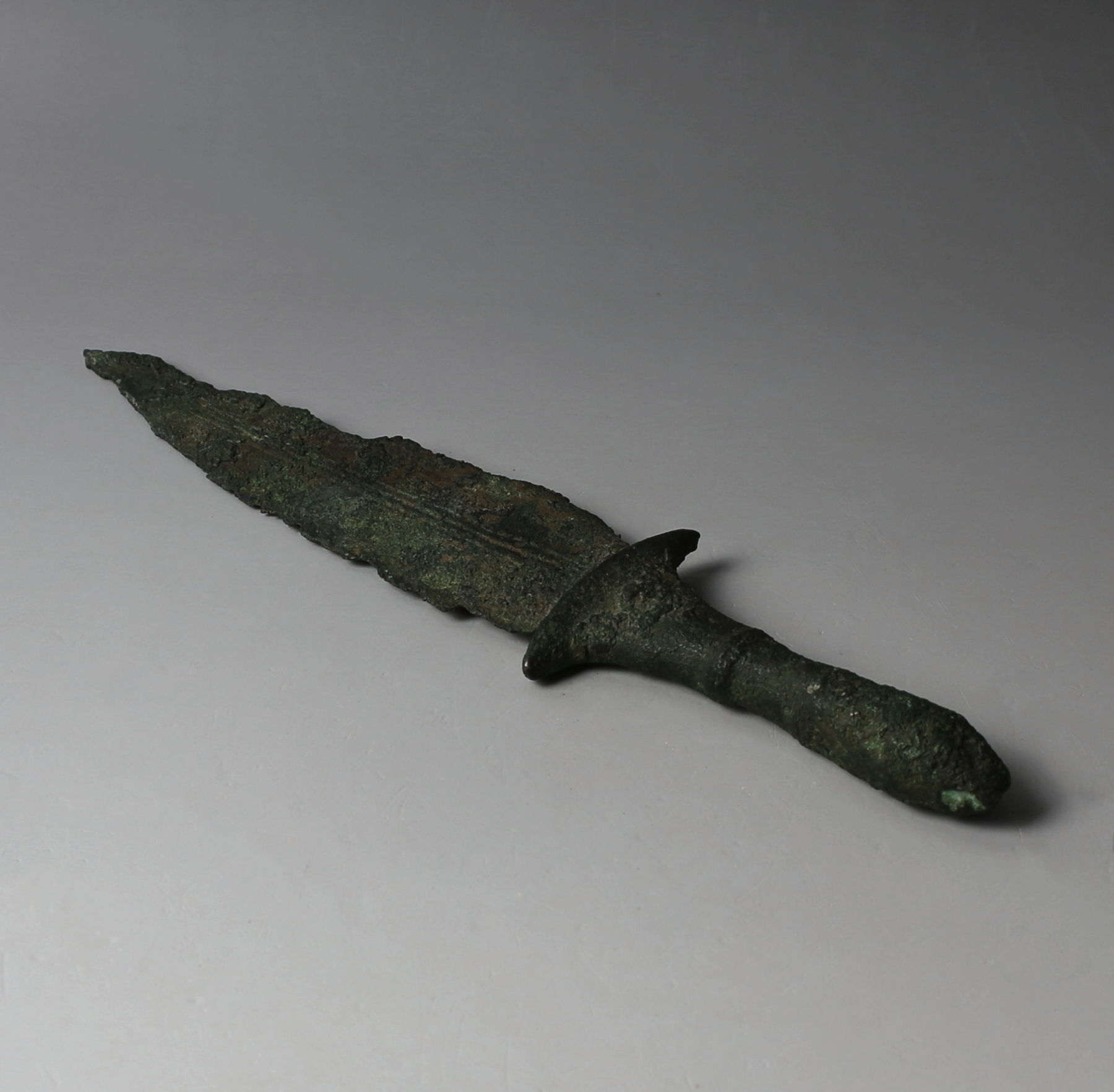
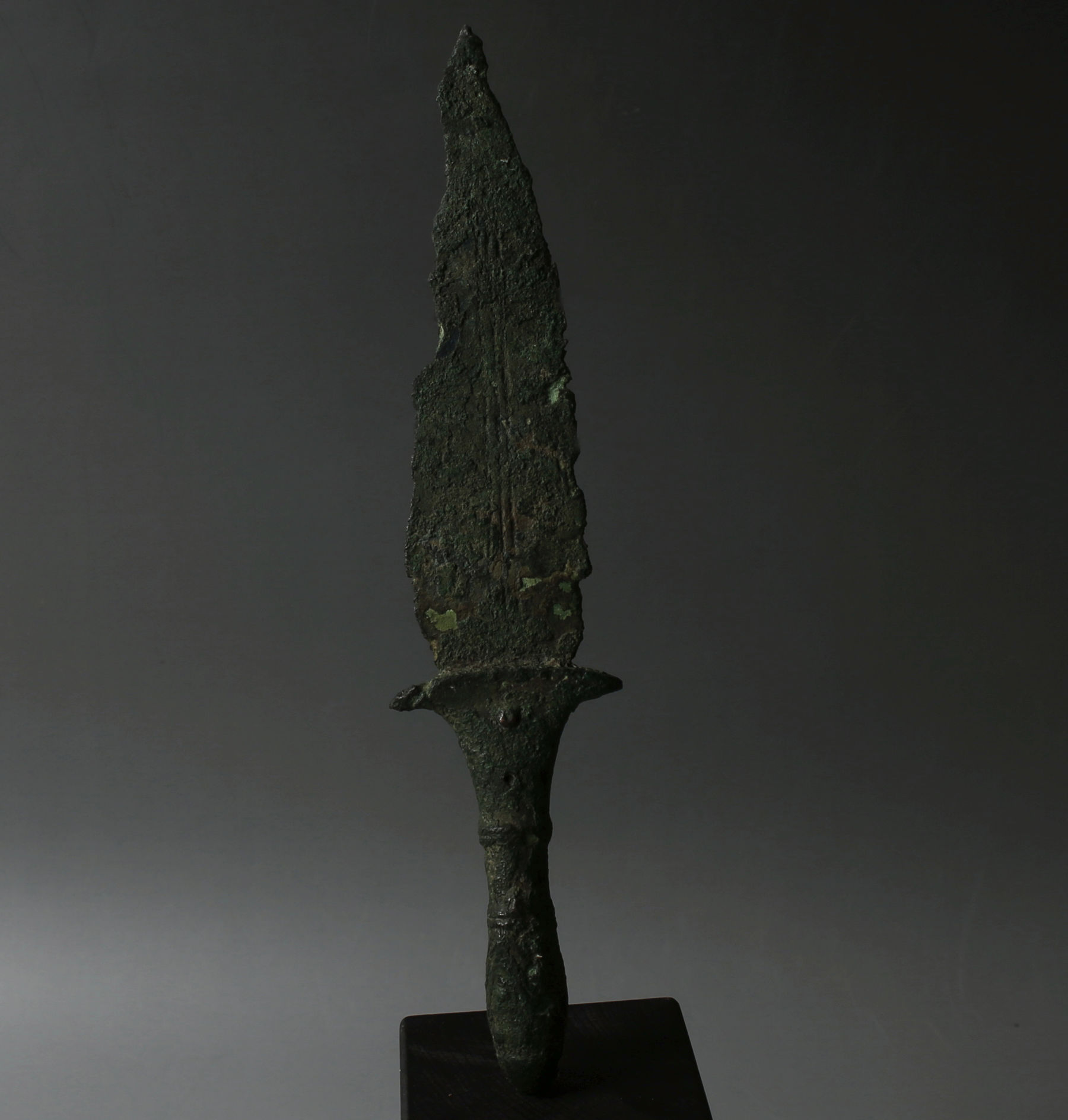
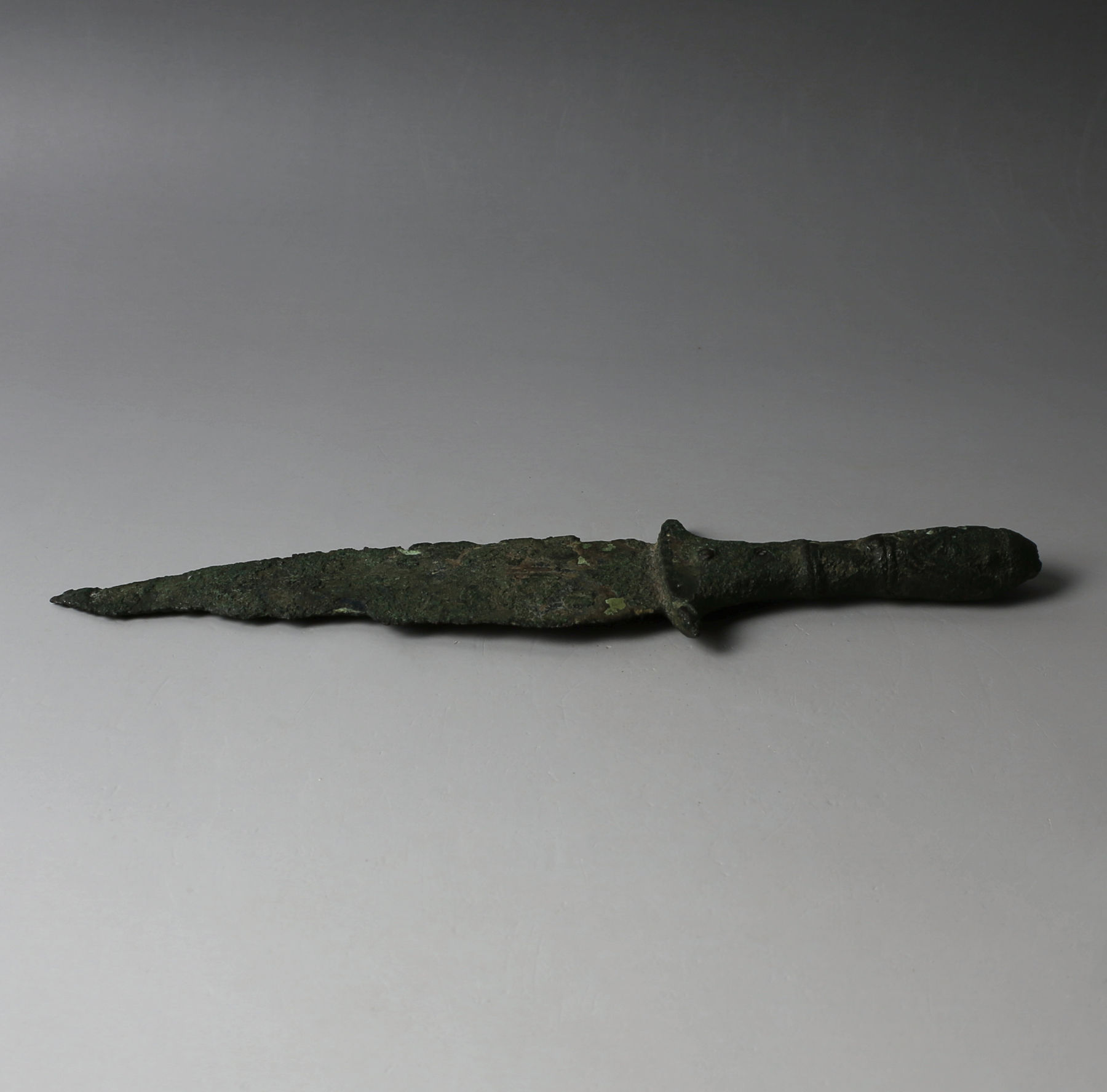
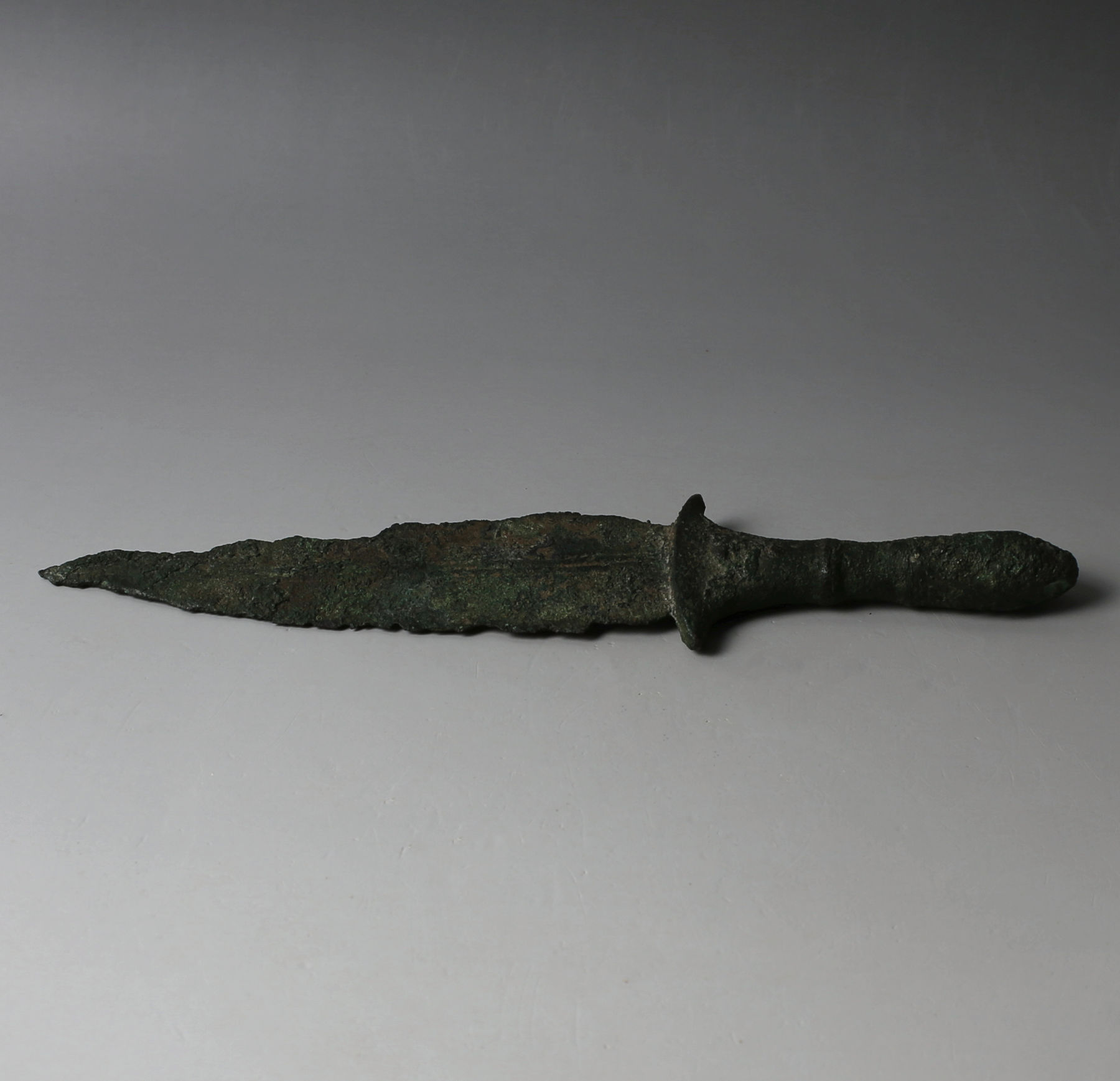
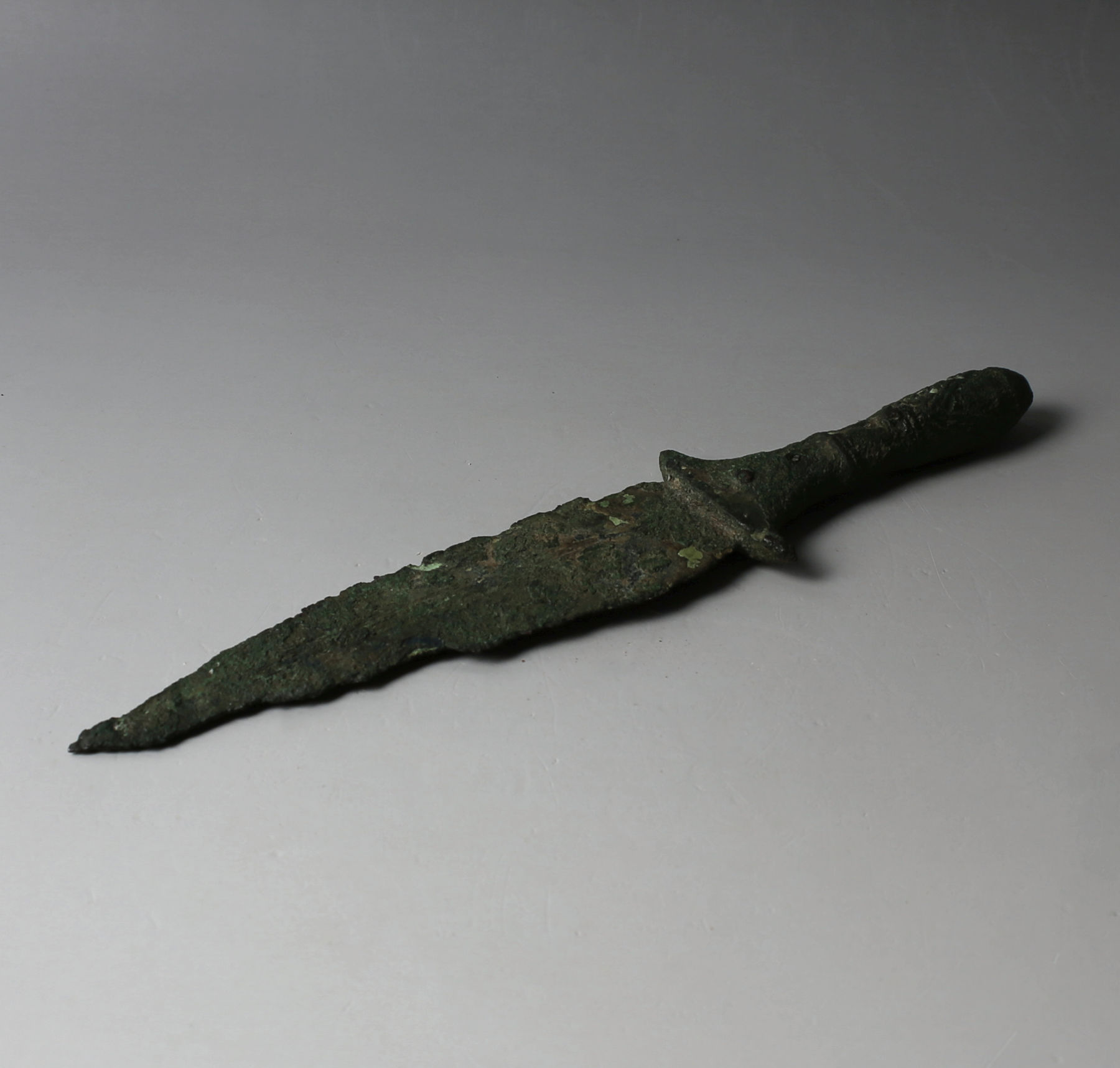
| ITEM | Dagger |
| MATERIAL | Bronze |
| CULTURE | Bronze Age, Luristan |
| PERIOD | 2500 – 2000 B.C |
| DIMENSIONS | 217 mm x 47 mm |
| CONDITION | Good condition |
| PROVENANCE | Ex German private collection, H.P., acquired before 1990 |
An artifact of remarkable metalwork and martial craftsmanship, the Luristan bronze dagger embodies the sophisticated metallurgy of the ancient nomadic tribes inhabiting the Zagros Mountains of western Iran during the early first millennium BCE. Forged primarily during the Late Bronze Age into the early Iron Age, these weapons are celebrated for their distinctive, balanced proportions and the harmonious integration of hilt and blade. Artisans of the Luristan culture mastered the intricate lost-wax casting technique, allowing them to create intricate, single-piece dagger designs where the grip, pommel, and blade were cast as a cohesive unit. This seamless construction not only ensured structural integrity during combat or ritual use but also provided a smooth, ergonomic feel in the hand, reflecting an advanced understanding of both utility and aesthetic grace.
Beyond their practical function as sidearms, Luristan bronze daggers served as potent symbols of status, identity, and ritual significance within tribal society. Many extant examples feature elaborate hilt decorations, including anthropomorphic motifs, stylized animal forms such as horses or felines, and ribbed grips designed to enhance grip security and visual appeal. The greenish-blue patina that coats these ancient bronzes—developed through centuries of burial in mountain soil—accents the subtle geometric engravings and flowing contours of the metal, heightening their sculptural presence. These daggers were frequently interred in elite burials alongside other prestigious horse trappings and bronze weaponry, signifying the warrior’s high standing and the spiritual importance of arms in the afterlife.
Today, Luristan daggers occupy a revered place in ancient art collections, bridging the gap between utilitarian weaponry and expressive Near Eastern sculpture. Their enduring appeal lies in the tension between their lethal original purpose and the remarkable artistic sensibility poured into their creation by anonymous ancient smiths. As tangible links to the equestrian societies of the ancient Iranian highlands, these bronzes continue to captivate historians and collectors alike, offering profound insights into the metallurgical prowess, iconography, and warrior ethos of a vanished mountainous civilization.