

Description
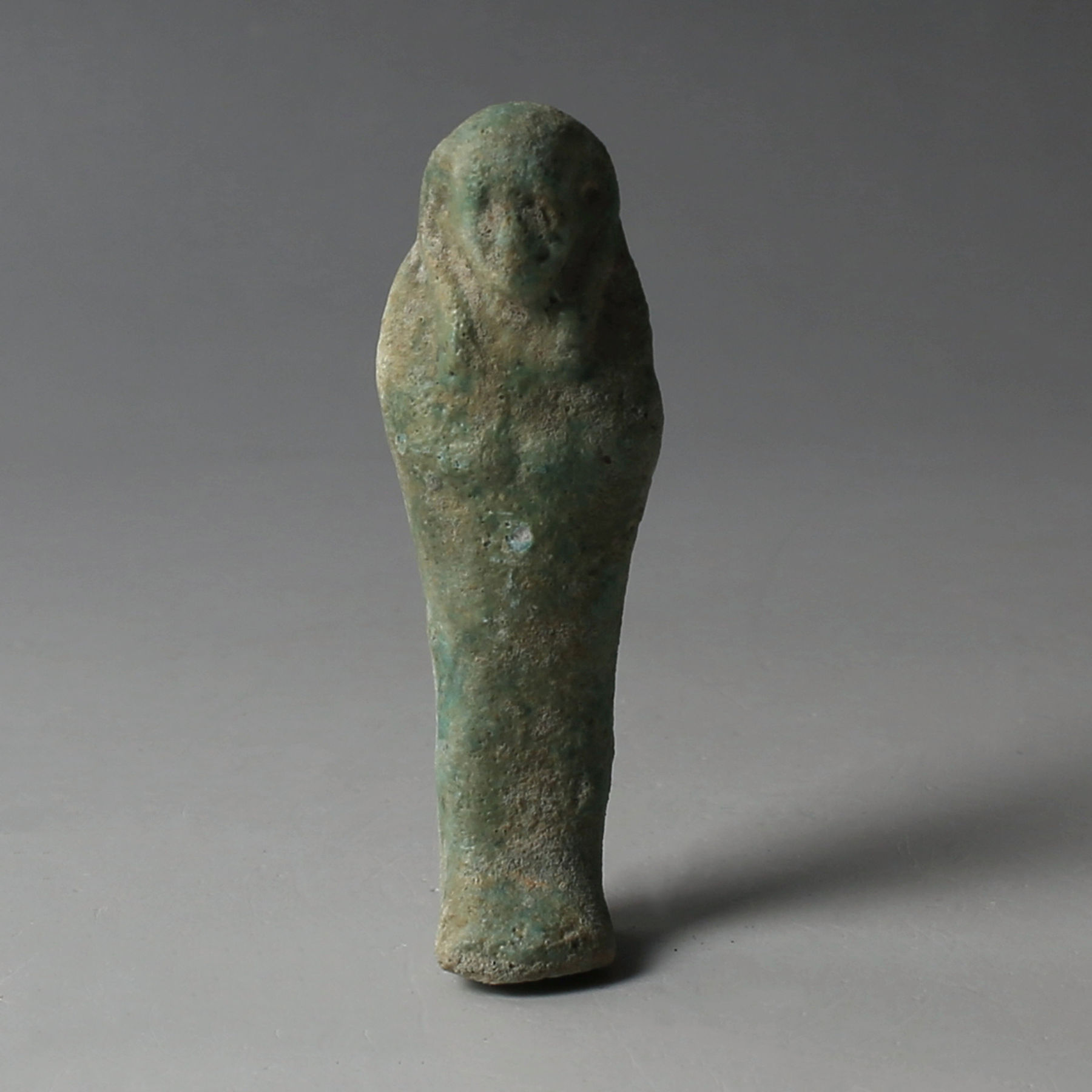
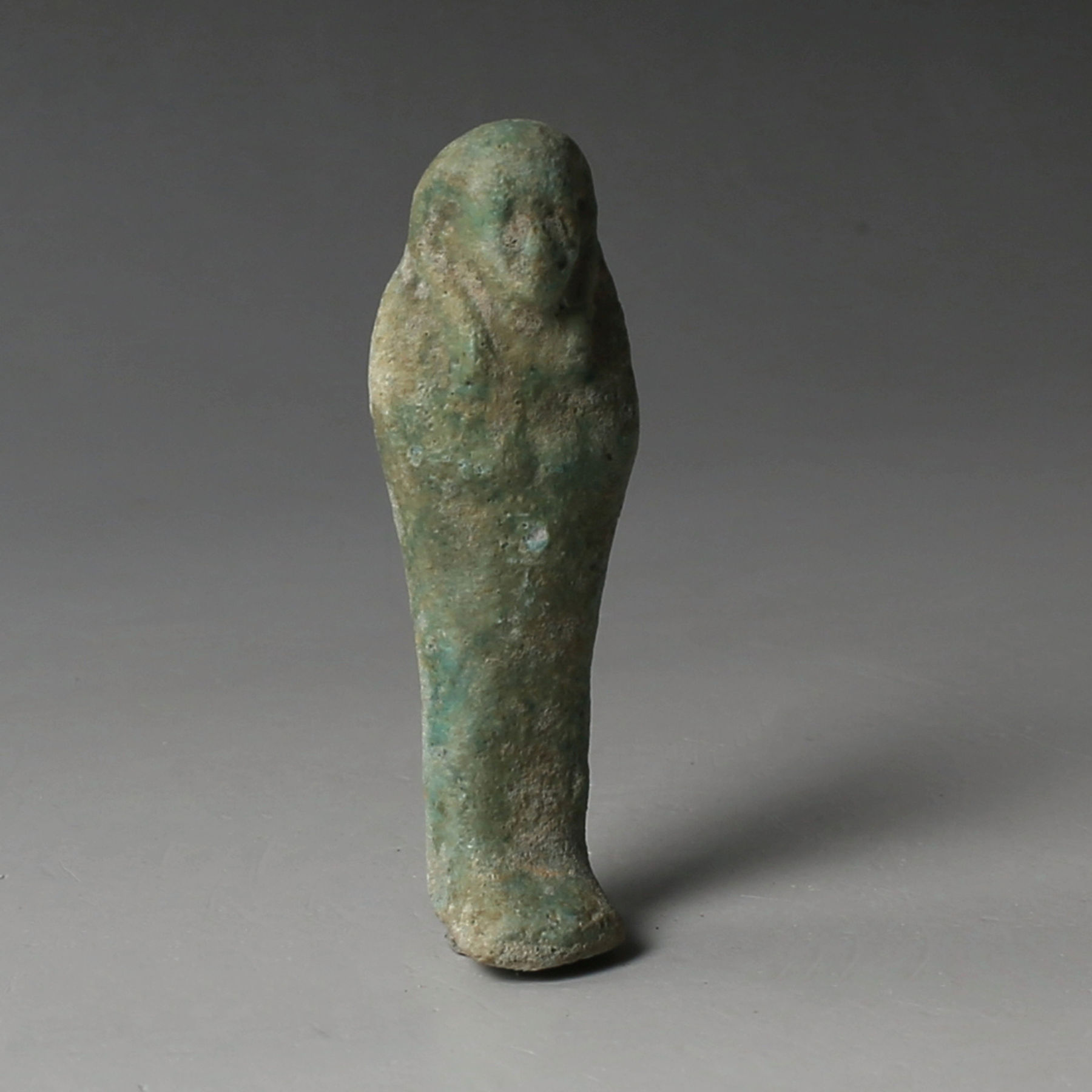
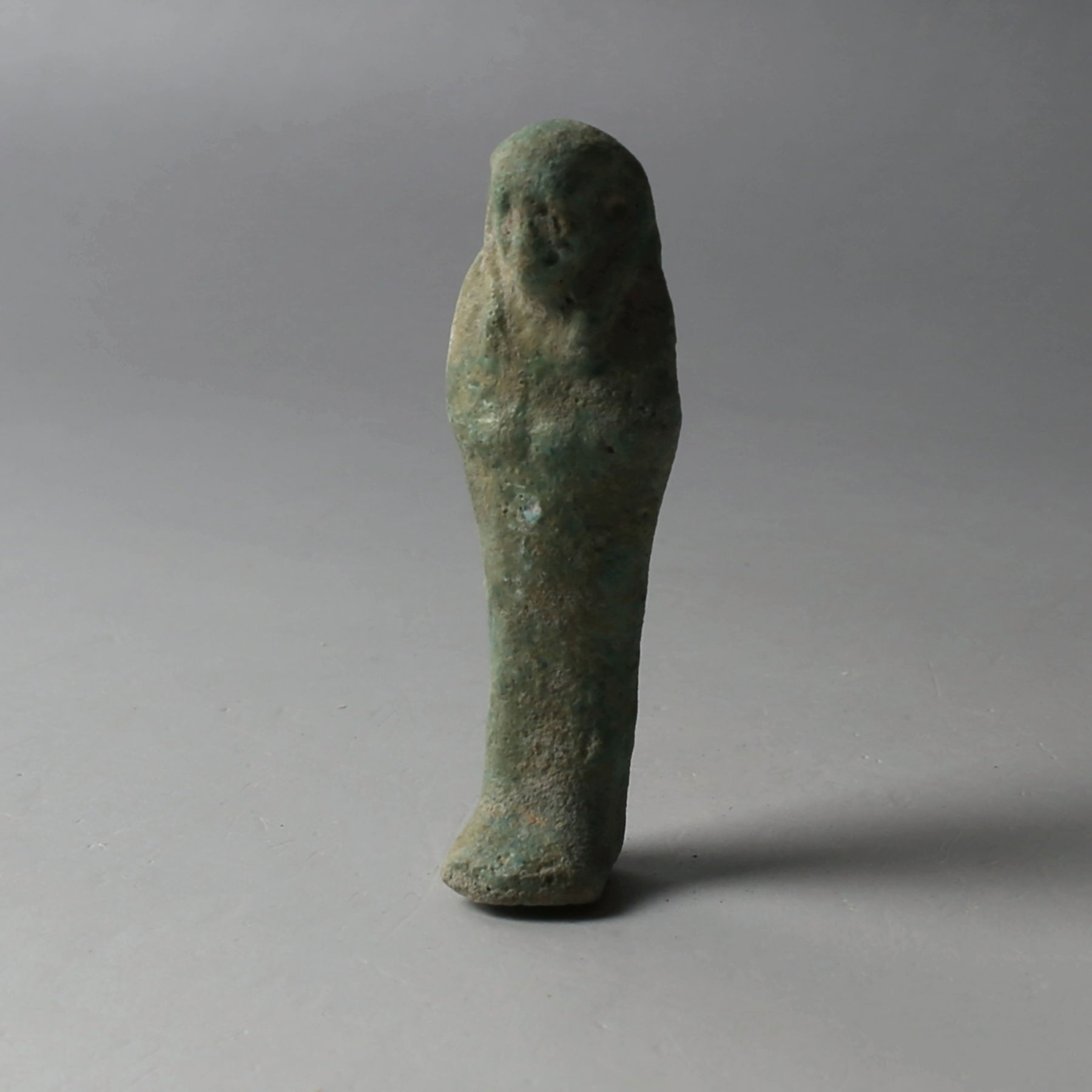
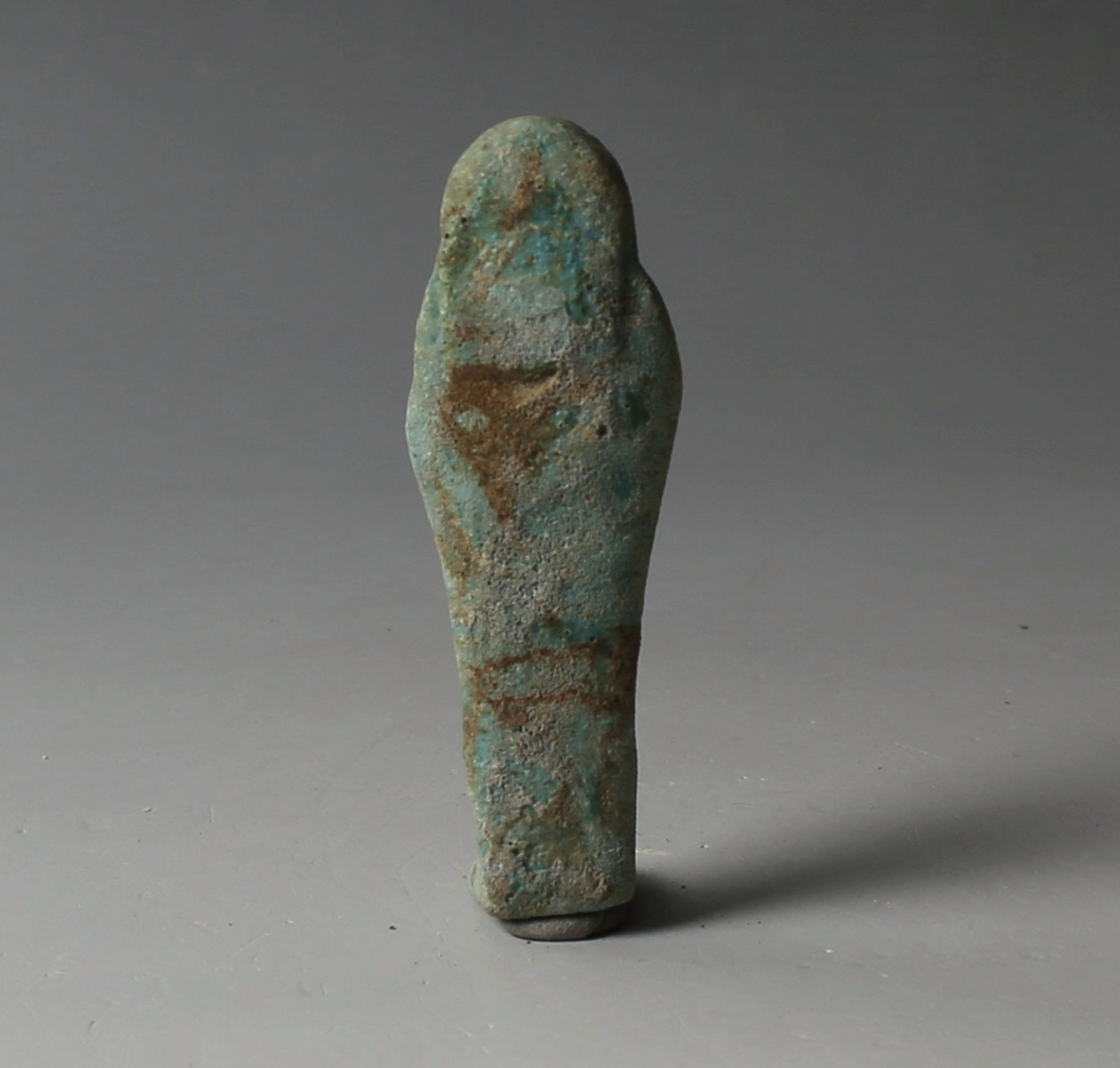
| ITEM | Shabti |
| MATERIAL | Faience |
| CULTURE | Egyptian |
| PERIOD | Late period, 664 – 332 B.C |
| DIMENSIONS | 70 mm x 25 mm |
| CONDITION | Good condition |
| PROVENANCE | Ex French private collection, acquired between 1960s – 1980s |
Egyptian shabtis (also known as ushabtis or shawabtis) were small funerary figurines placed in tombs to serve the deceased in the realm of Osiris, the underworld. The ancient Egyptians believed that the afterlife was a continuation of earthly existence, complete with daily chores and agricultural labor imposed by the gods. To avoid performing hard manual labor—such as tilling fields, digging irrigation canals, or harvesting crops—in the afterlife, individuals were buried with these mummiform figures. Magically empowered by inscriptions from the Book of the Dead (specifically Spell 6), the shabti was intended to awaken and answer “Here I am!” whenever the deceased was called upon to perform a task.
The design, materials, and complexity of shabtis evolved significantly over Egyptian history. Originating in the Middle Kingdom as simple mummiform figures carved from wood or wax, they grew increasingly sophisticated during the New Kingdom and the Late Period. Craftspeople produced them in a wide variety of mediums, including limestone, glazed composition (faience), terracotta, and bronze, with vibrant blue-green Egyptian faience becoming the most popular. Shabtis were typically depicted holding tools of agricultural labor, such as hoes, picks, and baskets slung over their shoulders, while their body panels were inscribed with hieroglyphic text detailing the owner’s name, titles, and the mandatory magical spell.
Over the centuries, the quantity of shabtis included in a single burial expanded dramatically, reflecting shifting religious customs and social status. While an early tomb might contain only one or two figures, by the Third Intermediate Period, a complete set ideally consisted of 401 figurines: 365 worker shabtis (one for every day of the solar year) and 36 overseer shabtis (wearing distinctive kilts and holding whips to manage groups of ten workers). Today, because millions were produced across three millennia of ancient Egyptian history, shabtis remain among the most recognizable, widely preserved, and culturally revealing artifacts in museum collections and private antiquities around the world.
