

Description
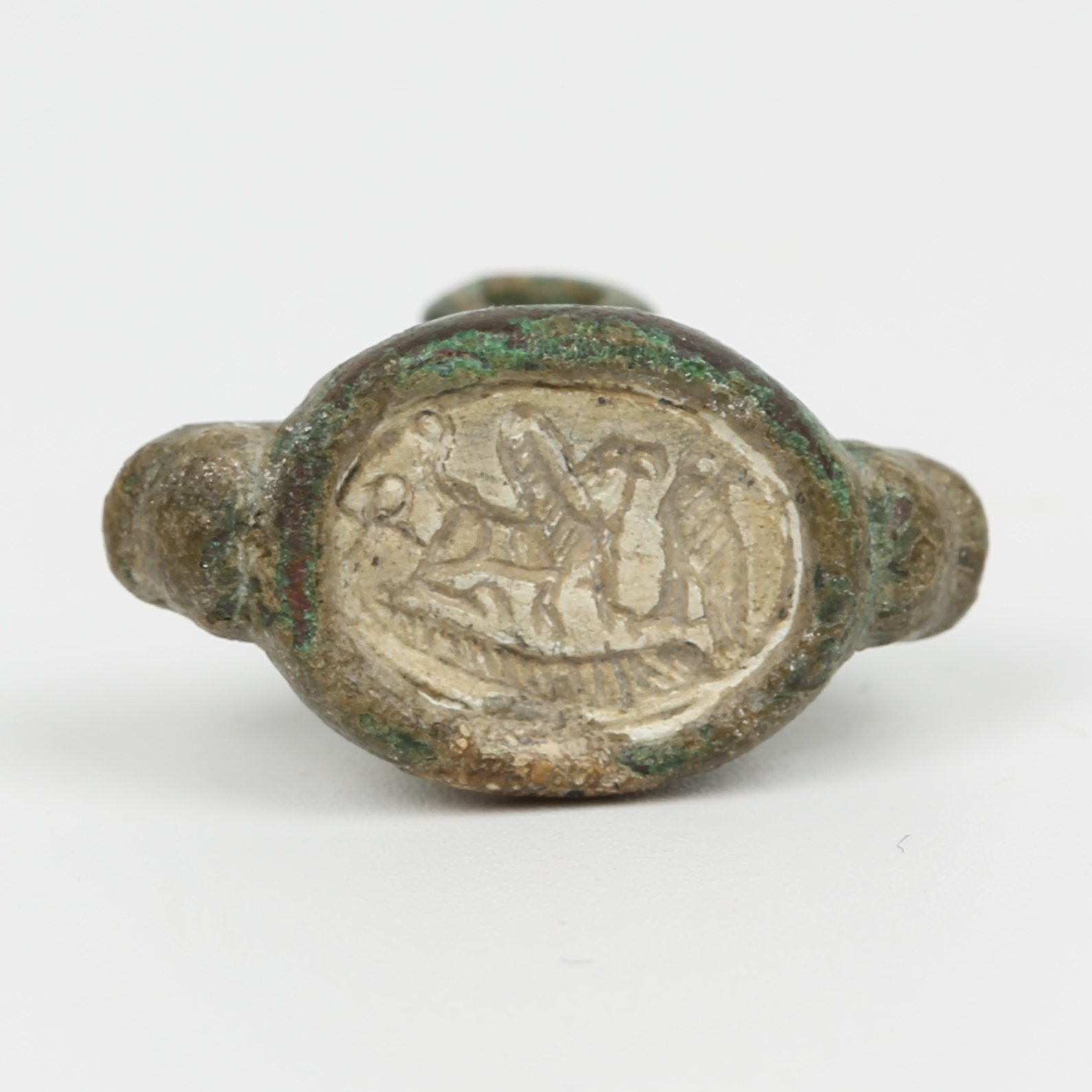
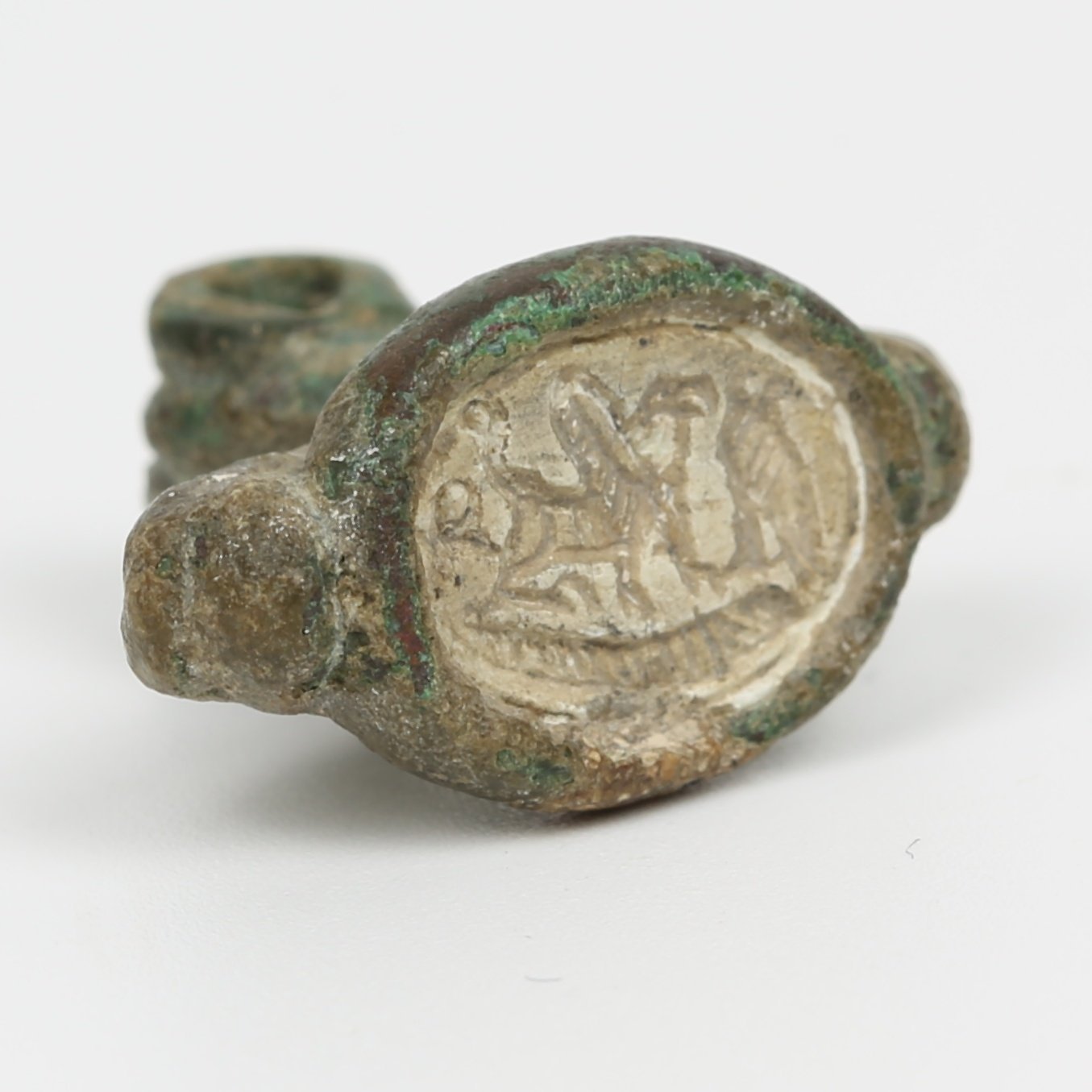
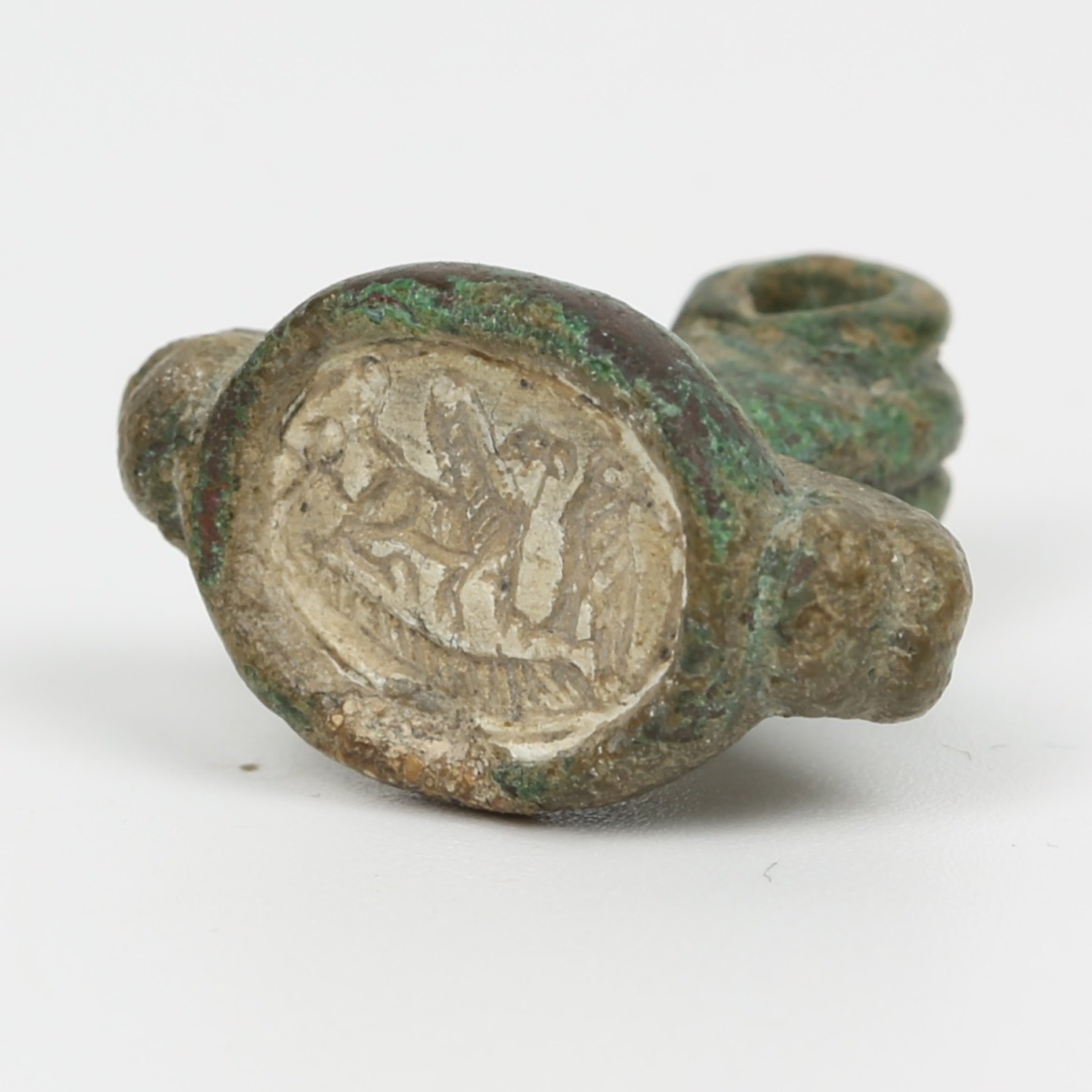
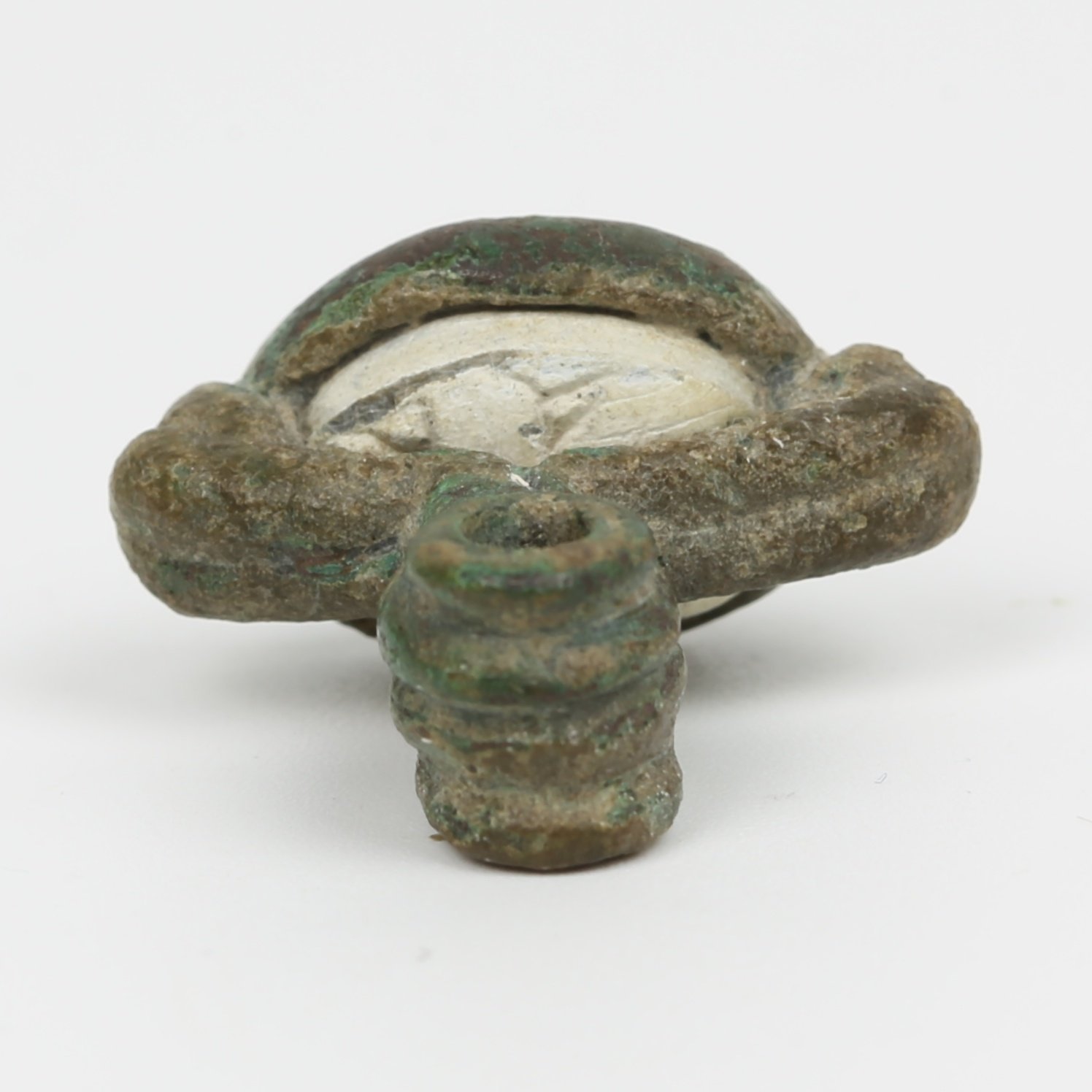
| ITEM | Seal with bezel ring depicts a griffon, an ankh and a falcon |
| MATERIAL | Bronze |
| CULTURE | Iron Age, Ammonite |
| PERIOD | 7th Century B.C |
| DIMENSIONS | 19 mm x 22 mm |
| CONDITION | Good condition |
| PROVENANCE | Ex Museum Exhibiton of the Arbeitsgruppe für Biblische Archäologie, Germany (Deaccession) |
The Ammonite seal ring from the 7th century BCE is a remarkable artifact that reflects the complex cultural synthesis of the Iron Age Levant. Crafted during a period when the Kingdom of Ammon (modern-day Jordan) was a thriving regional power, this bezel ring served as both a piece of personal jewelry and a functional administrative tool. The use of a seal was essential for high-ranking officials or merchants to “sign” documents and secure goods, acting as a physical extension of the owner’s legal identity and authority within the Ammonite bureaucracy.
The iconography of the seal is a classic example of Levantine hybridity, blending local artistic traditions with powerful motifs borrowed from Egypt and Mesopotamia. The depiction of the griffin—a mythical creature with the body of a lion and the wings of an eagle—represents a guardian of sacred spaces and a symbol of royal power. The inclusion of the falcon, a solar symbol associated with the Egyptian god Horus, alongside the ankh (the symbol of life), suggests that the Ammonite elite adopted these “prestige” symbols to convey divine protection and the eternal nature of their rule.
From a technical perspective, these seals were often carved into semi-precious stones like agate, jasper, or limestone before being set into a metal hoop, typically made of silver or bronze. The precision required to engrave three distinct symbols—the griffin, ankh, and falcon—onto such a miniature surface demonstrates the high level of skill possessed by Ammonite lapidaries. These rings are invaluable to modern historians because they often contain palaeo-Hebrew or Ammonite script naming the owner, providing a direct link to the names, titles, and religious beliefs of a civilization that flourished nearly three thousand years ago.