
Description
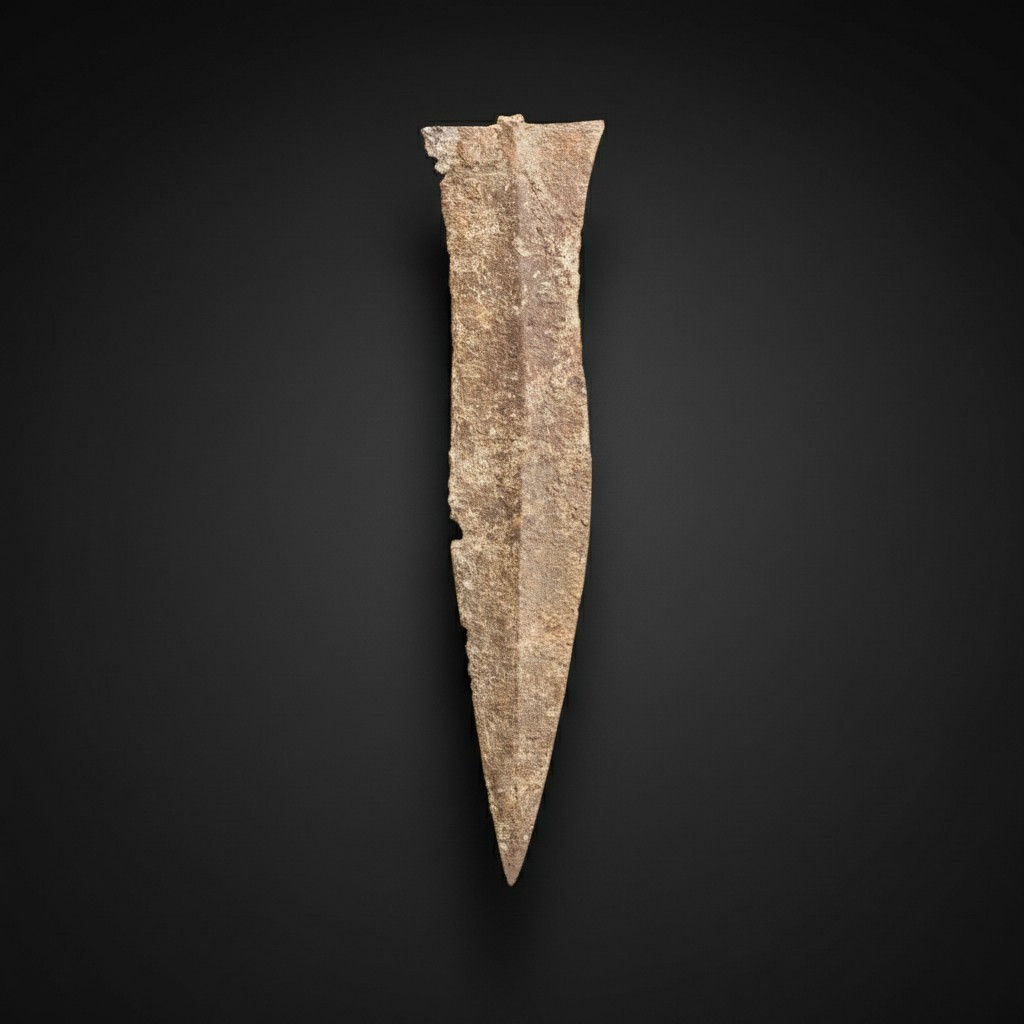
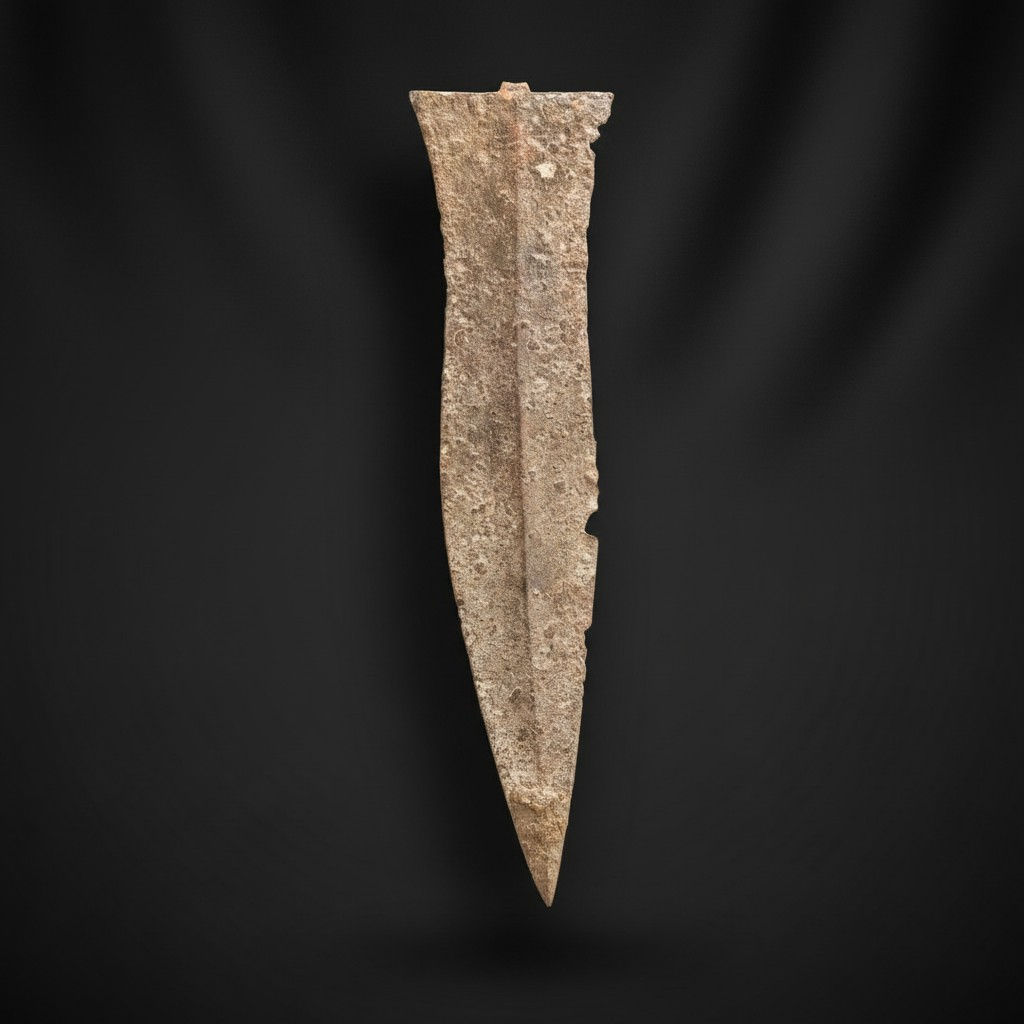
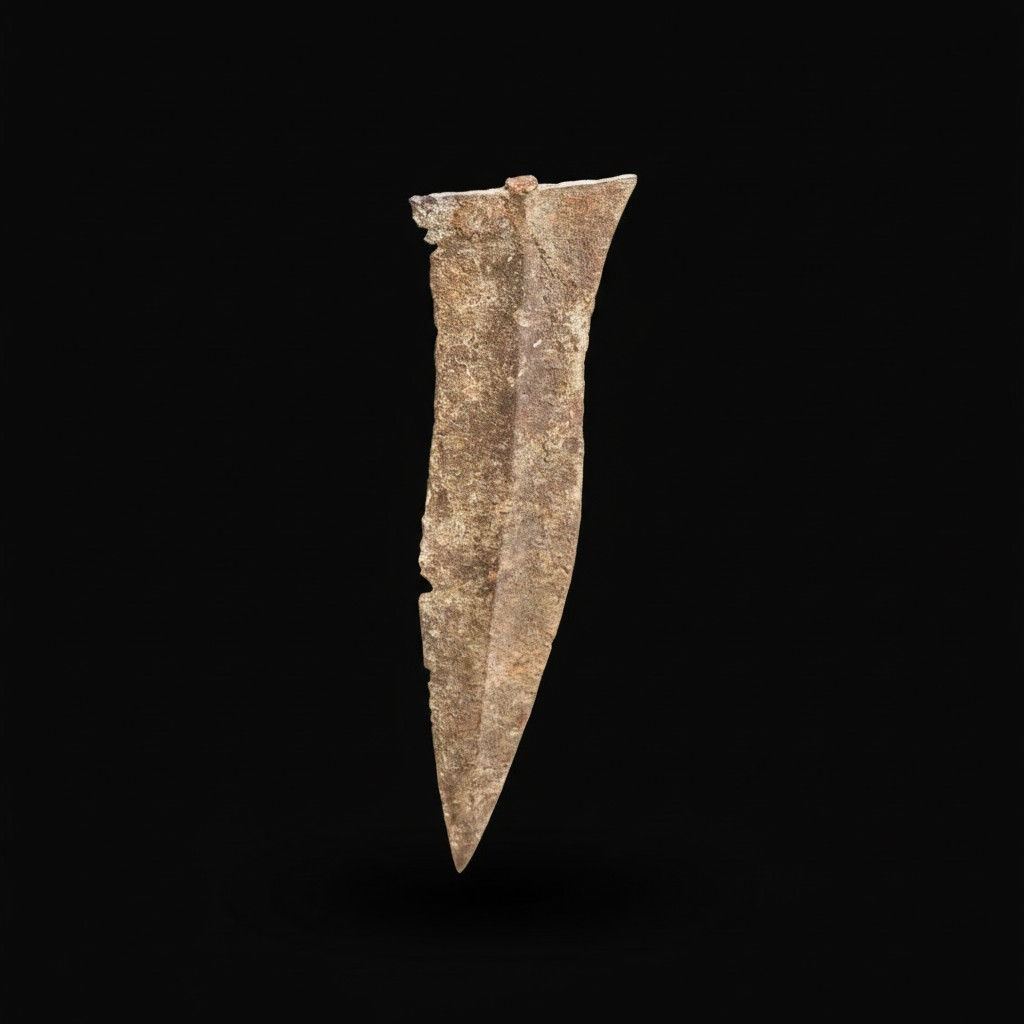
| ITEM | Dagger ‘Pugio’ Type Künzing |
| MATERIAL | Iron |
| CULTURE | Roman |
| PERIOD | 3rd Century A.D |
| DIMENSIONS | 325 mm x 75 mm |
| CONDITION | Good condition |
| PROVENANCE | Ex South German private collection, acquired in the South German art trade in the 80s. |
The pugio was a double-edged dagger used as a standard sidearm by Roman soldiers, particularly legionaries, from the late Republic through the Imperial period. While its primary function remains debated among historians, it is generally accepted as an auxiliary weapon for close-quarters fighting, complementing the primary sword, the gladius. The name pugio is thought to be related to the Latin word pugnus (fist), perhaps referring to the secure, fist-like grip required to wield it effectively as a thrusting weapon. Its design, likely adopted from the daggers of the Cantabrians in the Iberian Peninsula, evolved over time but typically featured a broad, leaf-shaped blade, often with a prominent central ridge for strength and penetrating power, making it an advanced stabbing tool.
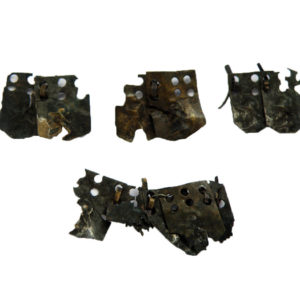
Beyond its military use on the battlefield, the pugio held significance as a status symbol and was a deeply personal item. Soldiers often purchased their own pugiones, leading to highly decorated examples that featured elaborate handles made of materials like wood, bone, or horn, often overlaid with metal plates. The accompanying scabbards were even more ornate, frequently featuring intricate inlays of brass, silver, niello, and colored enamel, reflecting the owner’s rank or wealth. This personalization underscores its importance to the Roman soldier, serving not only as a functional weapon of last resort but also as an integral part of his military identity and dress.
The pugio’s history is notably marked by its role in Roman politics and everyday life, as it was a common weapon for both self-defense and assassination. Most famously, it was the weapon of choice for the conspirators who murdered Julius Caesar in 44 BC. Its compact size made it easy to conceal beneath a toga, a key factor in its selection for that infamous event. Therefore, the pugio’s legacy is complex: it was an indispensable military tool, a highly personalized status symbol for the legionary, and a recurring fixture in the brutal political and personal violence of ancient Rome.