

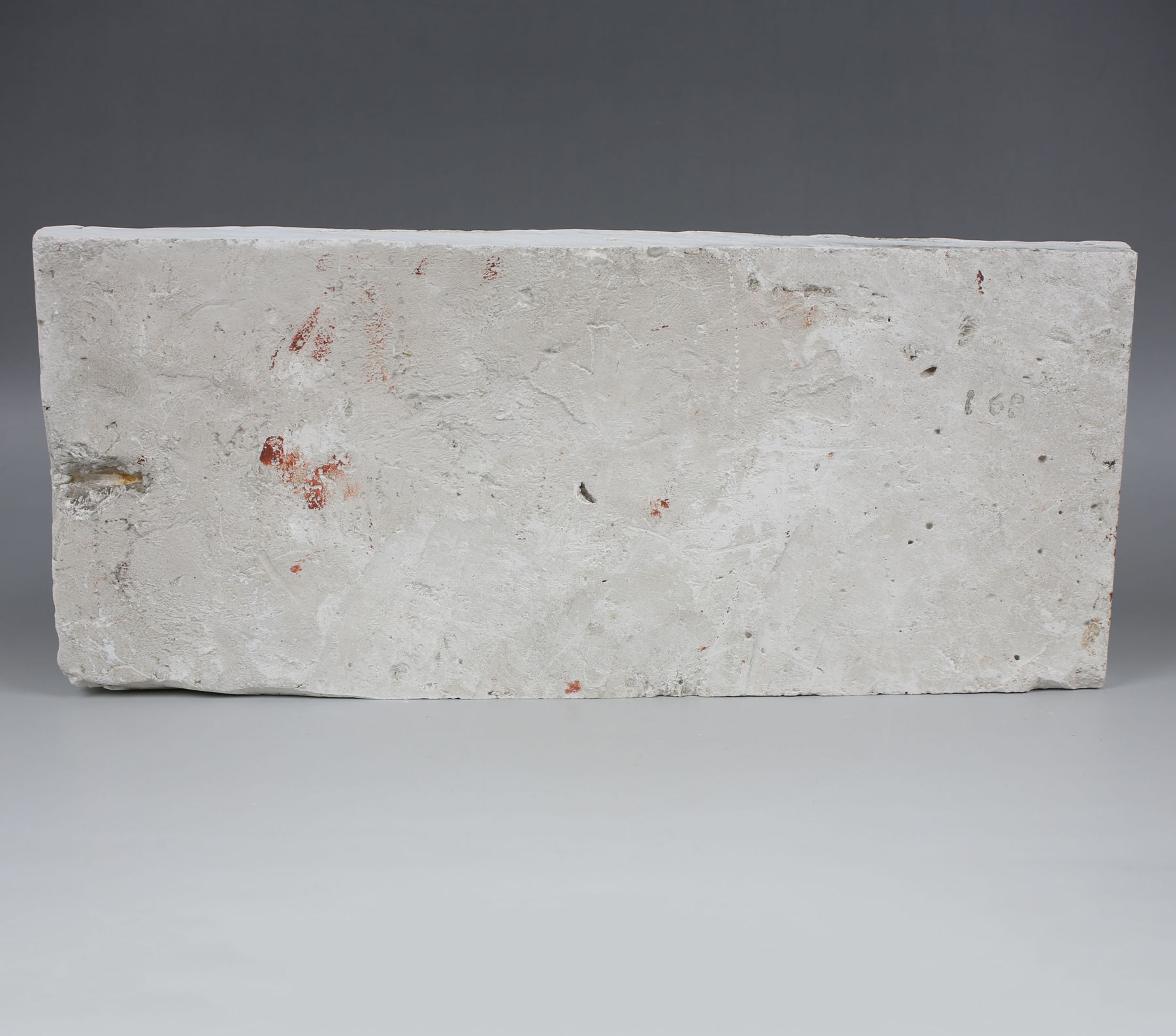
Description
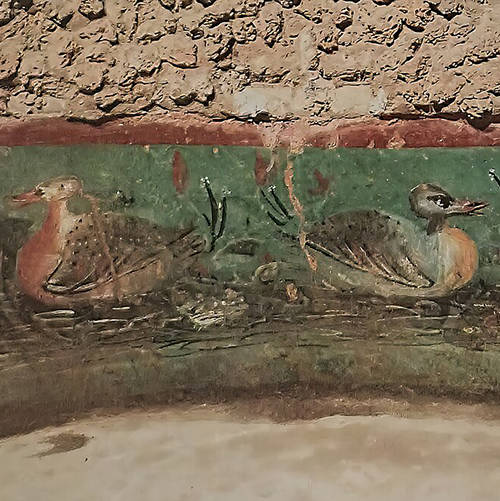
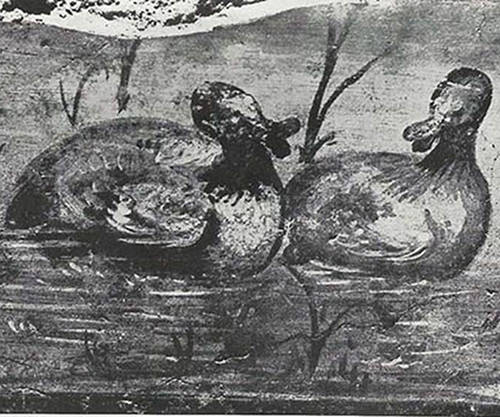
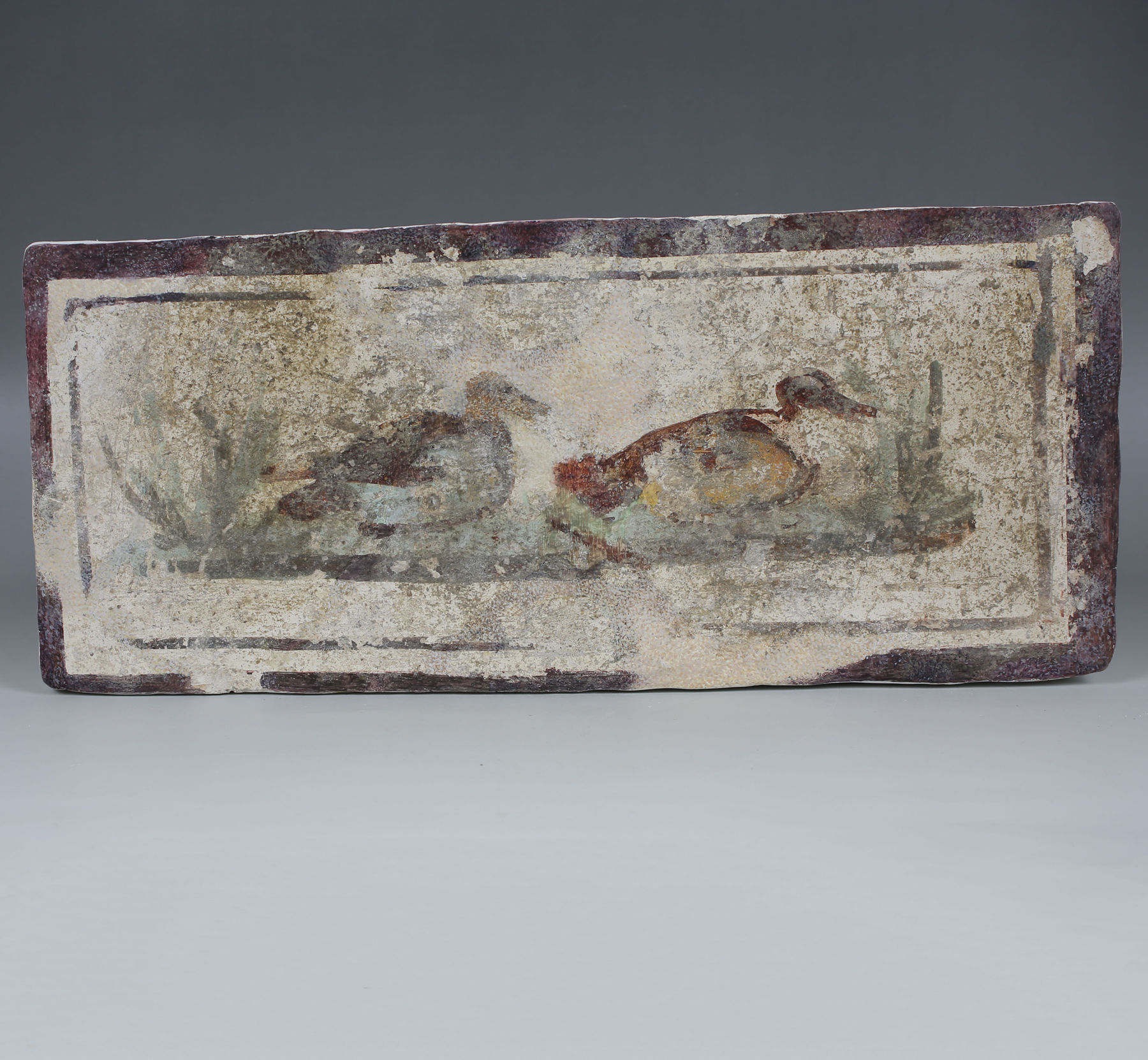
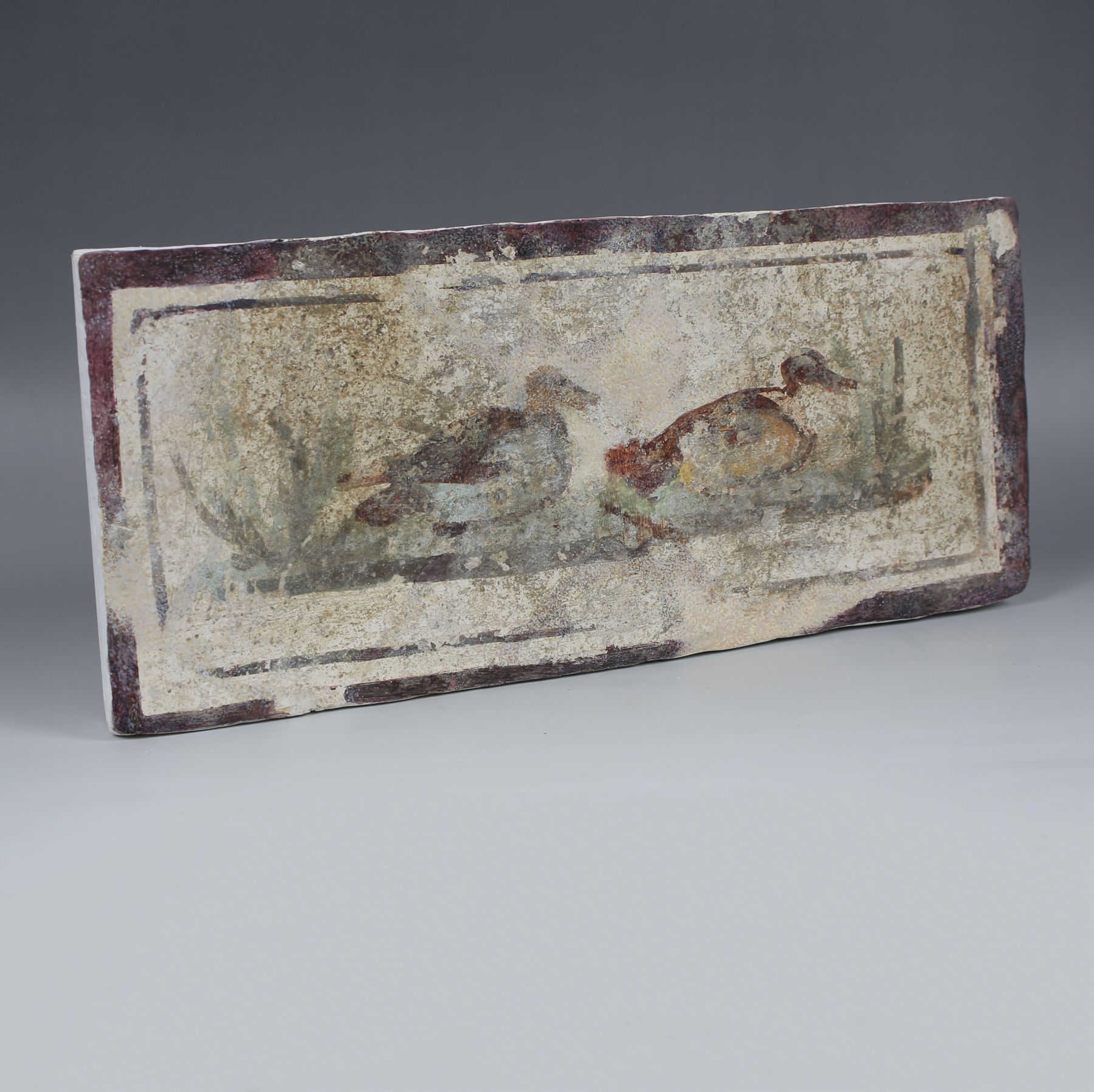
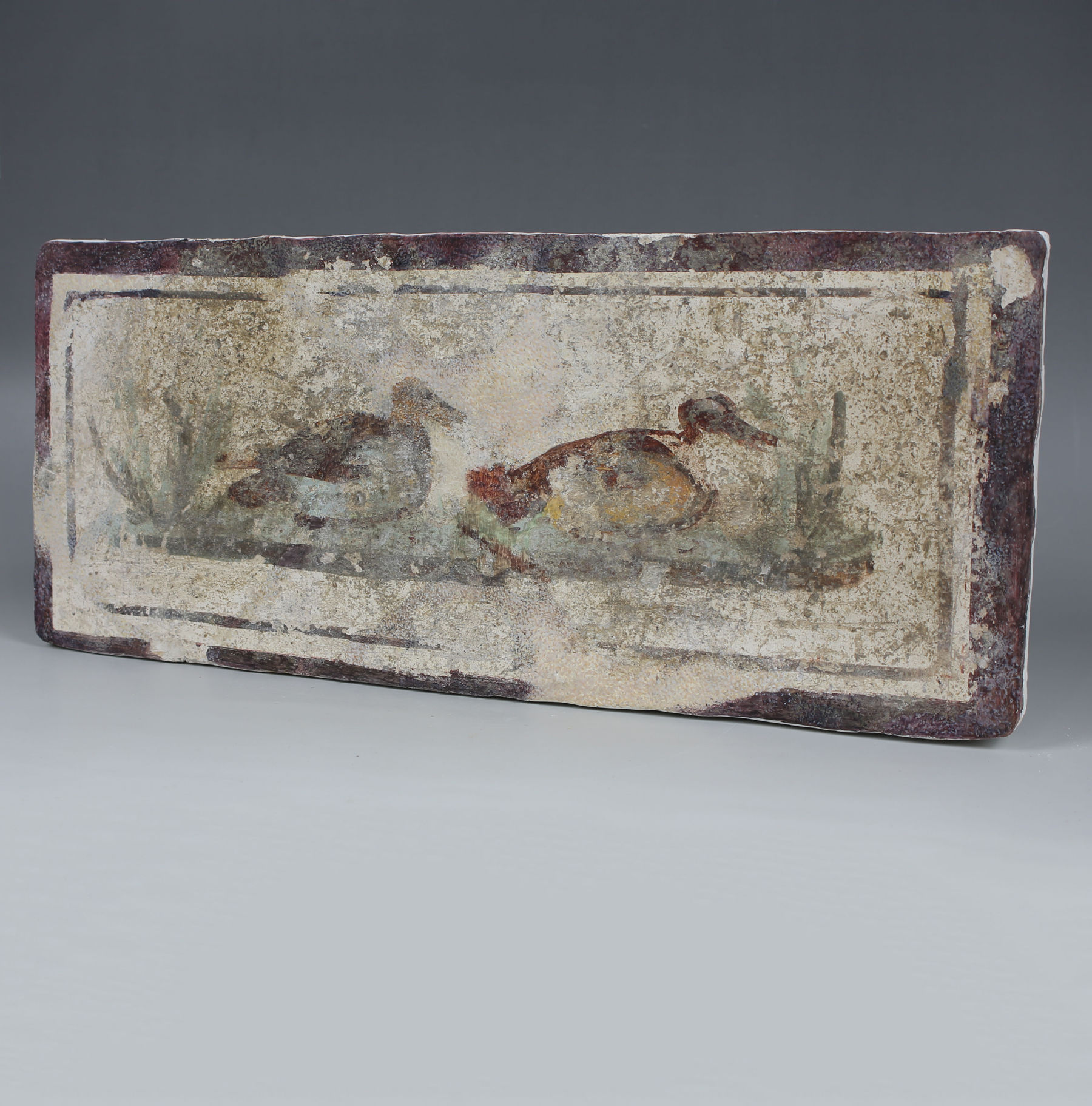
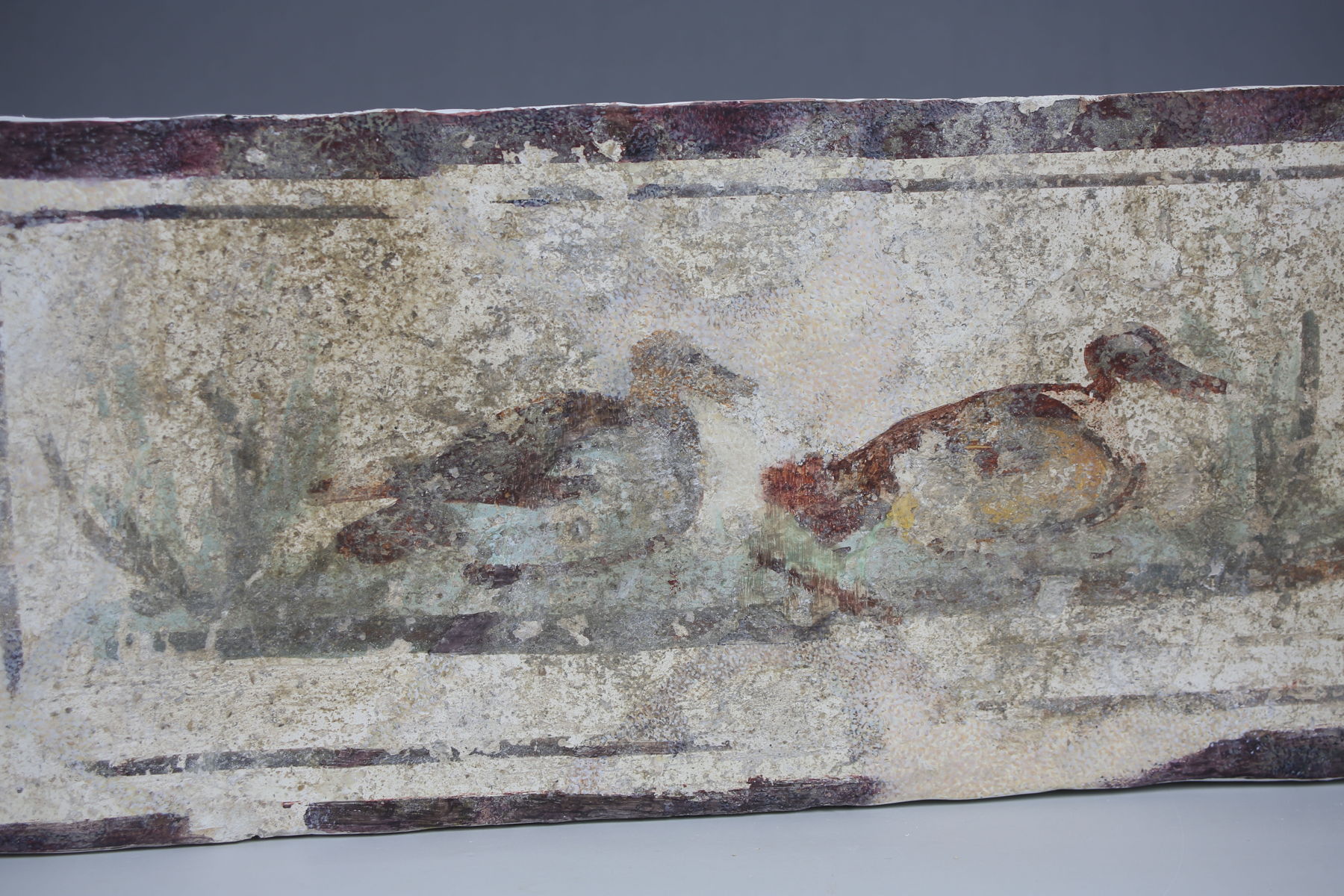
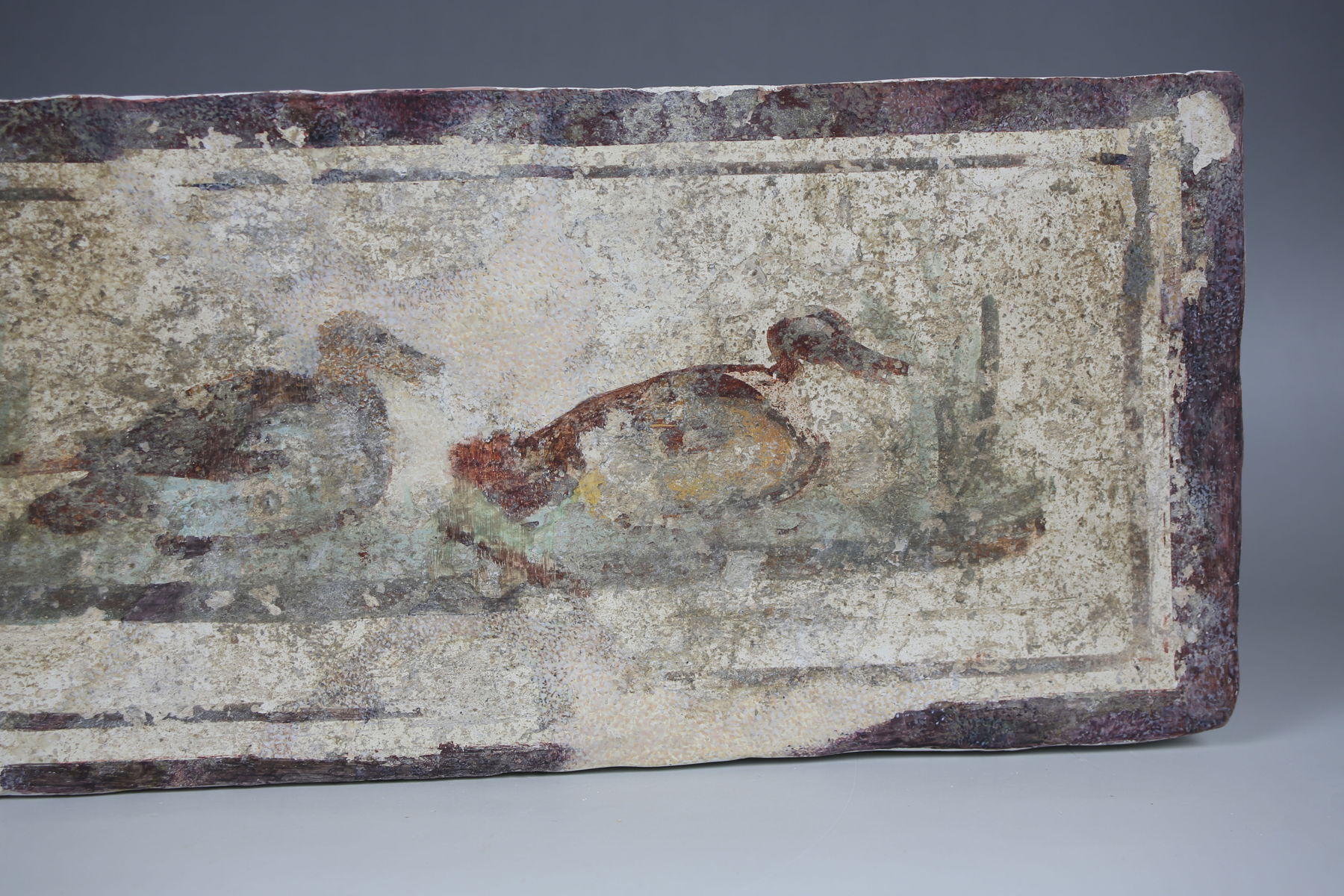
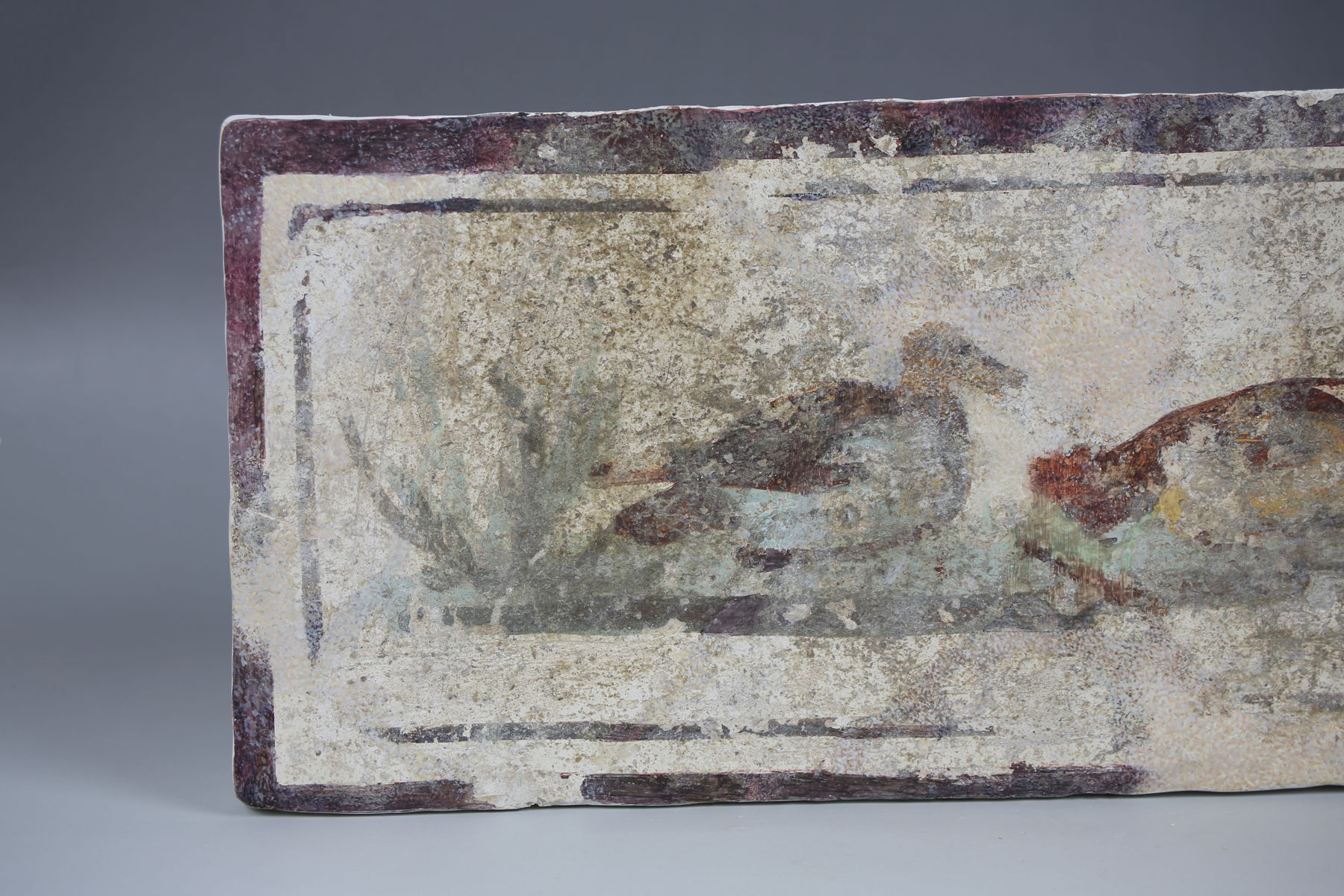
| ITEM | Fragment of a wall painting with ducks |
| MATERIAL | Lime plaster with dry powder pigment |
| CULTURE | Roman |
| PERIOD | 1st Century A.D |
| DIMENSIONS | 135 mm x 317 mm x 32 mm |
| CONDITION | Good condition, professionally restored |
| PROVENANCE | Ex French private collection, Chevallier-Verel Collection, Paris, acquired at the beginning of the 20th century |
Ducks and other waterfowl were a common and celebrated motif in Roman decorative art, frequently appearing in the vibrant wall paintings and mosaics recovered from sites like Pompeii and Herculaneum. These depictions often formed part of larger landscape scenes, especially the popular “Nilotic scenes” which evoked the exotic wildlife of the Egyptian Nile River. In these elaborate compositions, ducks might be seen swimming among water lilies, reeds, and other flora, often alongside frogs, fish, and even crocodiles or pygmies in a vivid, naturalistic tableau. This decorative choice served to transport the viewer to a distant, lush environment, creating an illusion of space and natural beauty that counteracted the often dark and windowless interiors of Roman homes.
The appearance of ducks in Roman wall paintings was not purely aesthetic; it also carried cultural and symbolic weight. Waterfowl were considered “characterful” creatures in the Greco-Roman world, sometimes associated with themes of wisdom or resourcefulness, and were also a well-known food source. In still-life paintings, known as xenia (guest offerings), birds like ducks and geese were meticulously rendered alongside fruit and other provisions to illustrate the host’s wealth and generous hospitality to visitors. Furthermore, ducks were sometimes incorporated into mythological subjects, such as in the ubiquitous artistic depictions of Leda and the Swan, a story where the god Zeus takes the form of a swan, a close relative of the duck, underscoring the species’ place in high culture.
The style of these decorations varied according to the “Pompeian Styles” of painting. In the later, more ornamental styles, ducks and other birds could appear as smaller, highly detailed elements nestled within intricate decorative borders or as framed vignettes on the vast, monochromatic wall panels. A well-preserved example, like the frescoed duck from the Villa di Arianna at Stabiae, showcases the Roman painter’s talent for naturalism, capturing the bird’s form and color with remarkable detail. Whether part of a grand Nilotic vista or a small, isolated bird on a thin architectural framework, the recurring motif of the duck enriched Roman domestic interiors, blending elements of the natural world, social status, and cultural appreciation for the exotic.