
Description
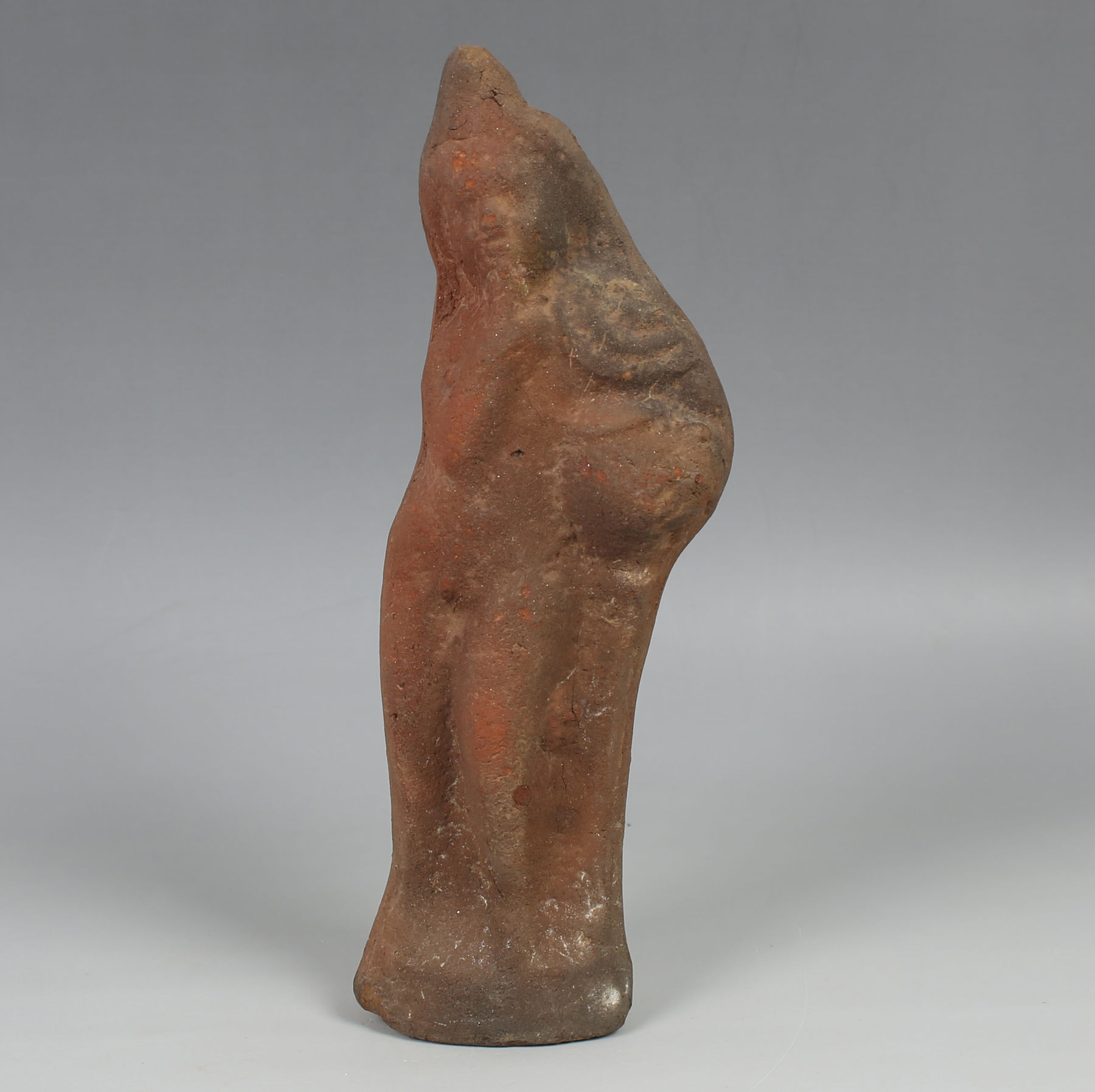
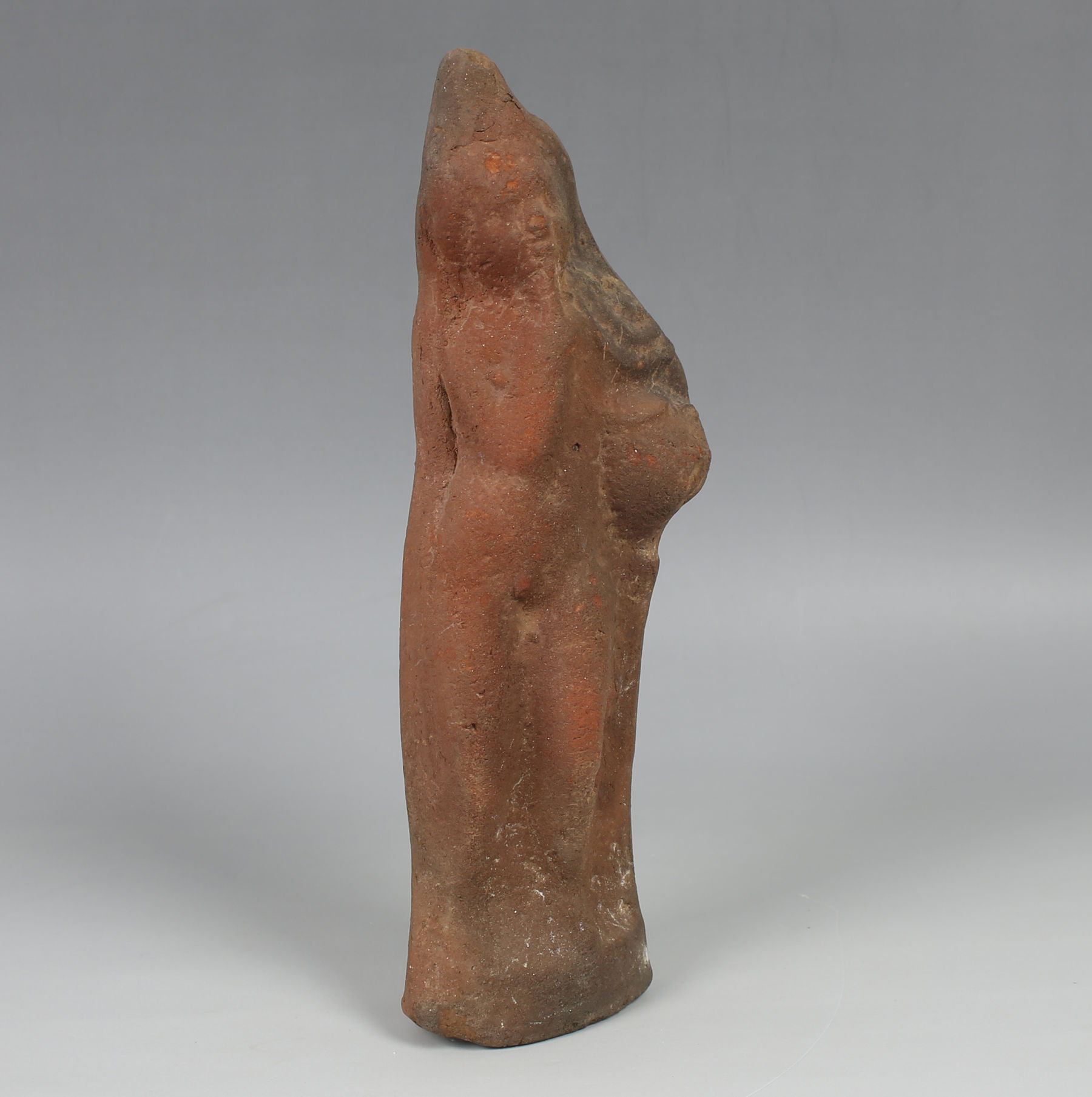
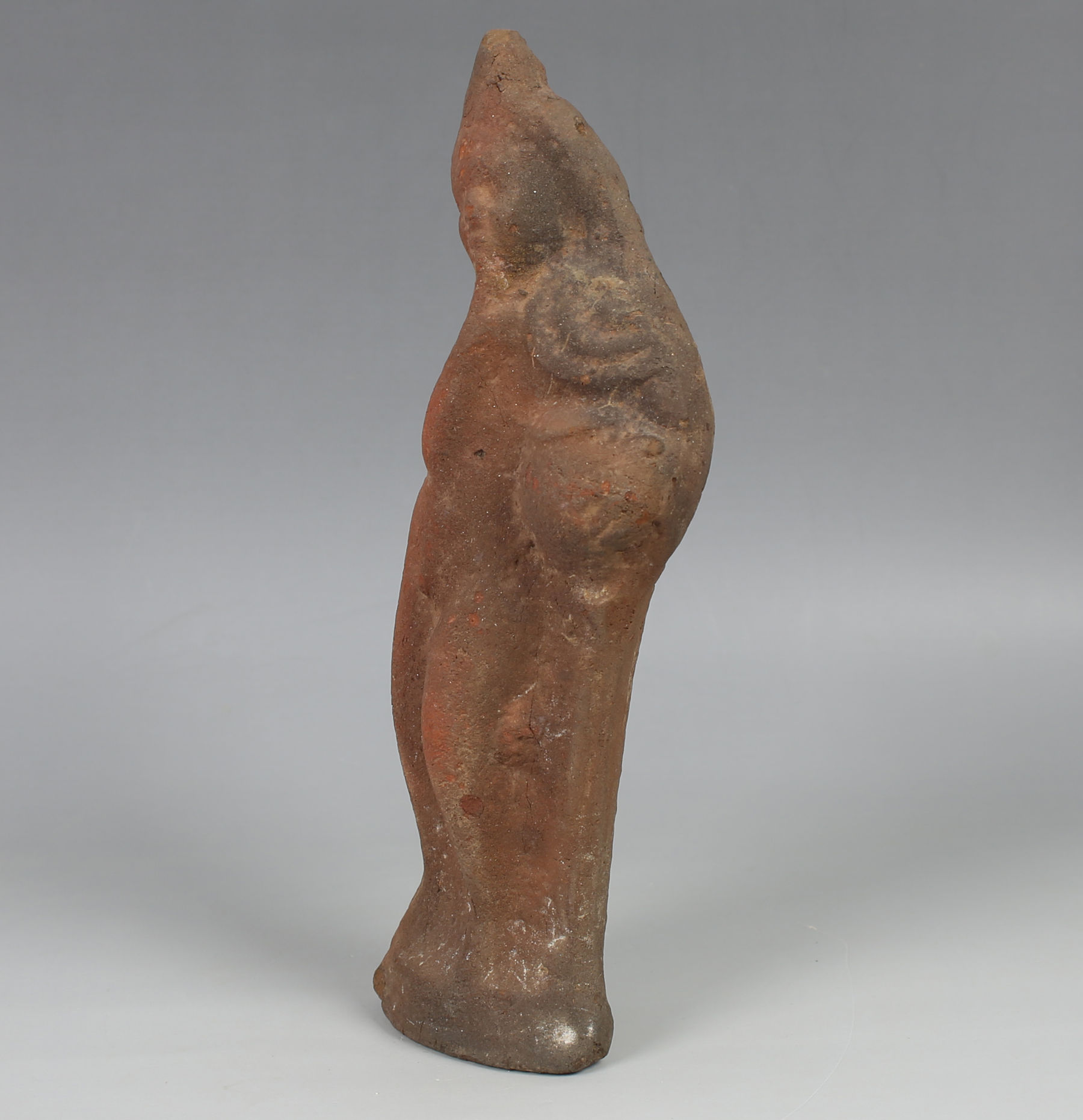
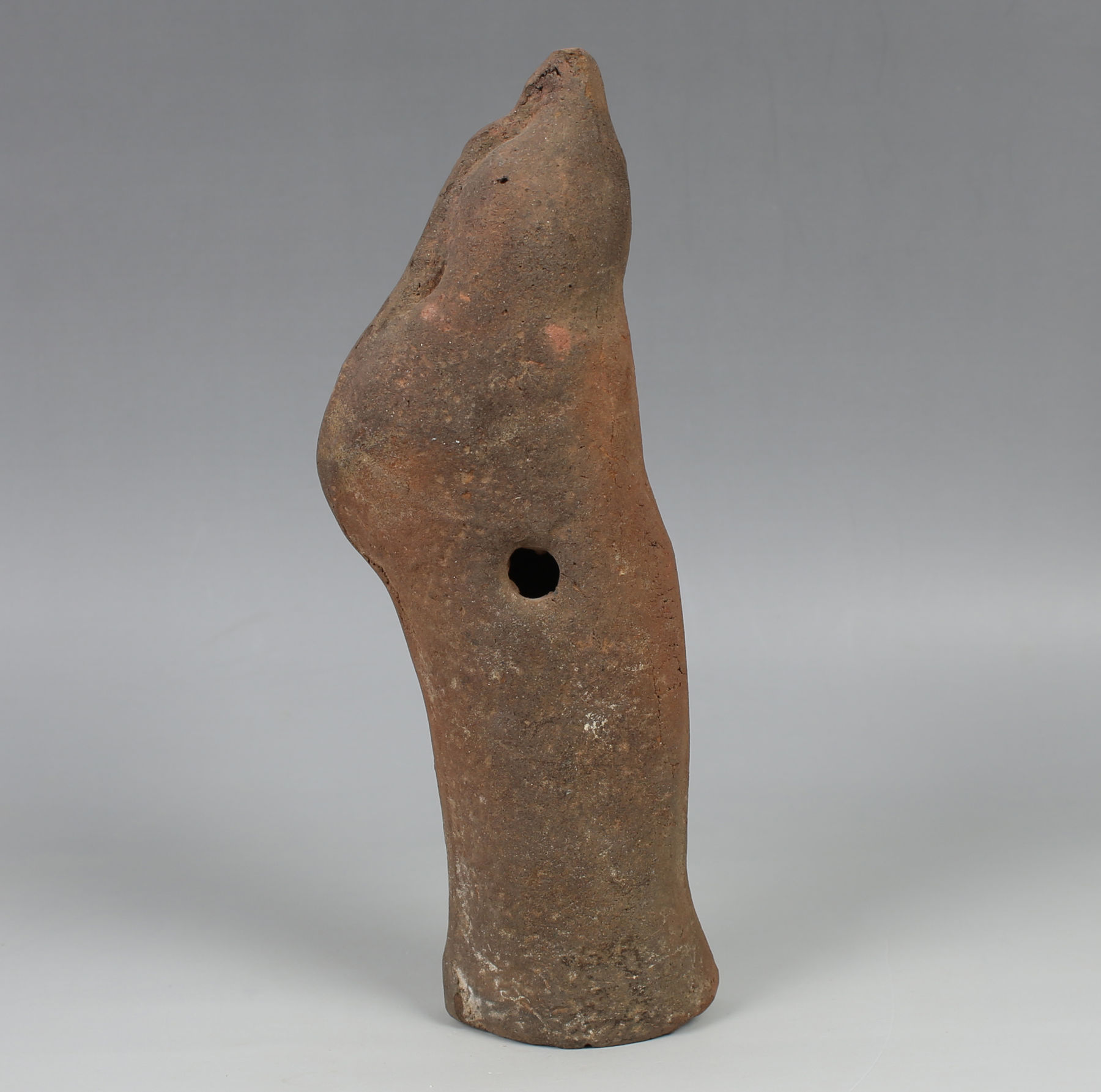
| ITEM | Statuette of Harpocrates |
| MATERIAL | Pottery |
| CULTURE | Roman |
| PERIOD | 1st Century A.D |
| DIMENSIONS | 202 mm x 75 mm |
| CONDITION | Good condition |
| PROVENANCE | Ex German private collection, W.F., Munich, acquired before 2000s |
Harpocrates was the Greco-Roman adaptation of the Egyptian child-god Horus the Child (Horus Harpocrates), who was represented as a young boy with a sidelock of youth and a finger to his lips. In Roman times, Harpocrates became a popular deity associated with silence, secrecy, and mystery, a reinterpretation of the Egyptian gesture of childhood (finger to the mouth) as a command for silence. This made him especially appealing in the context of Roman mystery cults and esoteric philosophies, where silence was considered a virtue and a mark of the initiate.
Roman depictions of Harpocrates often show him as a nude or semi-nude boy, sometimes seated on a lotus flower or holding cornucopiae, symbolizing fertility and abundance. In many cases, he wears the atef or solar crown, or appears with attributes linked to Isis and Serapis, reflecting his place within the wider Greco-Egyptian religious system. Statuettes and reliefs of Harpocrates were common in household shrines, indicating that he was worshipped as a protective and benevolent deity who ensured prosperity, health, and divine favor.
The popularity of Harpocrates in the Roman world reflects the broader spread of Egyptian religion under the Empire, especially the cult of Isis and Serapis, which became well established in cities such as Rome, Pompeii, and Ostia. Harpocrates’ image was not only religious but also symbolic, appearing on gems, amulets, and coins as a talisman for protection and discretion. His enduring presence shows how Egyptian and Hellenistic traditions fused into a Roman religious landscape that embraced foreign deities and their iconography.