
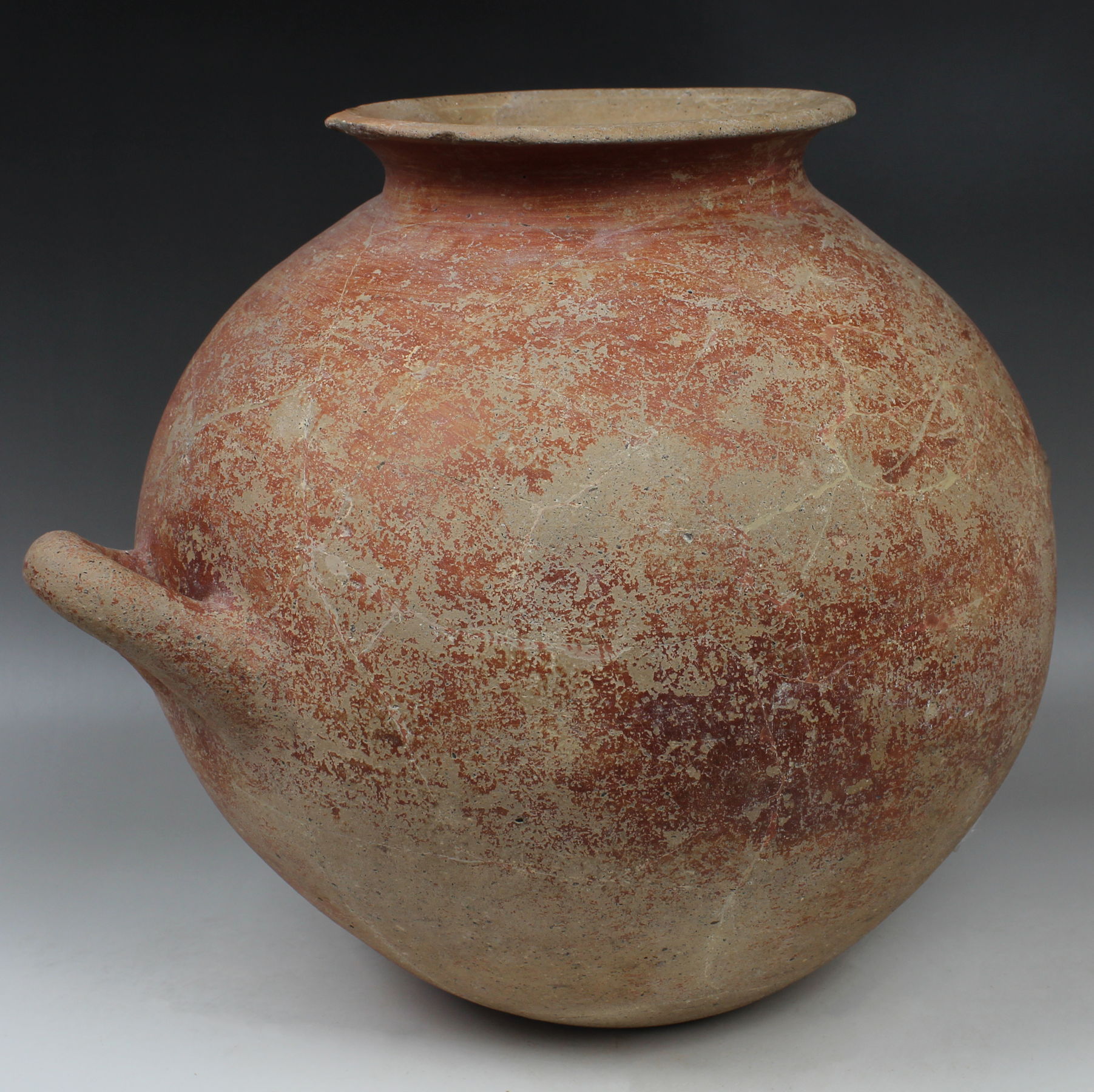
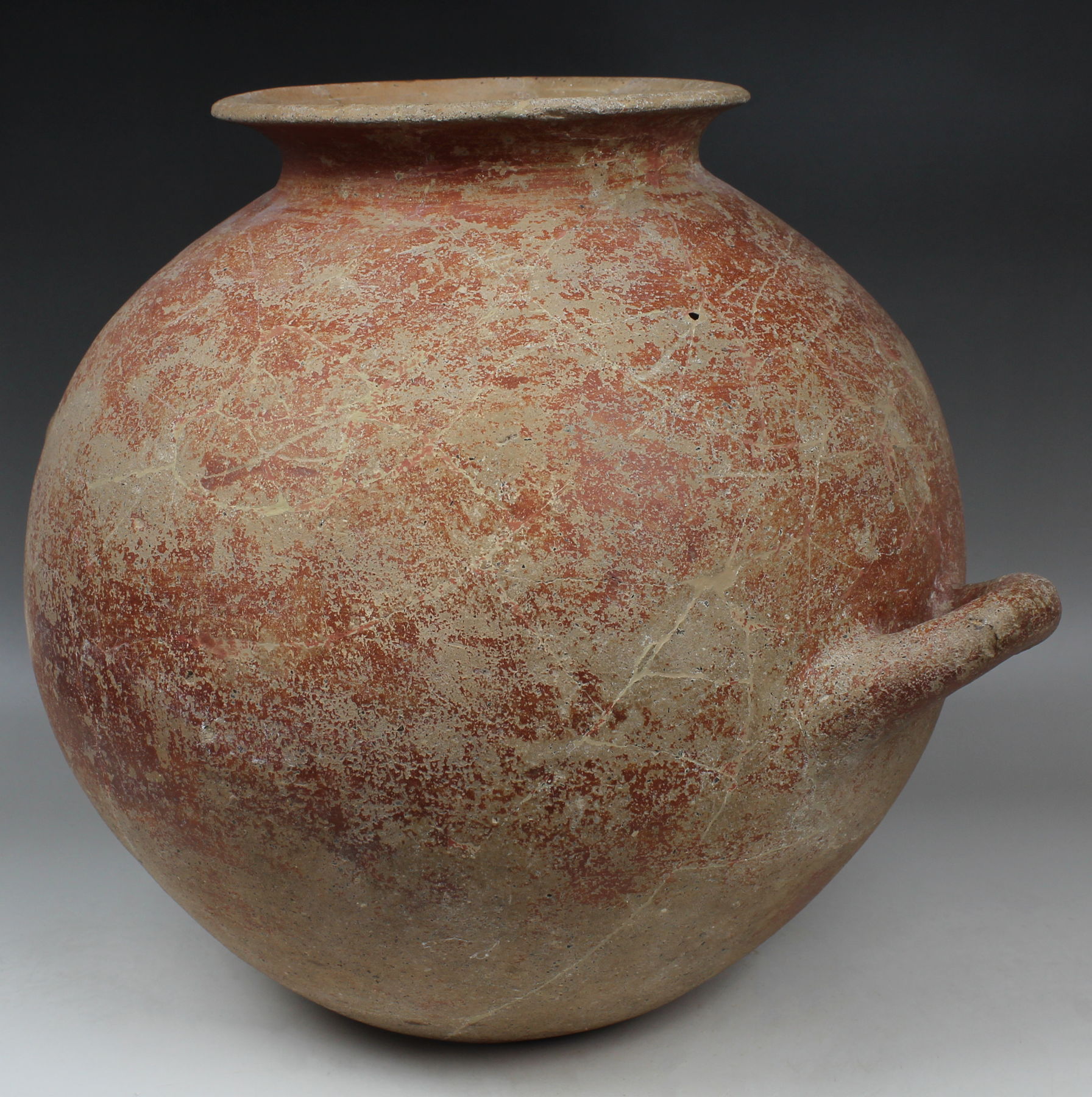
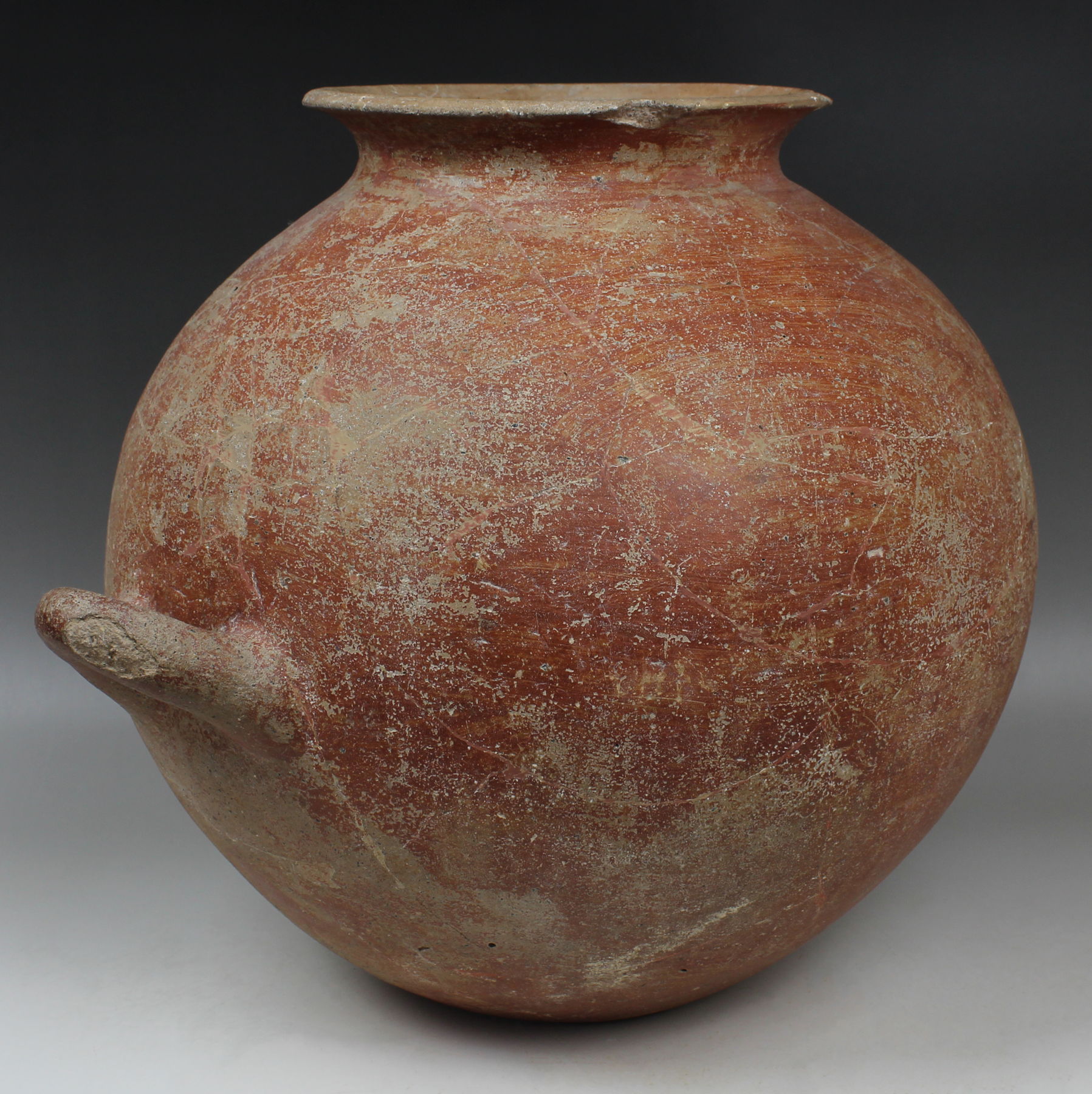
Description
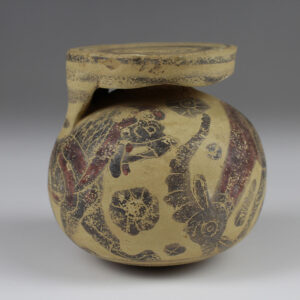
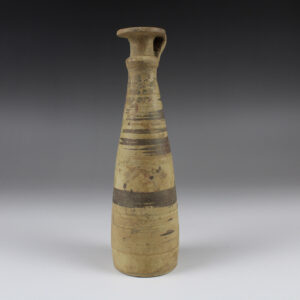
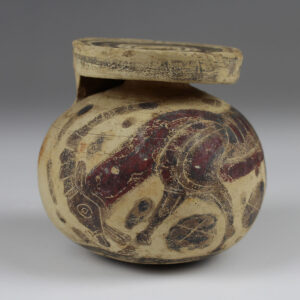
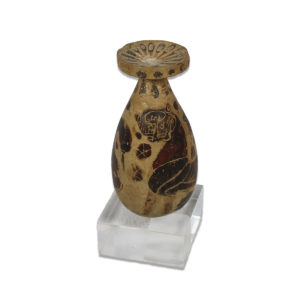
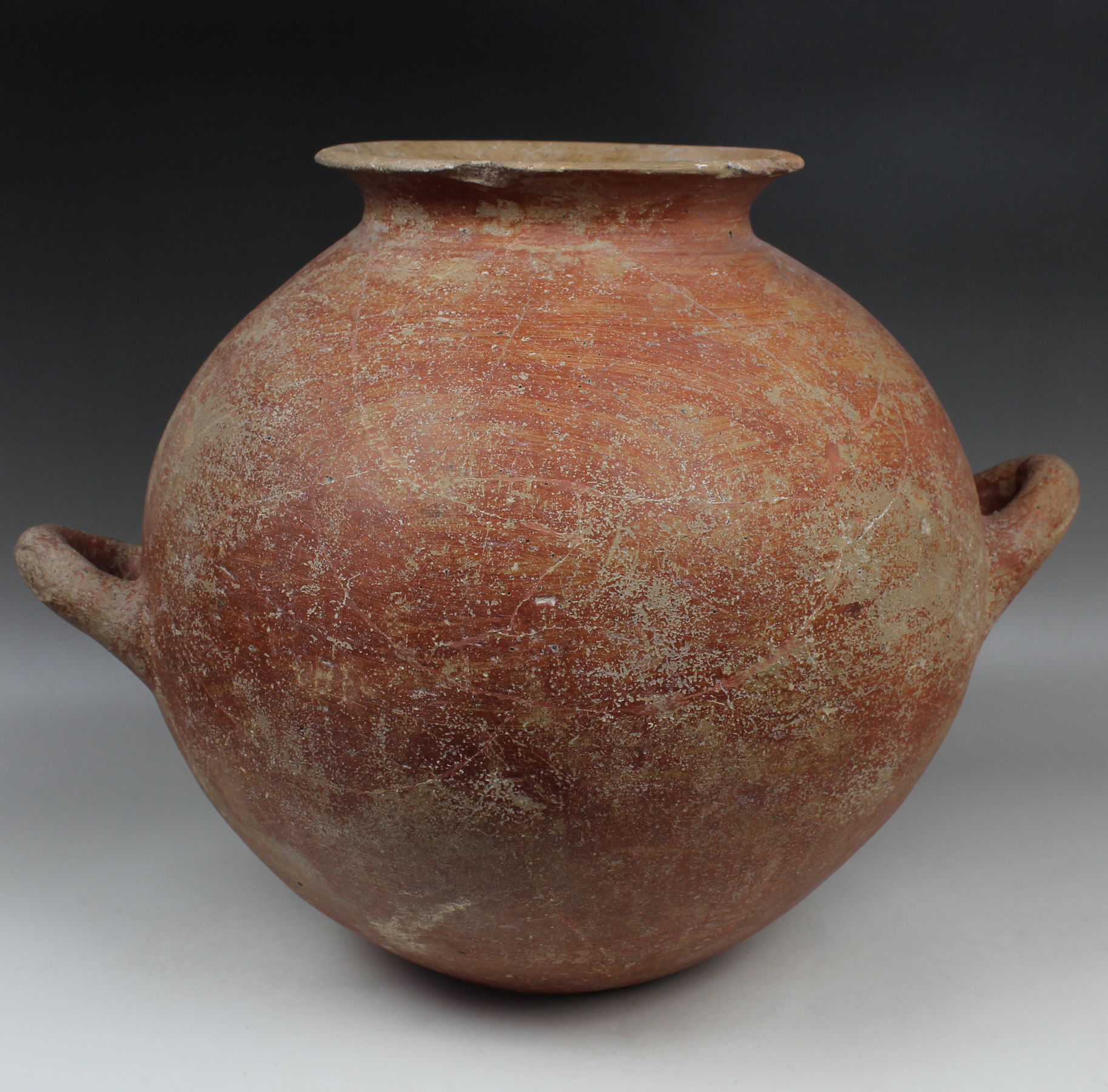
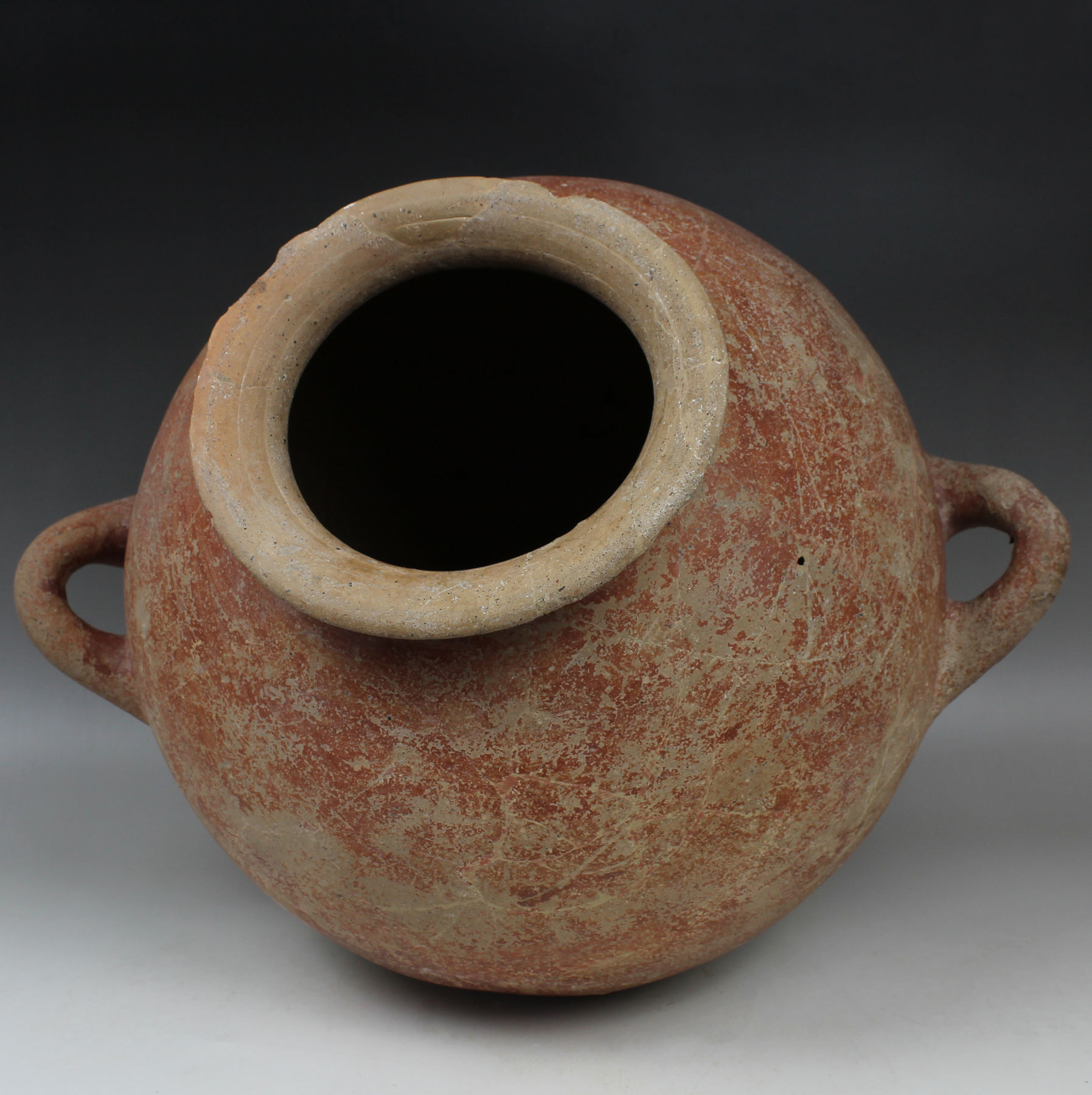
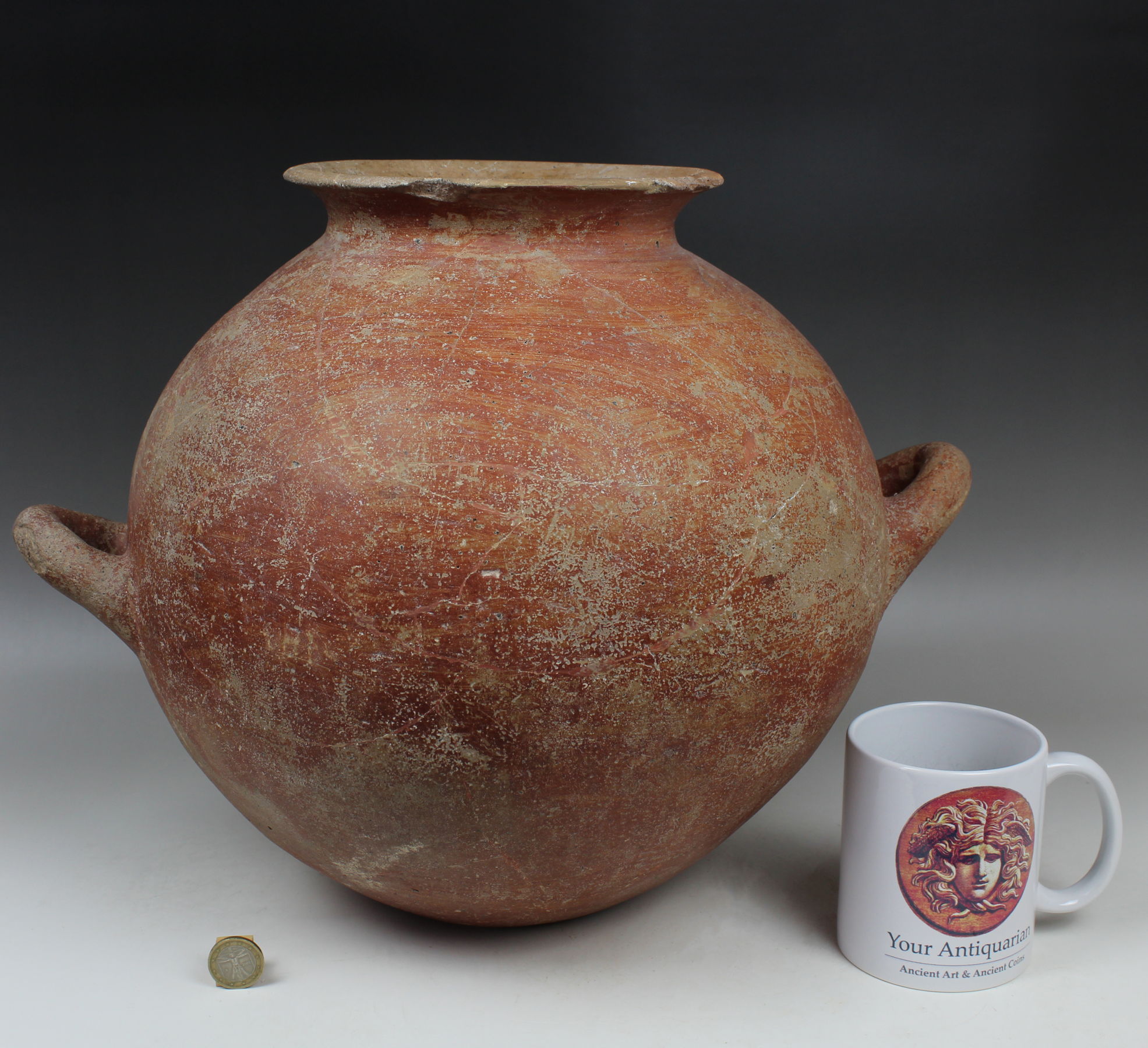
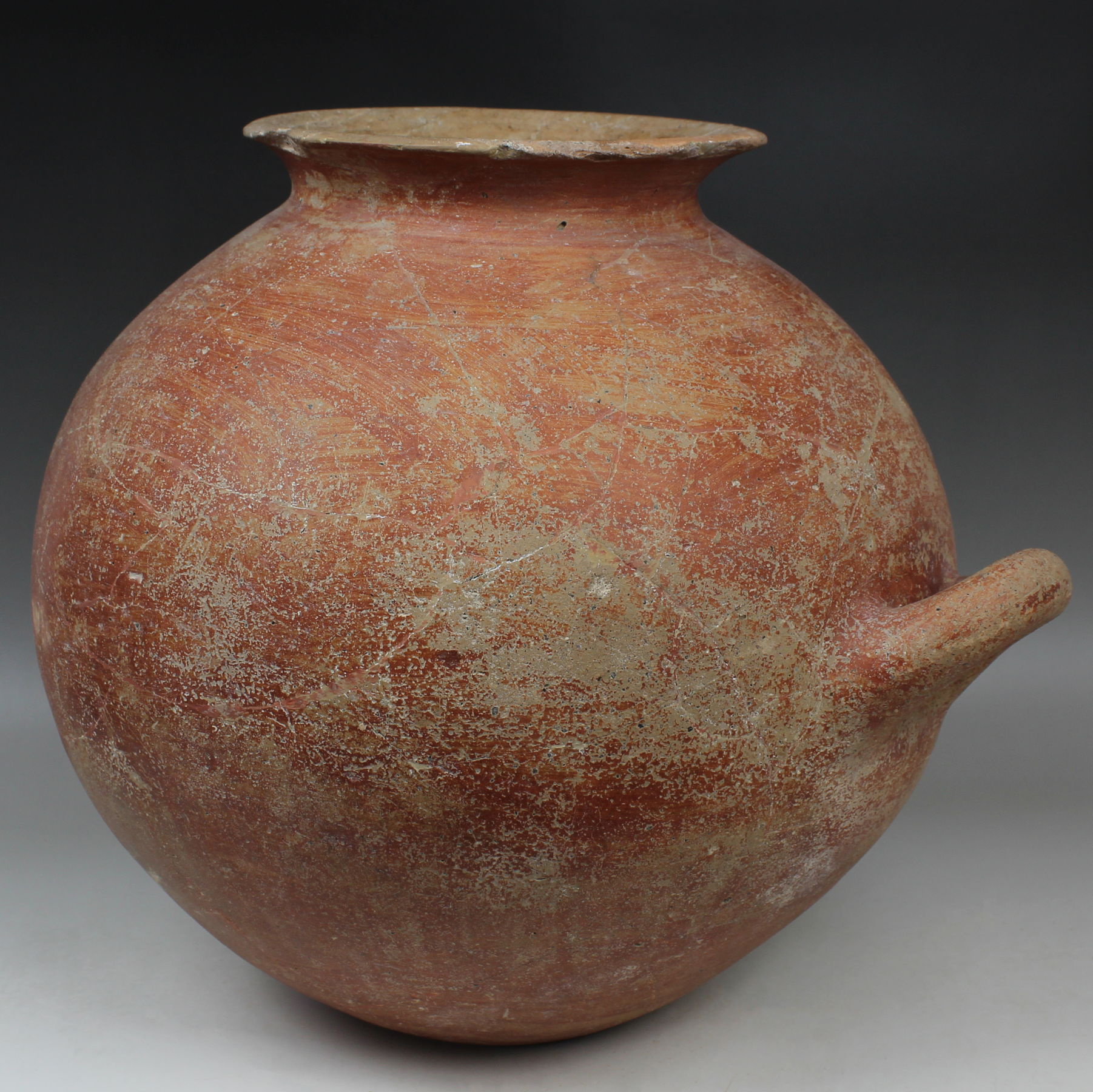
| ITEM | Stamnos |
| MATERIAL | Pottery, Impasto |
| CULTURE | Etruscan |
| PERIOD | 7th Century B.C |
| DIMENSIONS | 325 mm x 390 mm x 330 mm |
| CONDITION | Good condition, repaired from their original fragments |
| PROVENANCE | Ex German private collection, K.F., from and old family estate, acquired before 1980s |
The Etruscan stamnos is a wide-mouthed storage jar, typically featuring a low foot and two horizontal handles placed on its shoulder, near the widest diameter of the vessel’s body. Although the shape originated in Greece, the stamnos achieved particular popularity in Etruria, both in ceramic and bronze forms, suggesting it was produced to suit Etruscan taste. The vessel served multiple functions for the Etruscans, notably as a wine-mixing container—used in feasting and the symposium—but it was also frequently adapted for funerary purposes, sometimes serving as a cinerary urn to hold the ashes of the deceased. Its significance is underscored by the high number of Attic Greek stamnoi found in Etruscan tombs, suggesting the shape was prized and sometimes even purchased specifically as a grave good.
Etruscan stamnoi display a range of decorative styles, reflecting the strong influence of Greek pottery, particularly the black-figure and red-figure techniques, alongside local Etruscan ceramic traditions. Earlier examples, like those made of the distinctive black, lustrous bucchero pottery (7th-5th century BCE), were often adorned with incised lines, molded designs, or abstract, geometric, and animal friezes. Later Etruscan stamnoi mirrored Greek vase painting, utilizing the black-figure or the unique local “pseudo-red-figure” technique where figures were painted on a black slip. Renowned Etruscan workshops, such as the Group of Munich 883/Pittore dell’Ancile and the Micali Painter (active in Vulci), produced figured stamnoi often featuring scenes related to Etruscan mythology, the underworld, or the Dionysiac cult.
The subjects and style of decoration on these vessels often reveal their funerary or cultic context. While scenes from Greek mythology were common due to cultural exchange, Etruscan painters frequently adapted the iconography to local beliefs, such as the depiction of winged figures like the underworld demon Charun, alluding to the journey between the realms of life and death. During the later red-figure period (4th century BCE), the mythological scenes became less prominent, giving way to simpler, more ornamental designs, often consisting of palmette and floral motifs covering the vase body. The evolution of the Etruscan stamnos—from early bucchero examples to later painted wares—demonstrates the dynamic way Etruscan artisans absorbed, adapted, and ultimately personalized Mediterranean artistic trends.