
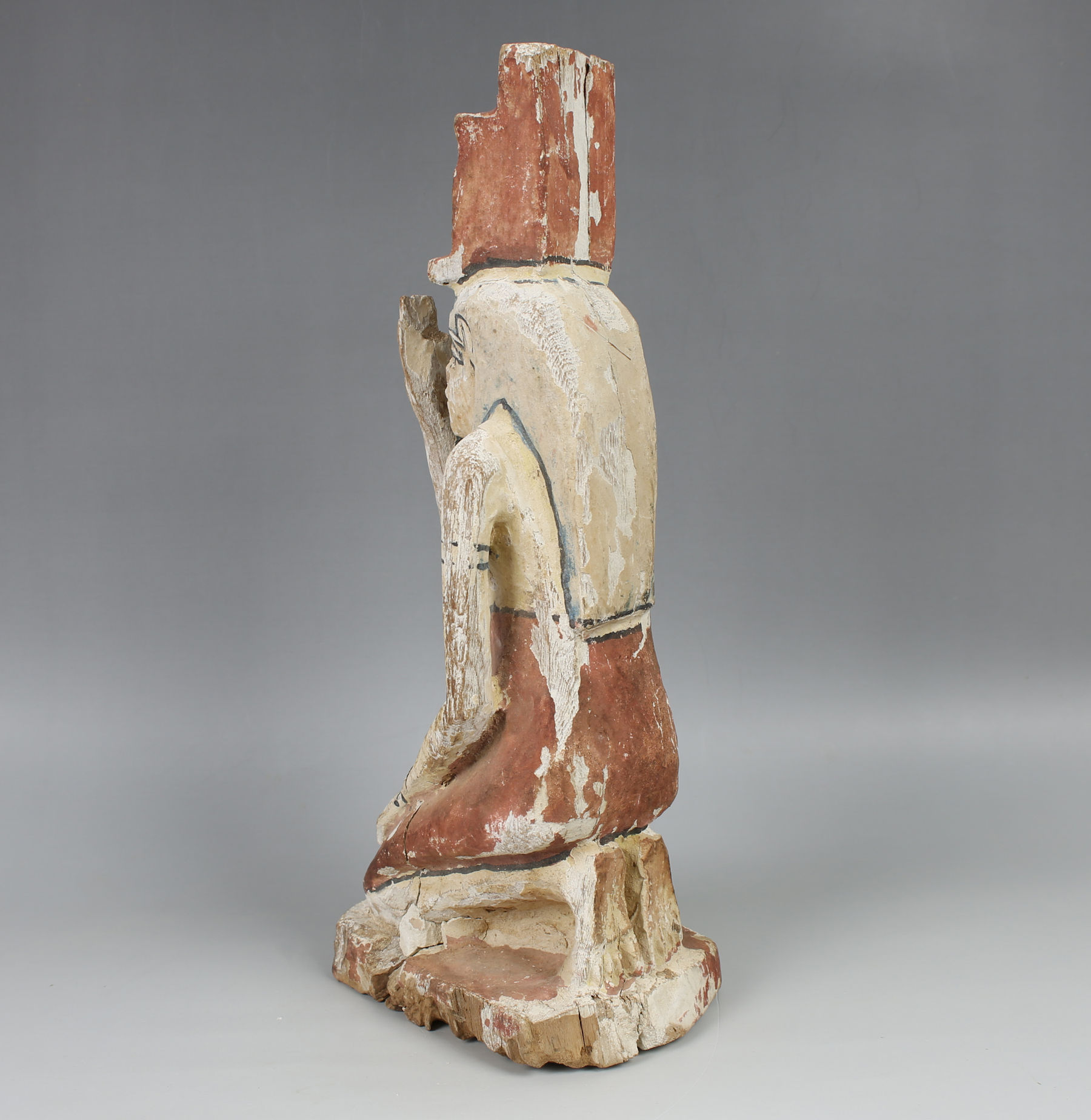
Description
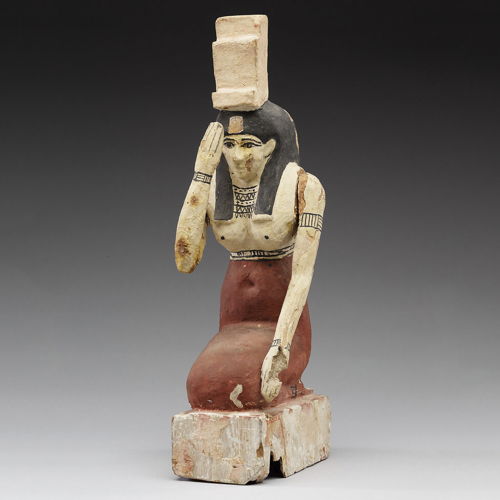
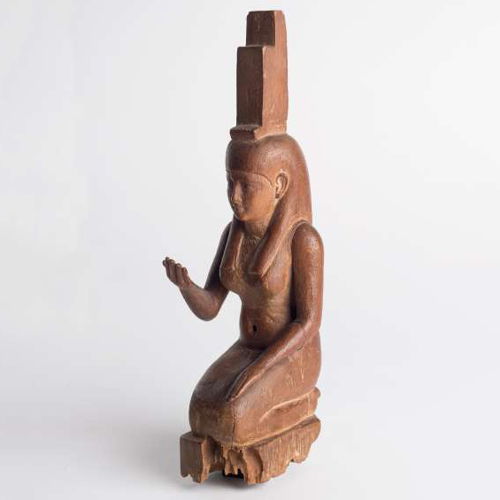
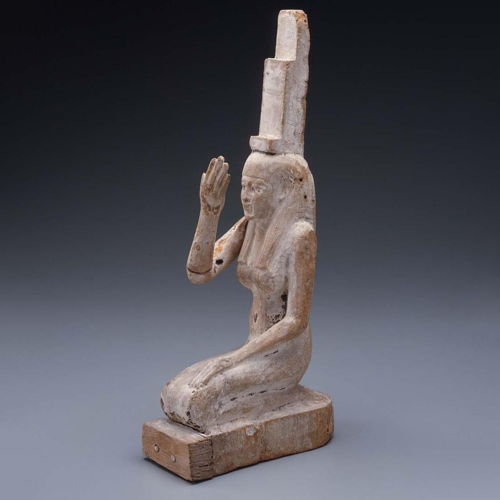
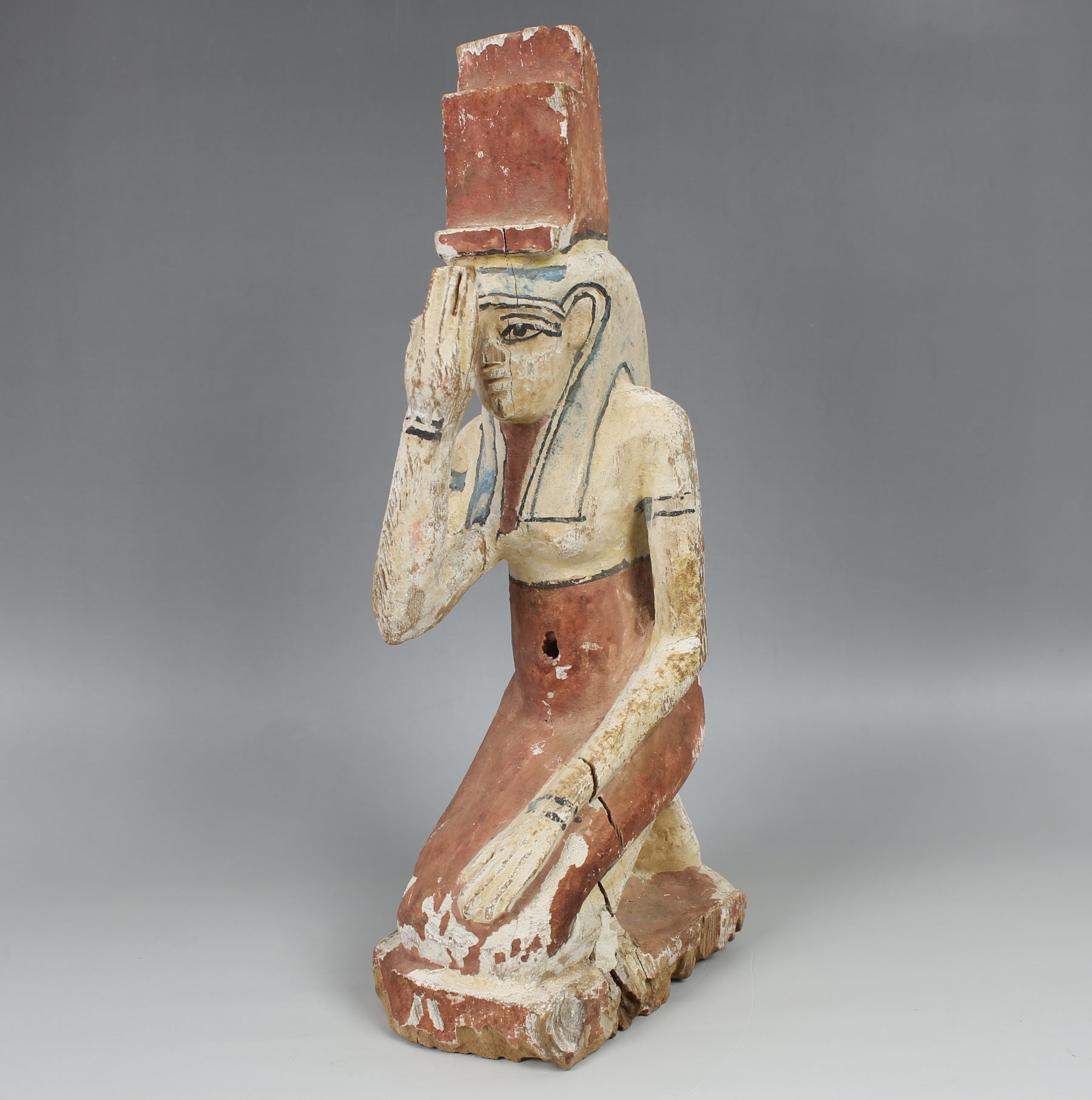
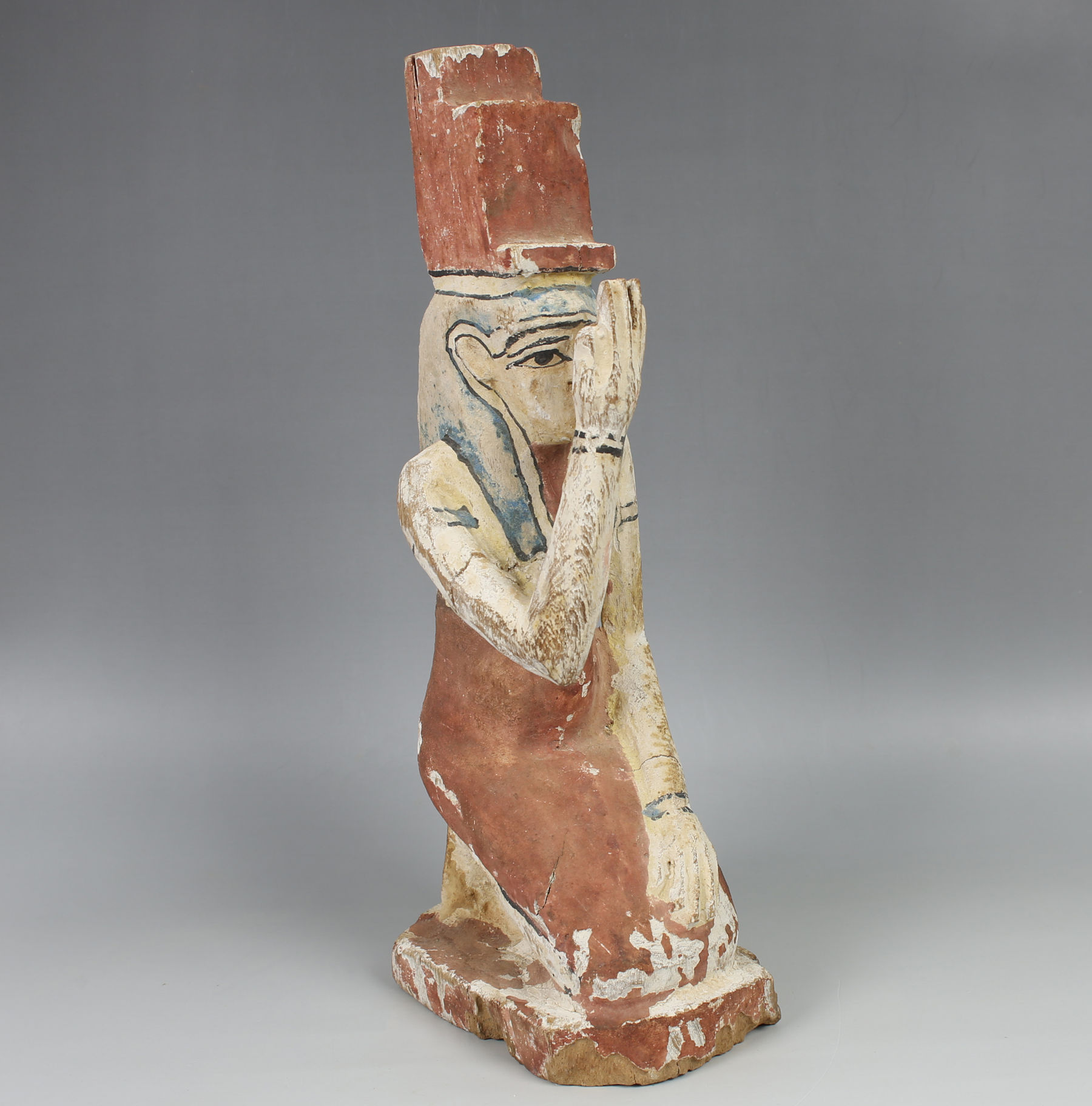
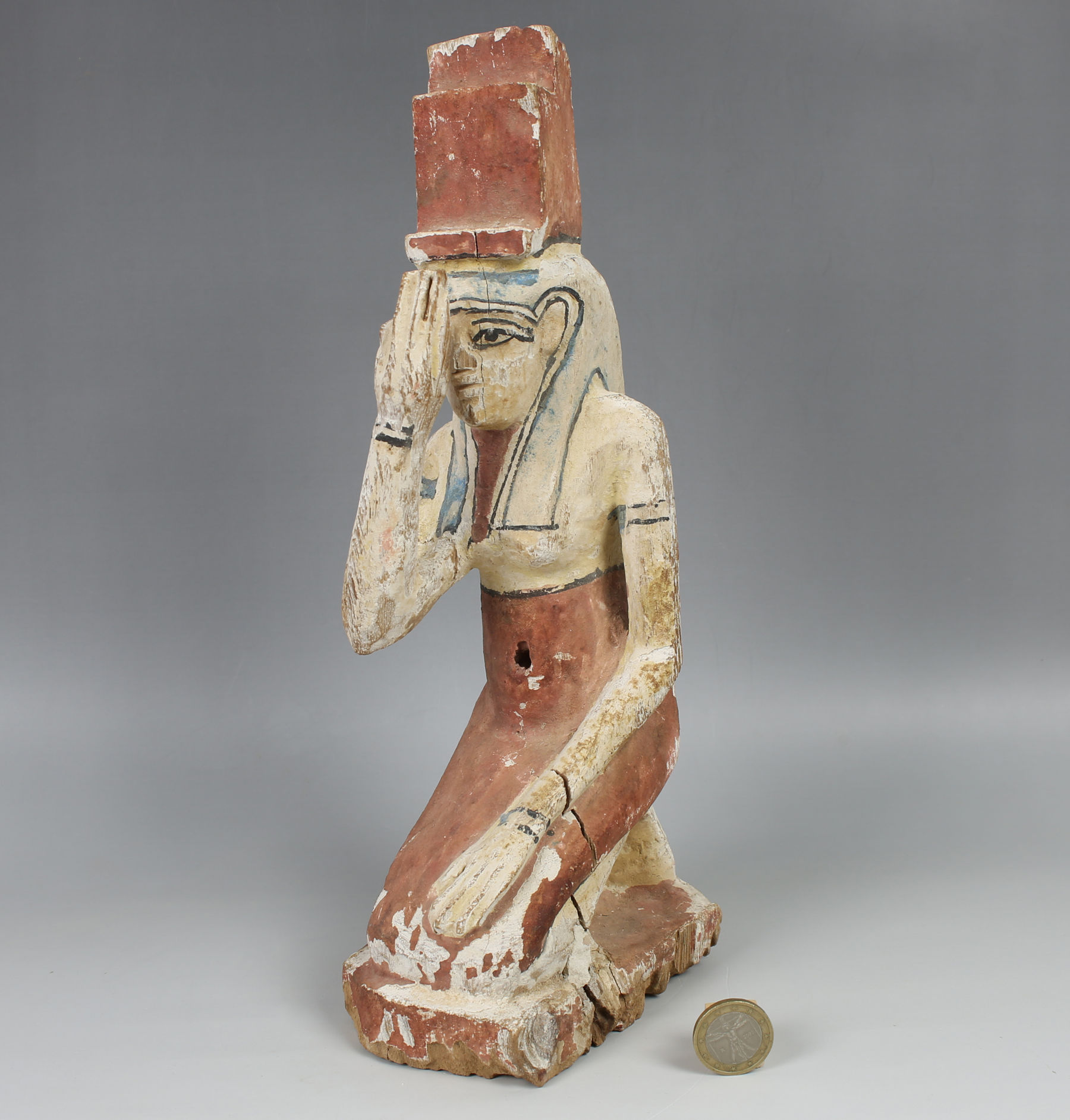
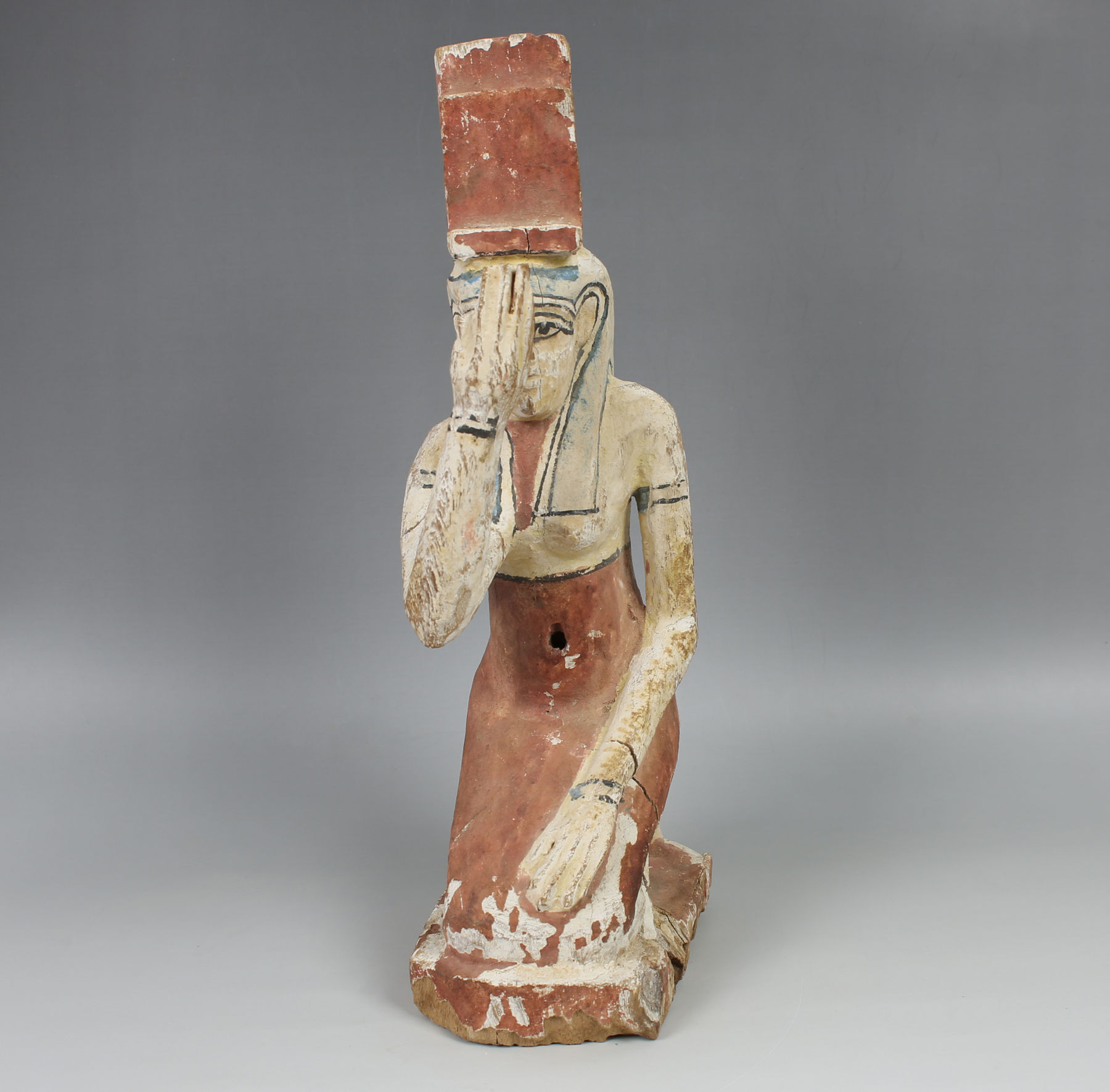
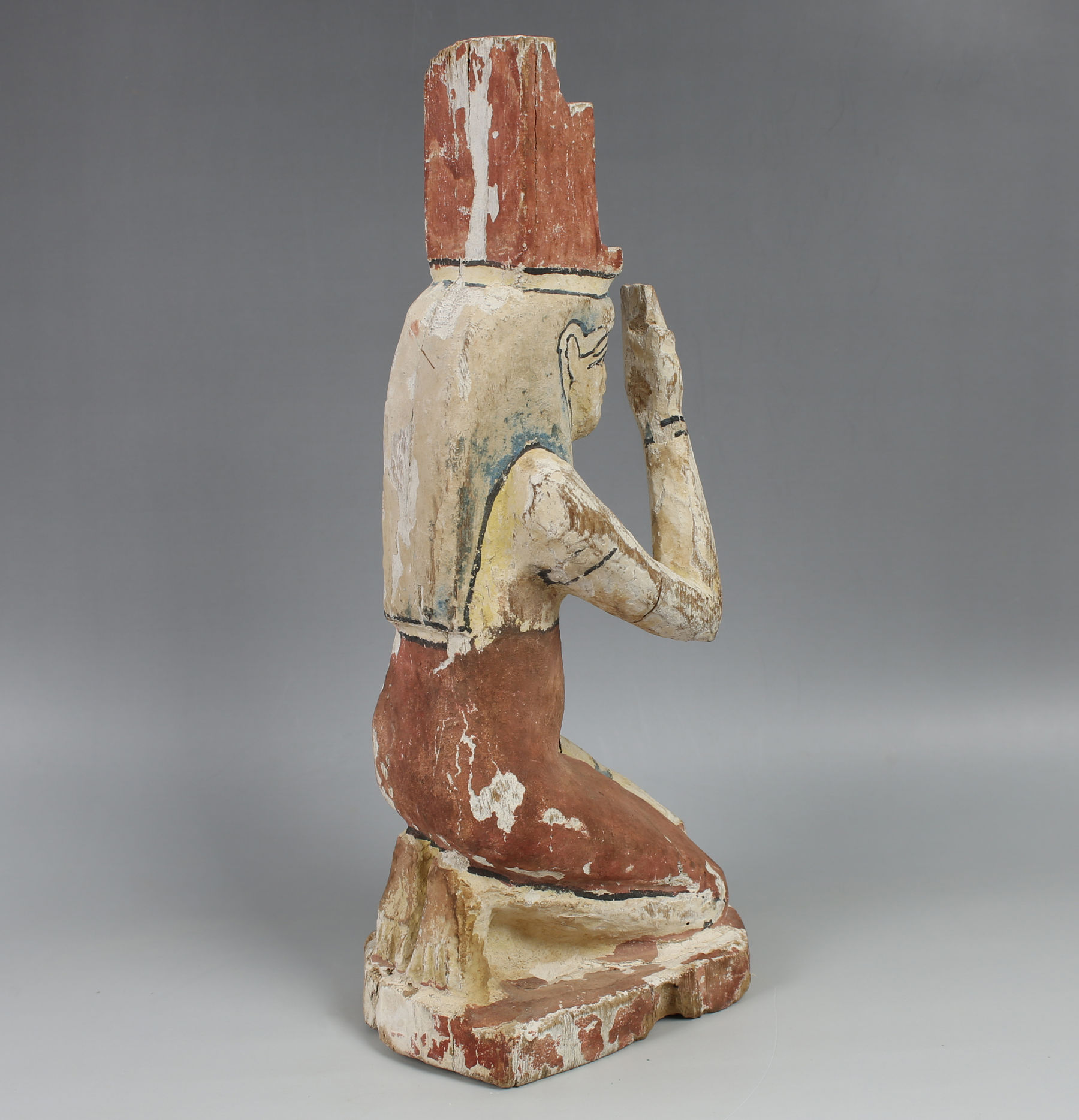
| ITEM | Statuette of mourning Isis |
| MATERIAL | Wood and gesso |
| CULTURE | Egyptian, Ptolemaic period |
| PERIOD | 4th – 1st Century B.C |
| DIMENSIONS | 305 mm x 90 mm x 115 mm |
| CONDITION | Good condition |
| PROVENANCE | Ex Dutch private collection, J.D., acquired in 2020’s from Dutch antiquities dealer. |
During the Ptolemaic Period (305–30 BCE), Isis was the most prominent goddess of the Egyptian pantheon, worshipped both as a mother and as a mourner. In her role as Mourning Isis, she was the sister and wife of Osiris, who grieved his murder and magically restored him to life. This act made her the archetype of divine mourning and the model for human funerary lamentation. In the Ptolemaic period, when temple rituals became increasingly elaborate, Isis’ role as mourner was celebrated in public festivals such as the Khoiak festival, which reenacted the death and resurrection of Osiris. Her lament was not simply grief, but a performative and magical act that brought about rebirth for both Osiris and the deceased.
Visually, Mourning Isis was typically depicted standing or kneeling at the foot of the bier, mirroring her sister Nephthys at the head. She could be shown with arms raised in a gesture of wailing or beating her chest, sometimes with tears indicated by fine incised lines on temple reliefs. Ptolemaic artists often emphasized her femininity and grace, aligning her image with Hellenistic aesthetics while preserving her Egyptian attributes, such as the throne hieroglyph (aset) on her head. In paired scenes, the two sisters flanked the corpse of Osiris or the deceased, creating a protective enclosure with their lamentations.
Ritually, Isis’ voice was considered the most powerful element of the mourning rite. The Lamentations of Isis and Nephthys were performed by priestesses who embodied the two goddesses during funerary rites and temple festivals. These ritual texts, which survived and were recopied in the Ptolemaic era, describe Isis crying out to Osiris, urging him to rise and live again. Her lament was not only an expression of sorrow but a creative act of magic, restoring cosmic balance. In this period, Isis also absorbed attributes of Greek goddesses such as Demeter, which strengthened her association with seasonal cycles, fertility, and resurrection.
The figure of Mourning Isis in the Ptolemaic period thus symbolized eternal life and divine compassion. Her cult, already popular, became global as Ptolemaic rulers promoted her worship beyond Egypt, into the Mediterranean world. In the funerary context, her presence assured the deceased that they would share in the resurrection of Osiris, just as Isis had ensured for her husband. This enduring image of Isis weeping at the foot of the coffin remained one of the most comforting and powerful symbols of Egyptian religion until the end of the pharaonic era — and even into Roman times, when her cult spread to Rome itself.