
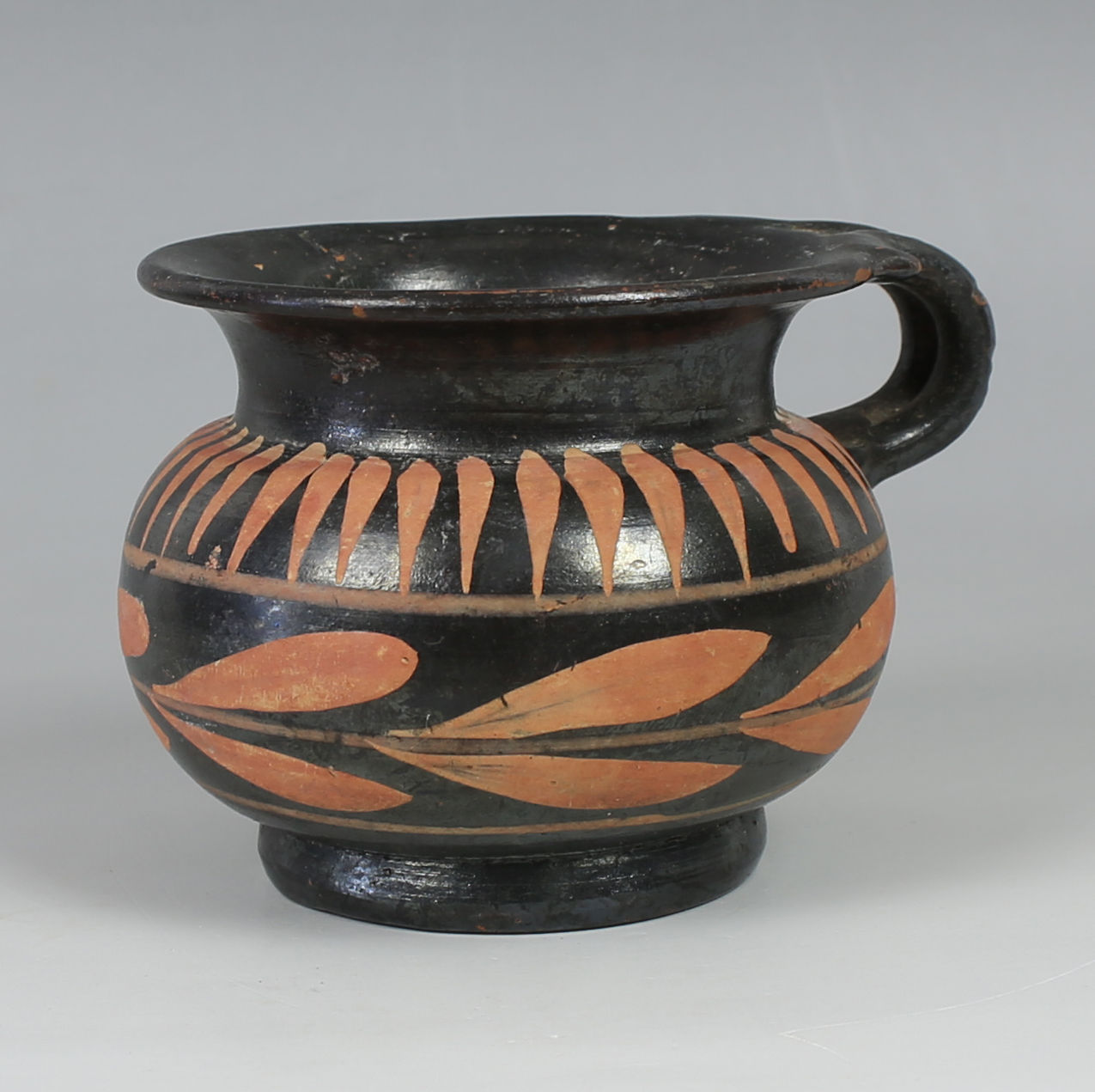
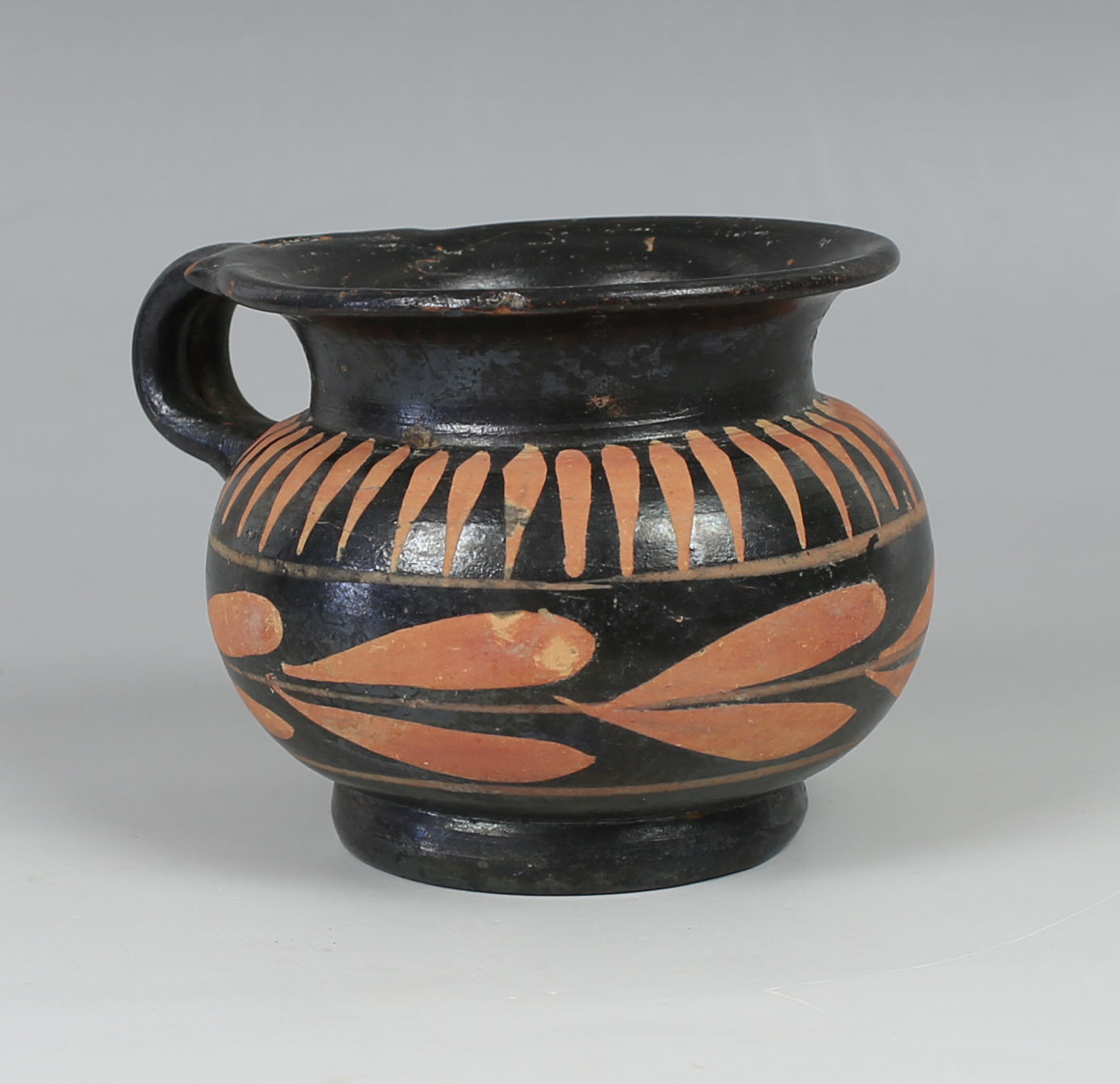
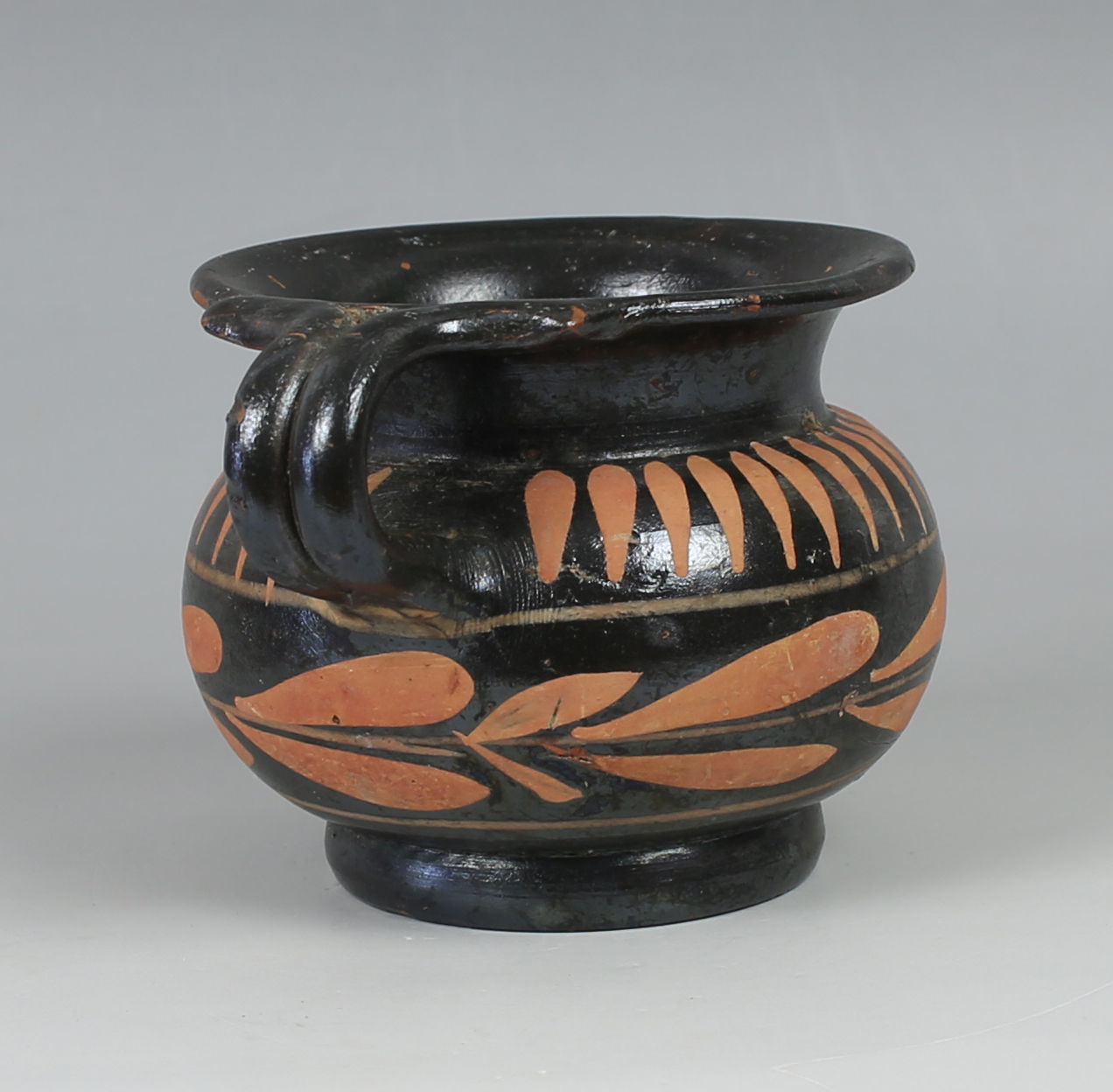
Description
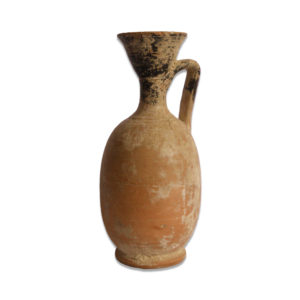
| ITEM | Miniature olpe |
| MATERIAL | Pottery, Xenon ware |
| CULTURE | Greek, Apulian |
| PERIOD | 4th Century B.C |
| DIMENSIONS | 65 mm x 92 mm |
| CONDITION | Good condition |
| PROVENANCE | Ex Dutch private collection, acquired between 1970 – 2000 |
The olpe is a type of Greek jug characterized by its round or slightly elongated body, a continuous profile (without a sharp angle between neck and body), and a single vertical handle rising above the rim. It was primarily used for pouring wine or water, often at symposia, and served a similar function to the oinochoe but with a more cylindrical or smooth, flowing shape. In the 4th century BCE, a distinctive style known as Xenon ware appeared in South Italian workshops, especially in Apulia. This ware is named after a vase in the Berlin Antikensammlung bearing the inscription “XENON” and is recognized by its pale clay and delicate black-glaze decoration.
Xenon ware olpai were typically decorated with simple yet elegant motifs in added white, yellow, or red over the black-glaze surface. Common decorations included wreaths, laurel branches, rosettes, or geometric borders, often carefully placed around the shoulder or neck of the vessel. Unlike the highly narrative red-figure pottery, Xenon ware was more restrained, focusing on refinement and balance rather than complex mythological scenes. The result was a vessel that emphasized elegance and function, suitable for both everyday use and as a fine banquet piece for the elite.