
Description
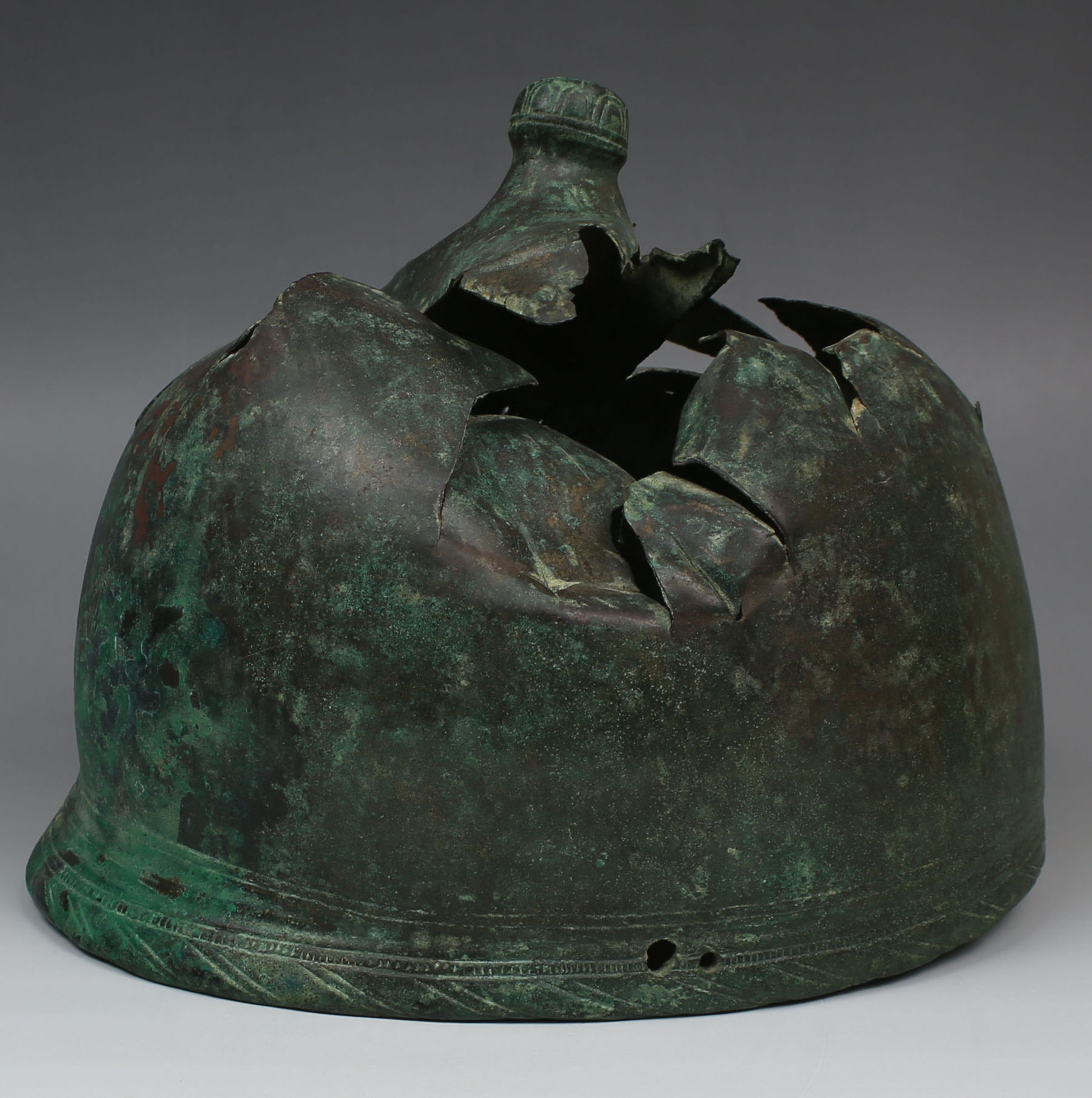
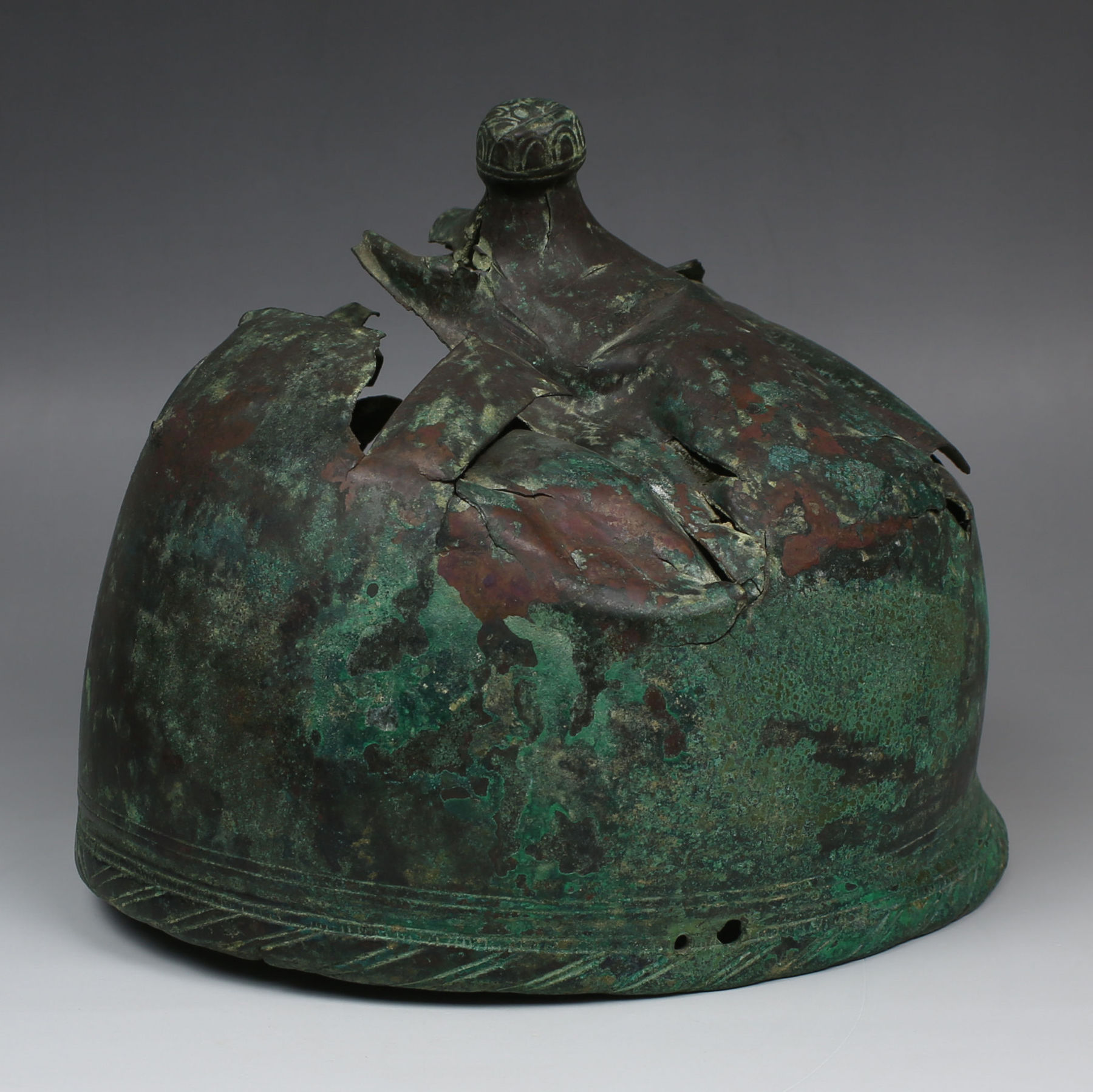
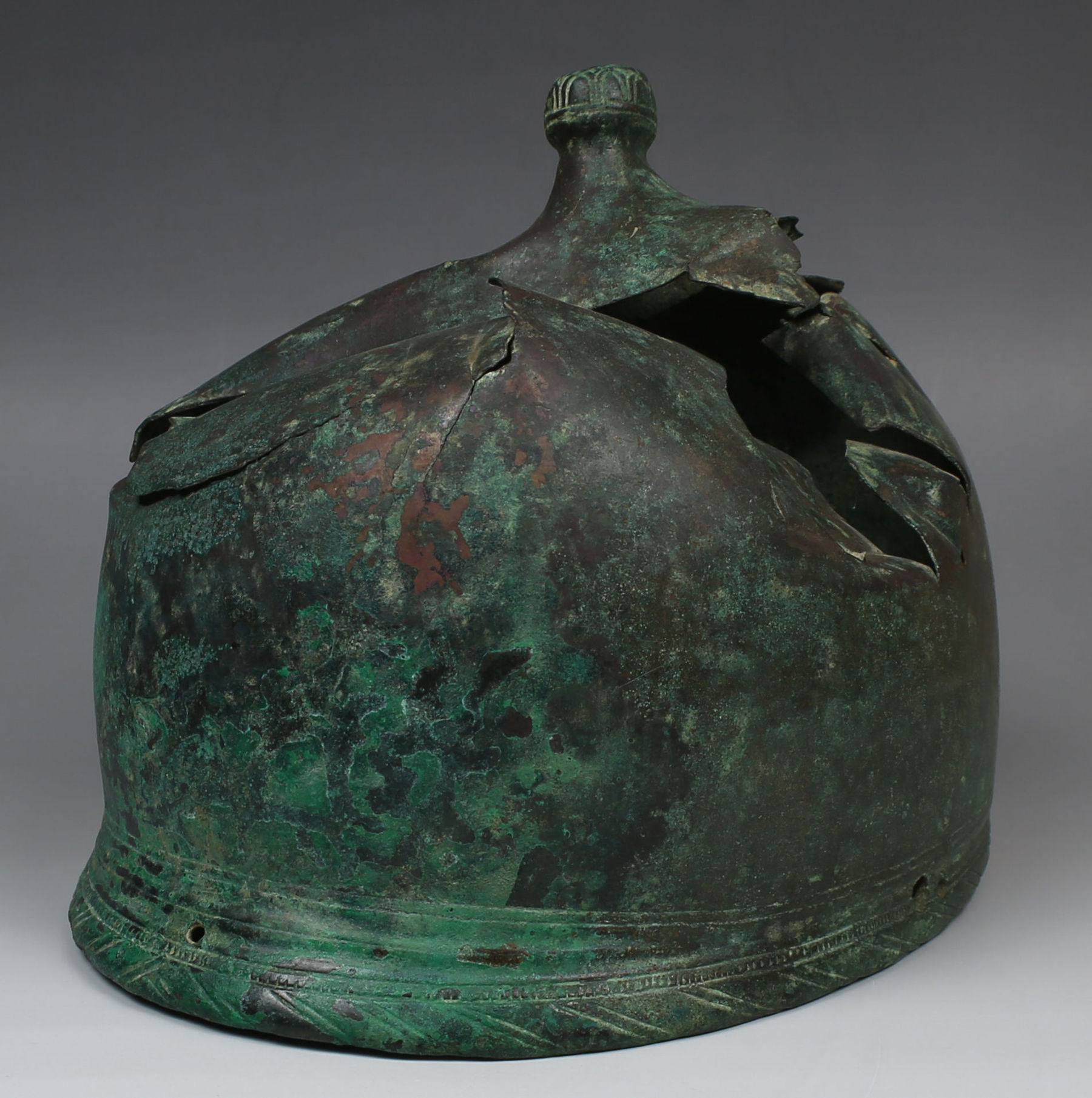
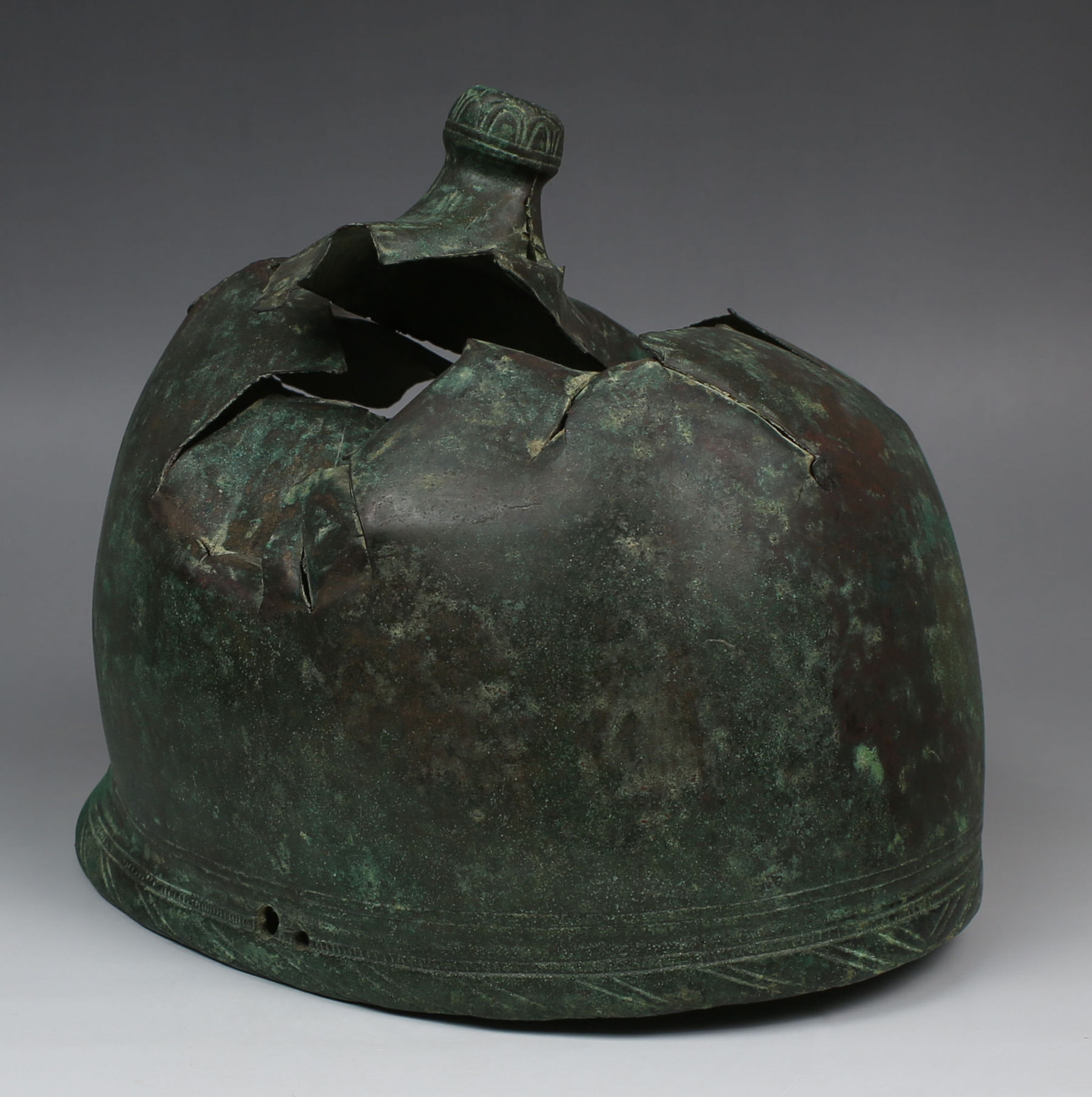
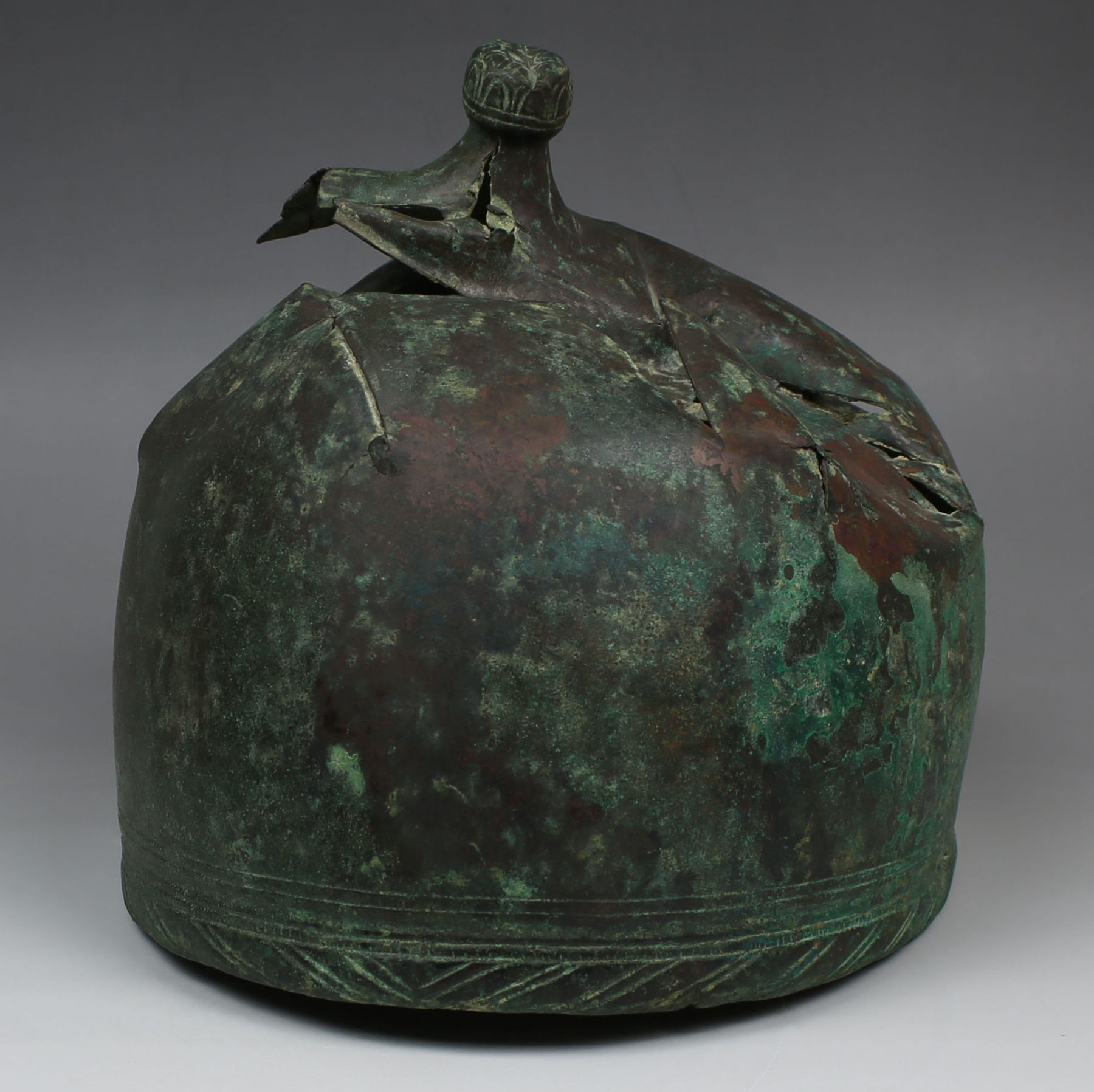
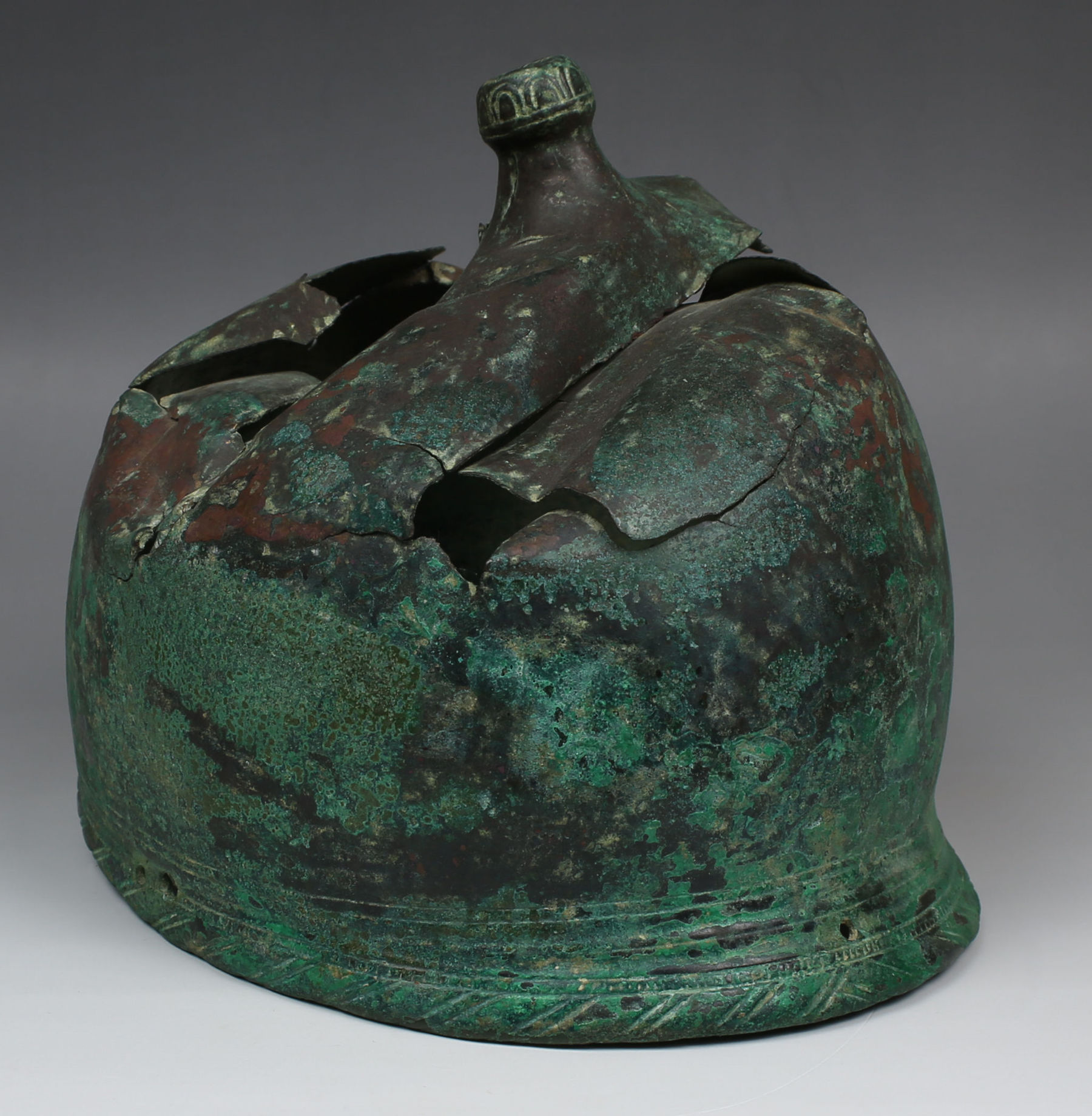
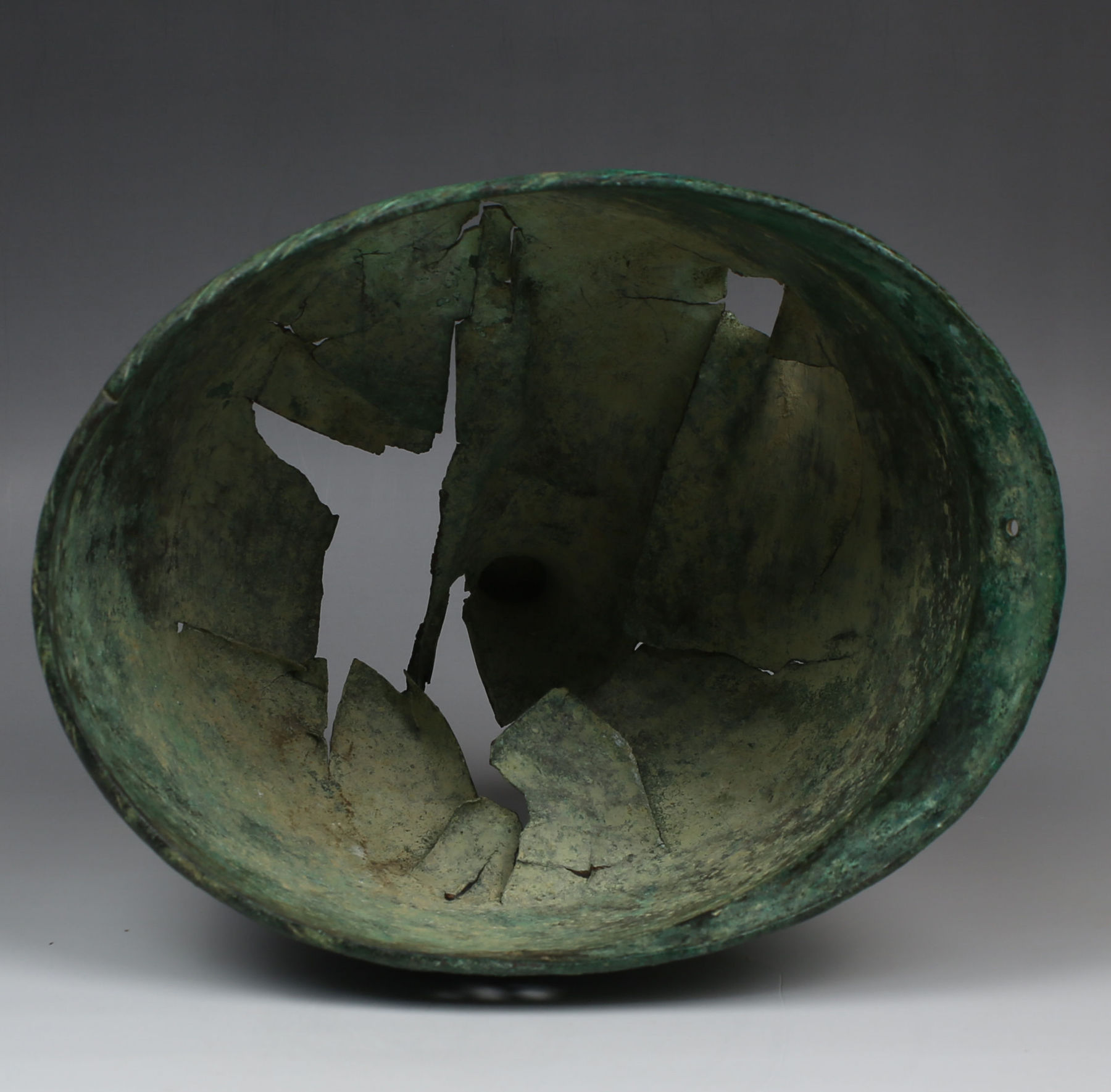
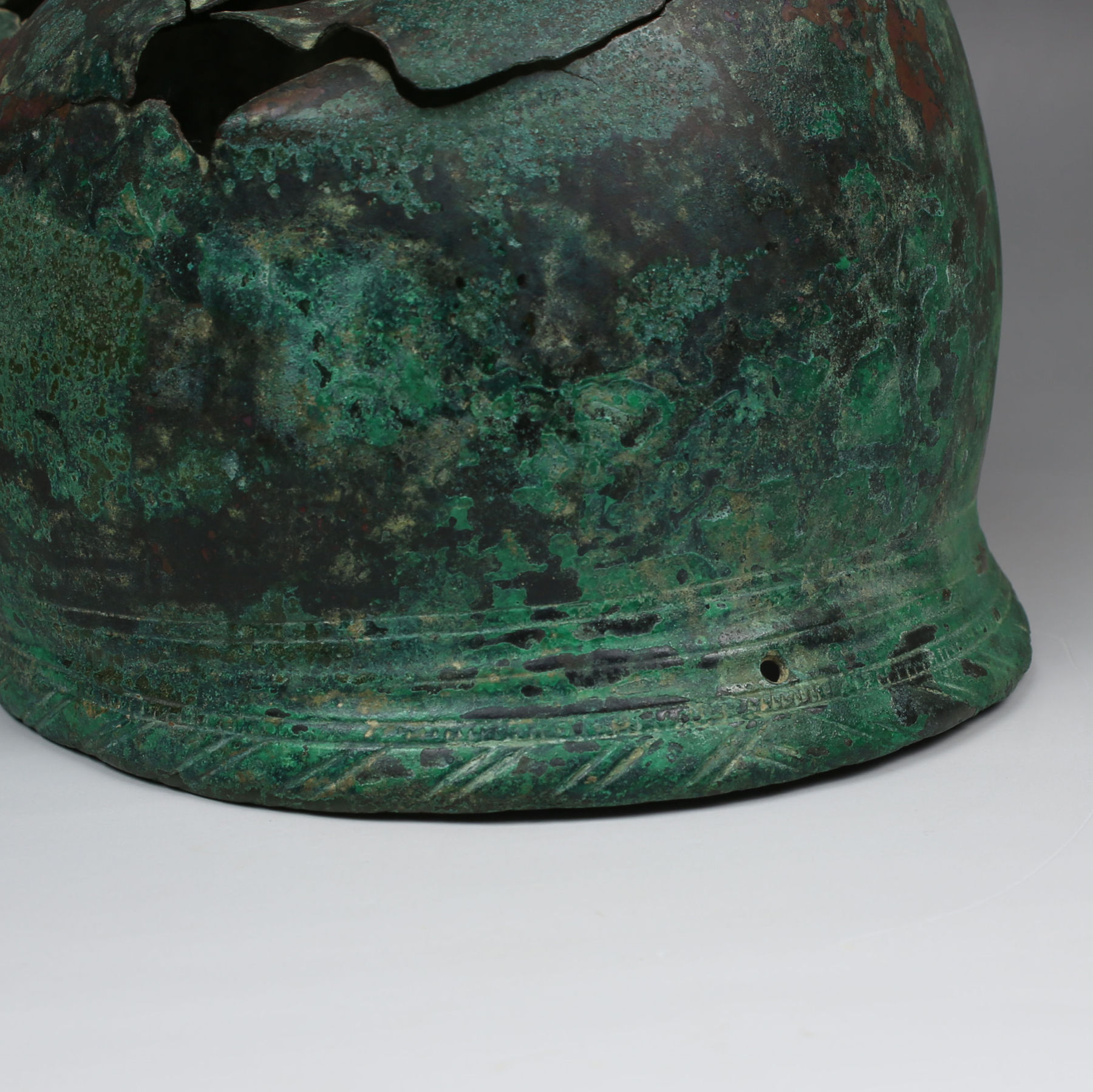
| ITEM | Montefortino helmet, Group 1 – Type Robinson B, Coarelli D |
| MATERIAL | Bronze |
| CULTURE | Roman |
| PERIOD | 3rd – 2nd Century B.C |
| DIMENSIONS | 170 mm x 215 mm x 167 mm |
| CONDITION | Good condition |
| PROVENANCE | Ex German private collection, Dr. Hufnagel, Aschaffenburg. Expertised by Angelo de Robertis in 1980, Frankfurt am Main |
| PARALLEL | SYMONENKO, O., Sarmatian age helmets from Eastern Europe, p.291, Fig. 3 & QUESADA SANZ, F., Journal of Roman Military Equipment Studies 8 (1997), Montefortino-type and related helmets in the Iberian Peninsula, p. 158, Fig. 7 Group C |
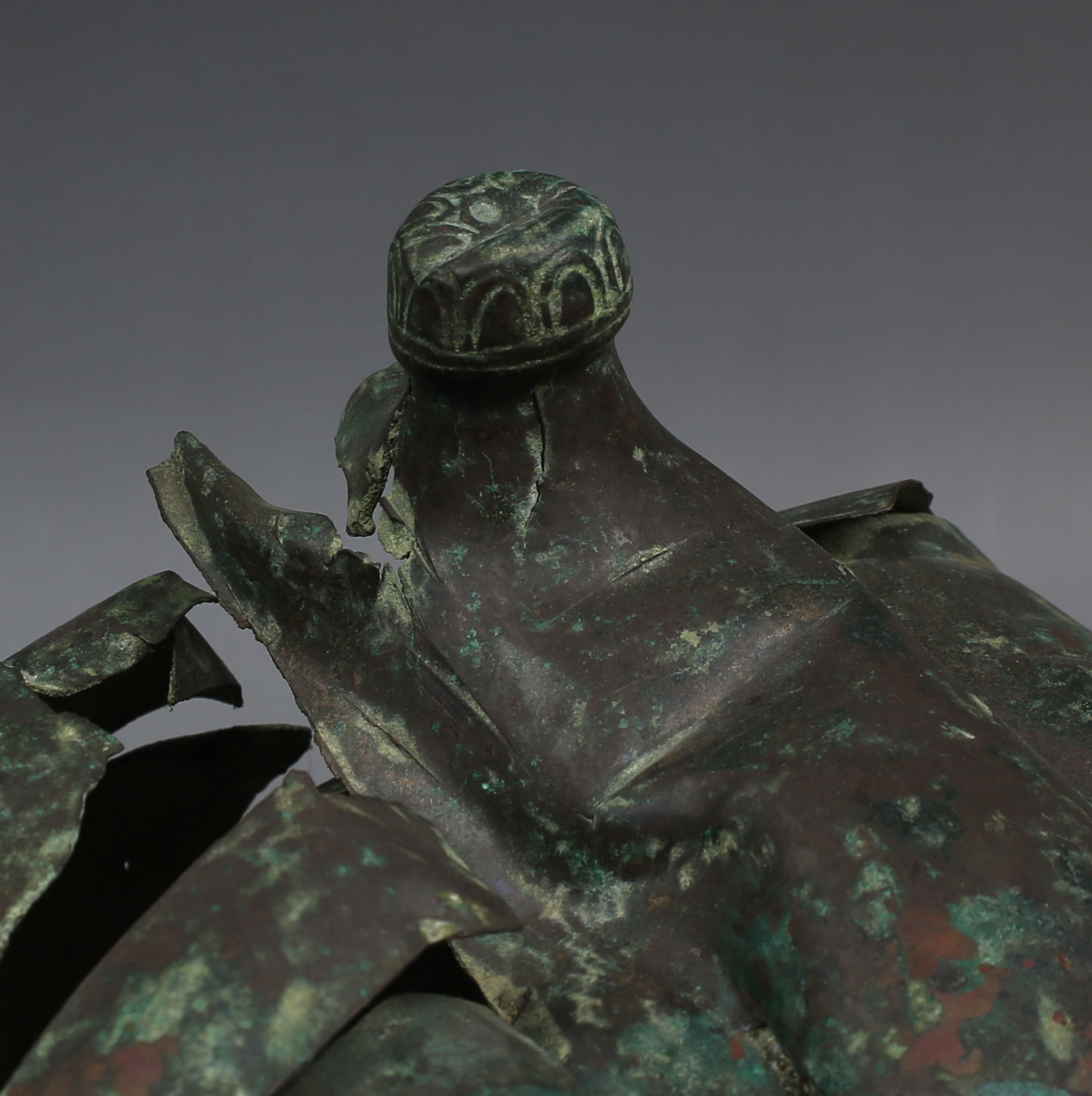
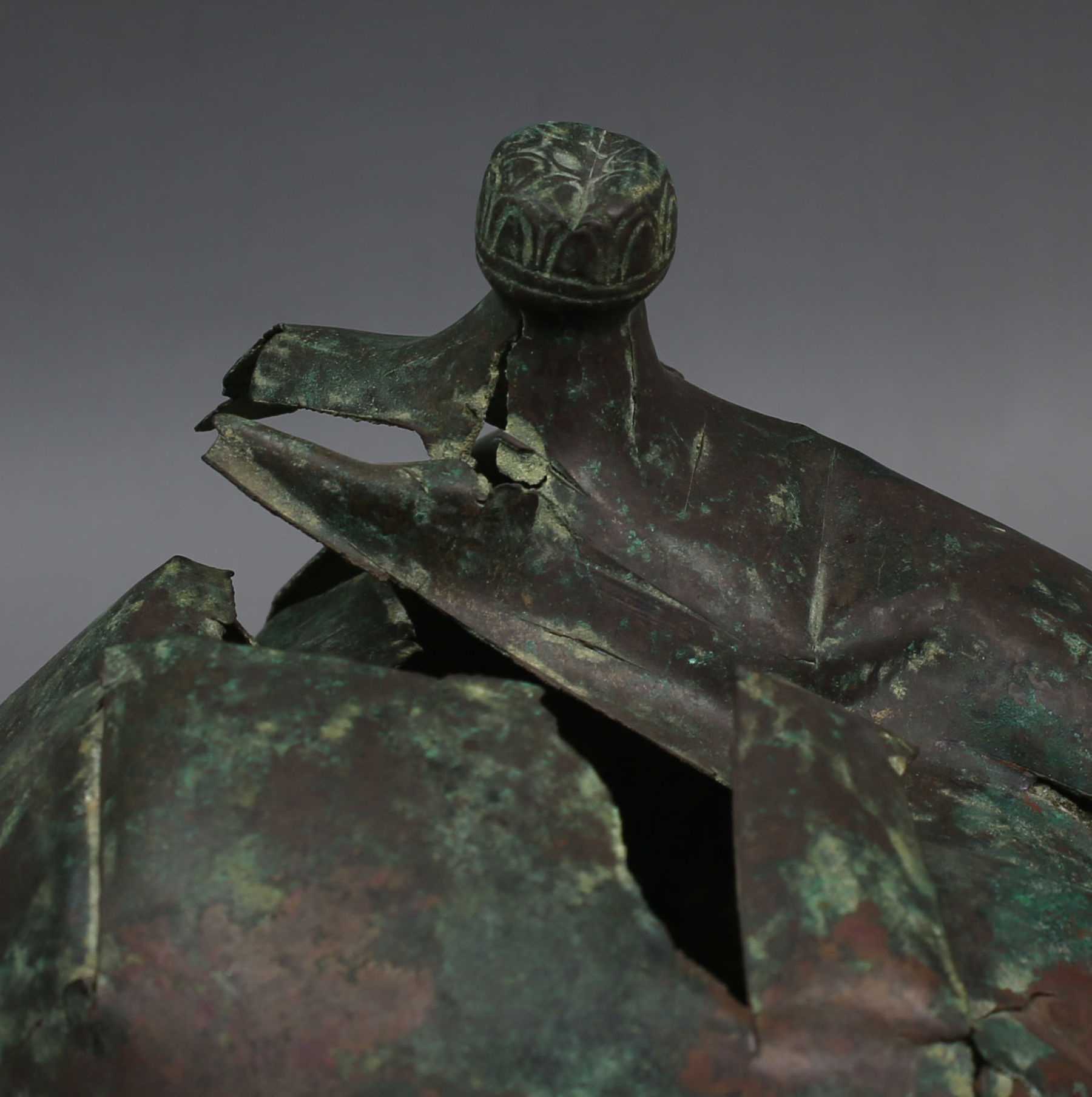
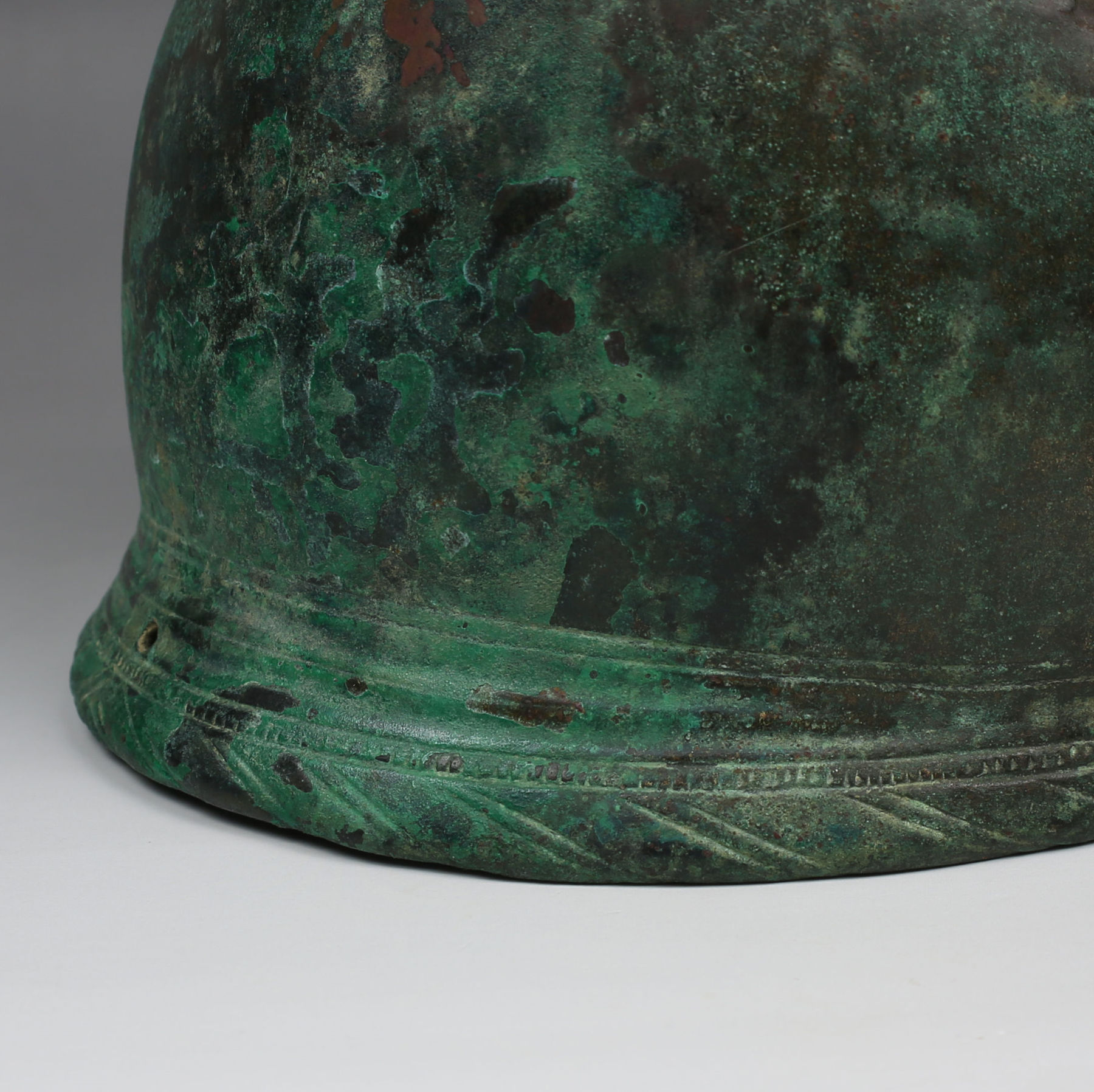
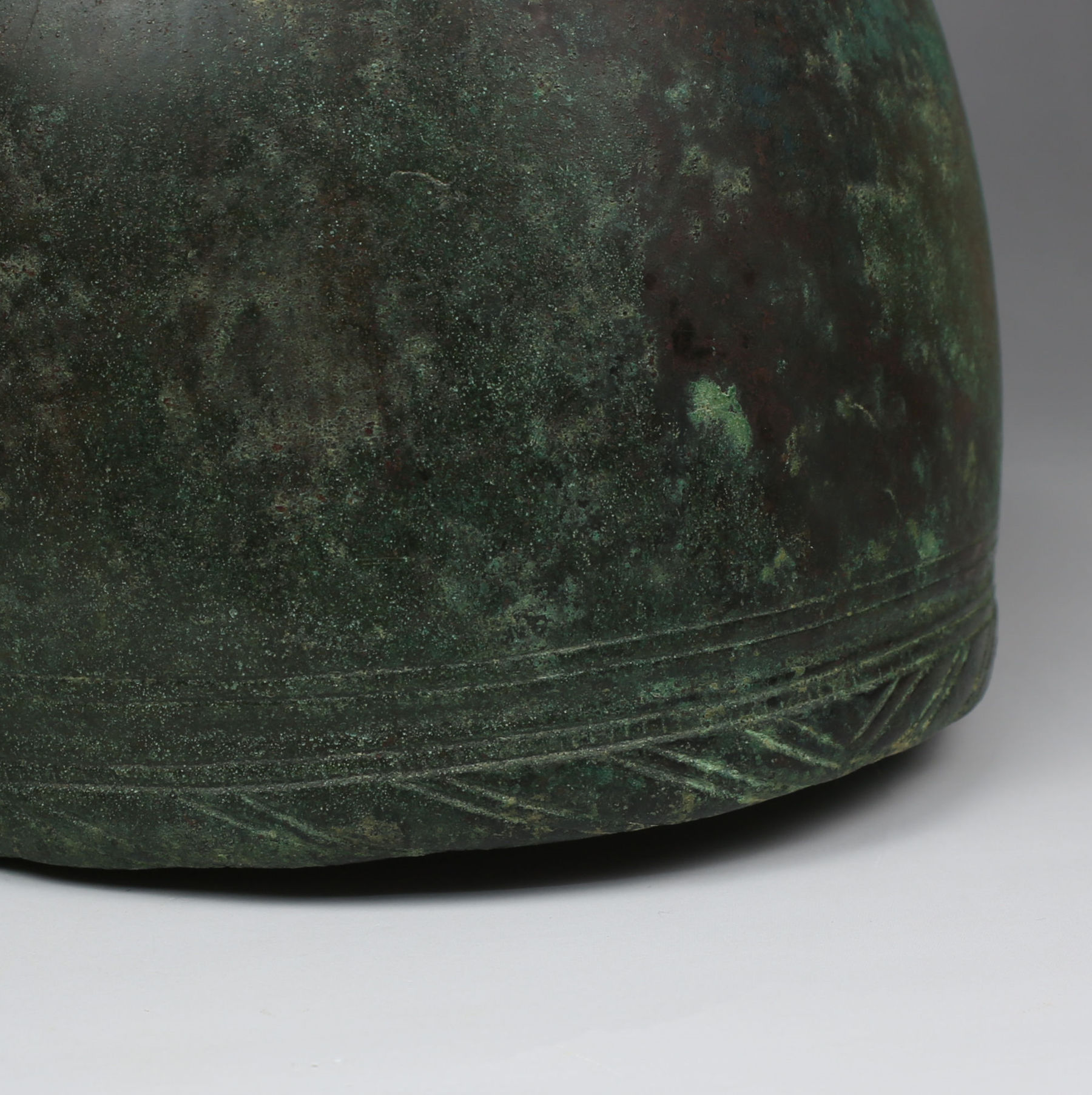
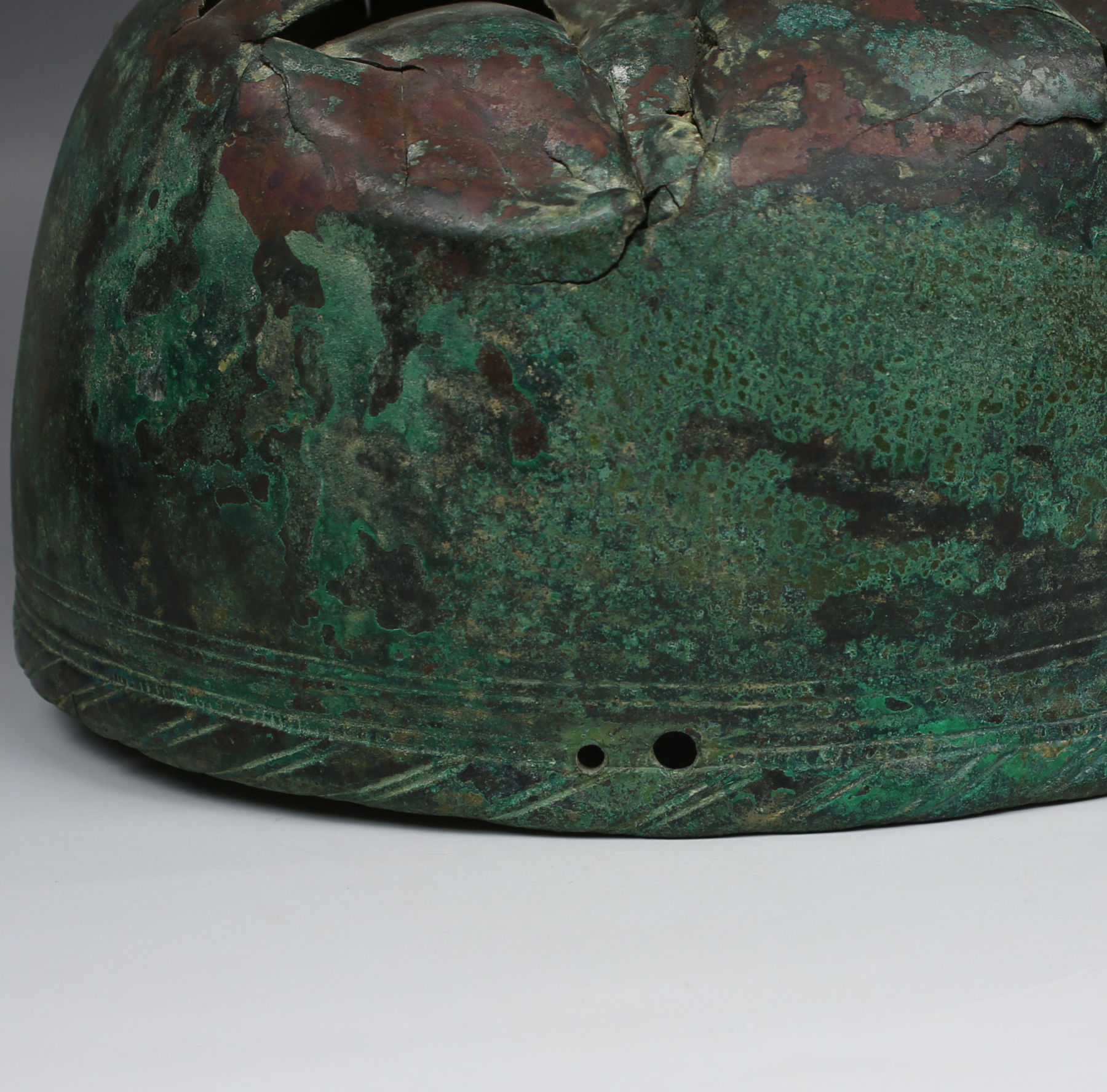
The Montefortino helmet was a foundational piece of Roman military equipment, serving as the standard head protection for the Roman army throughout the mid-to-late Roman Republic, from approximately 300 BC into the 1st century AD. Its design originated with the Celts, and the name is derived from a burial site in Italy where an early example was found. The helmet is characteristically a single-piece casting made primarily of bronze (or brass, with later, simpler versions sometimes using iron). Key features include a conical or rounded bowl for impact deflection, a small, raised neck guard flaring out at the back, and a distinctive central knob at the apex used for attaching a plume, usually made of horsehair or feathers, to signify rank or unit. Early versions were often highly decorated with patterns like a “rope” motif around the rim or a “pinecone” design on the crest knob, reflecting the period when soldiers bought their own equipment.
The widespread adoption of the Montefortino by the Roman army was due to its simplicity, effectiveness, and suitability for mass production. As the Roman Republic expanded and its army grew into a vast, standing force, the need for cheap, standardized equipment became paramount. The Montefortino, despite its Celtic origins, became the first distinctly Roman helmet type to be mass-manufactured, a development critical to equipping the large numbers of levied citizen-soldiers. This led to a gradual simplification of the helmet’s design; later variants like the Buggenum sub-type were much plainer, more practical, and less decorated than their earlier Republican counterparts. The helmet was integral to the equipment of the legionaries who fought in the Punic Wars and the great campaigns of the late Republic.
Over time, the Montefortino helmet underwent an evolutionary process that ultimately led to its replacement by other types. As the Roman army transitioned to professional legions under the Empire, the Coolus helmet, also Celtic in origin but often made of laminated iron, was increasingly used alongside the Montefortino in the 1st century BC and 1st century AD. The ultimate successor was the Imperial Gallic and Imperial Italic series of helmets, which offered a much broader, more pronounced neck guard and reinforcing brow-ridge for superior protection against the new threats and fighting styles encountered on Rome’s frontiers. Despite the shift in standard issue, older Montefortino helmets were likely reused or adapted, sometimes even remaining in service with auxiliary units or non-frontline troops well into the Imperial period, demonstrating the enduring nature of this classic Roman design.