


Description
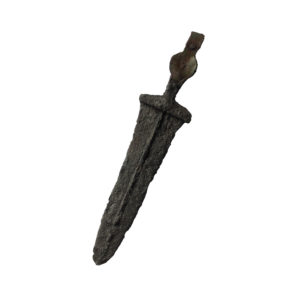
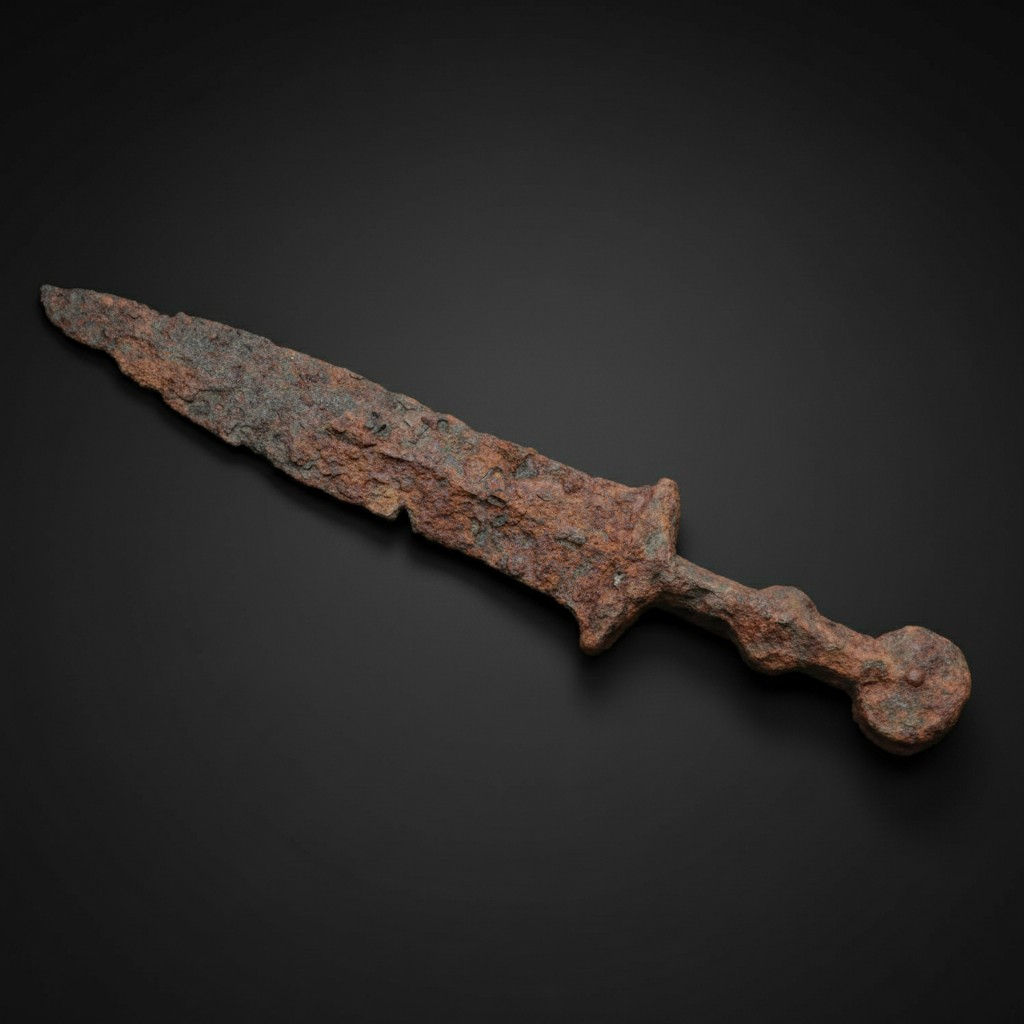
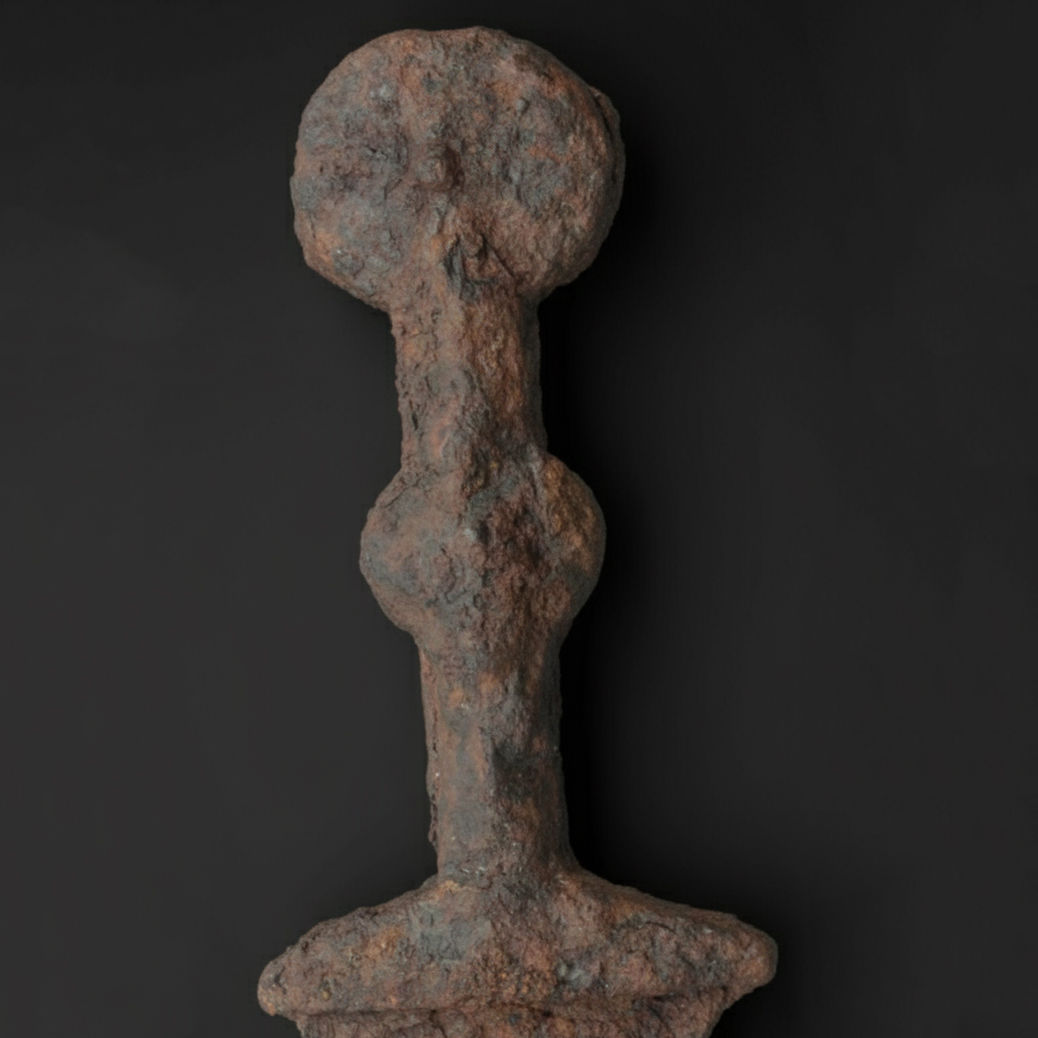
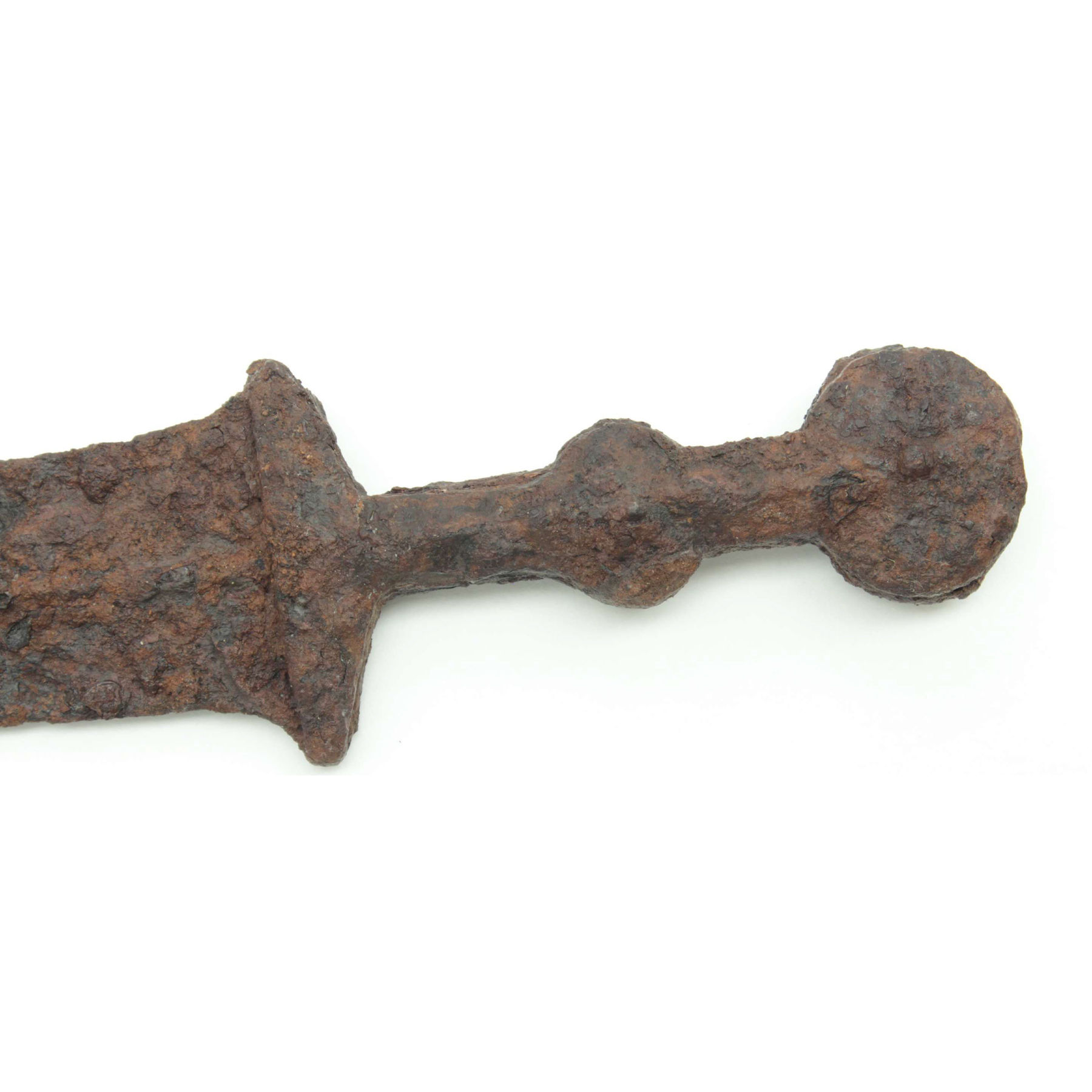
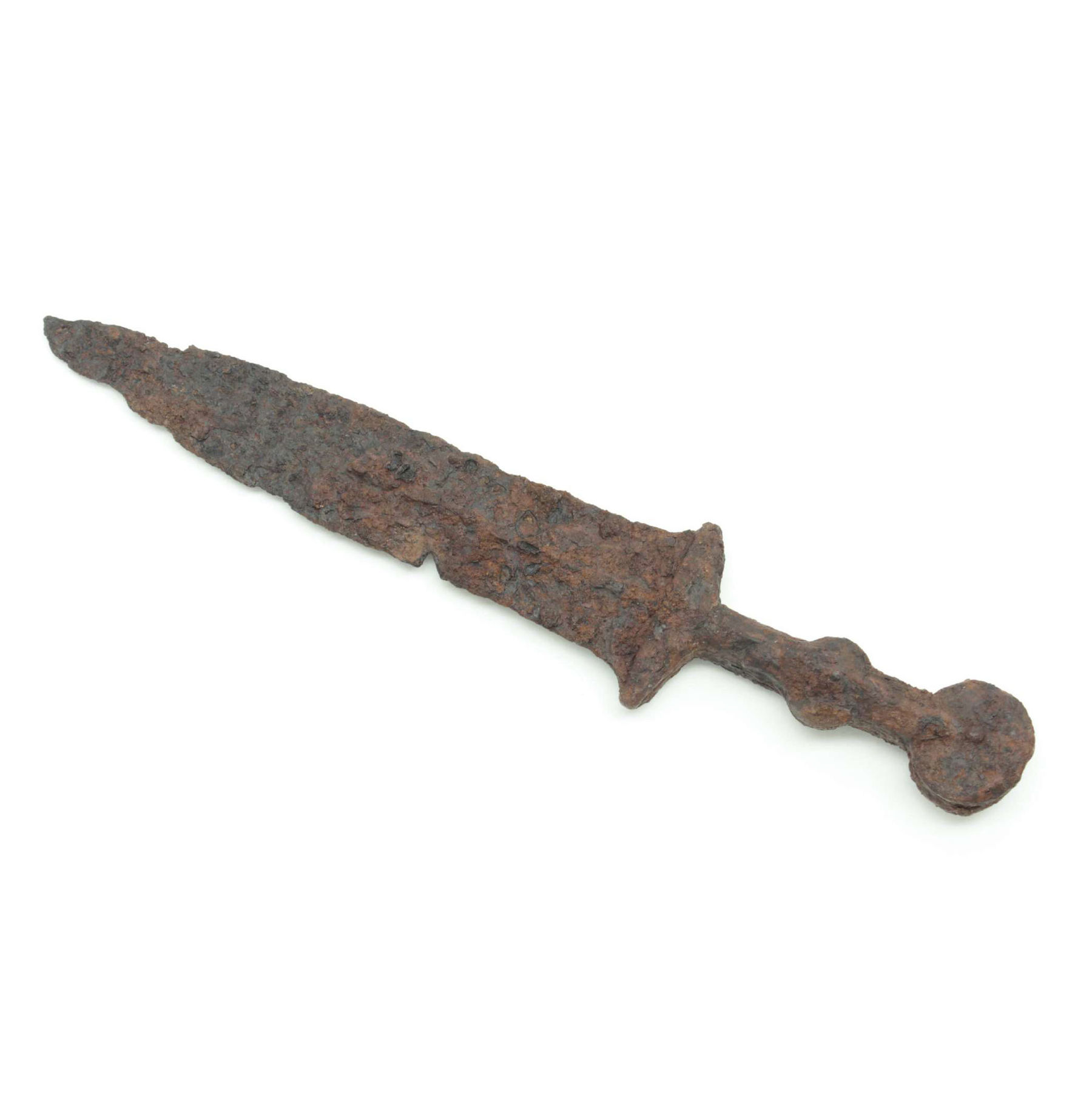
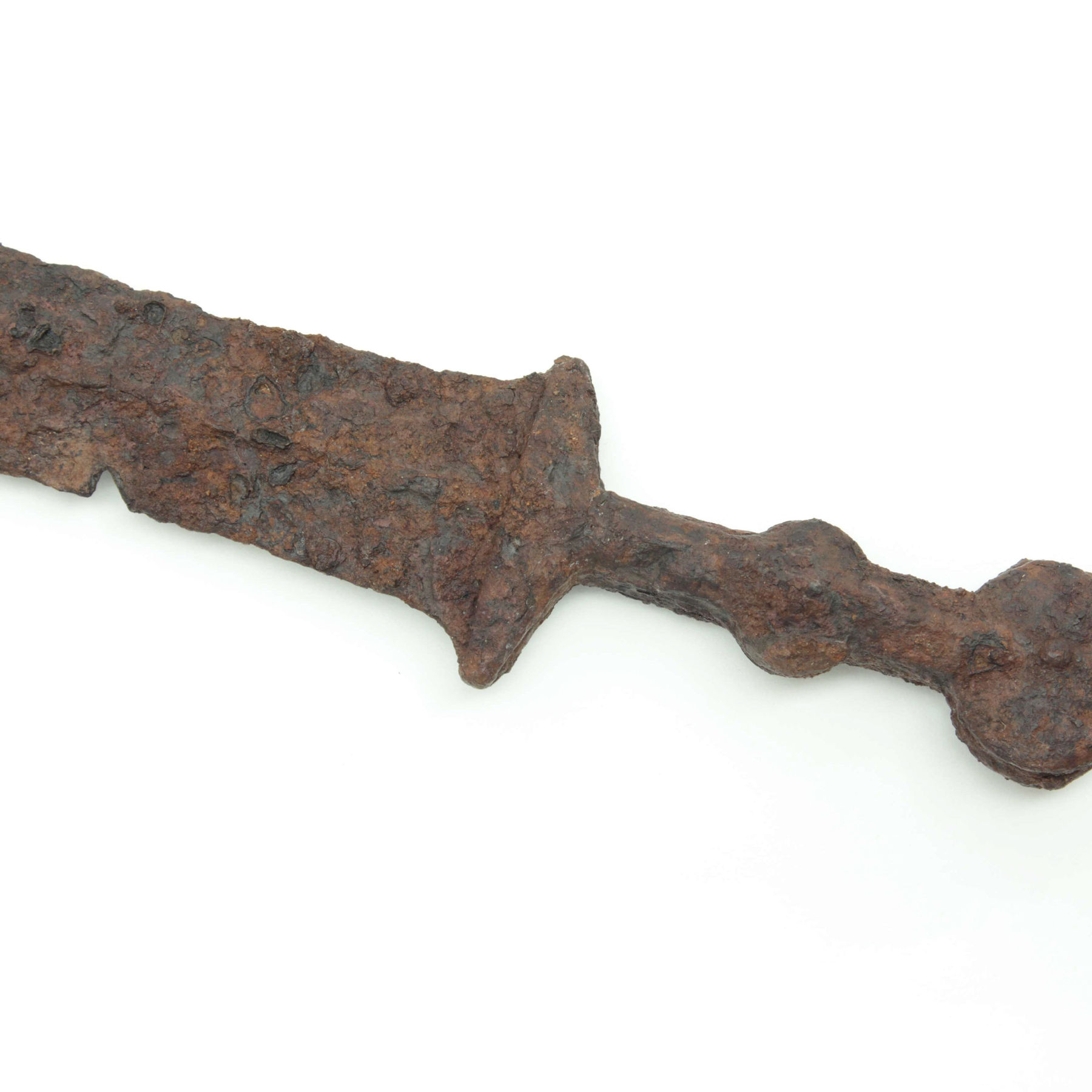
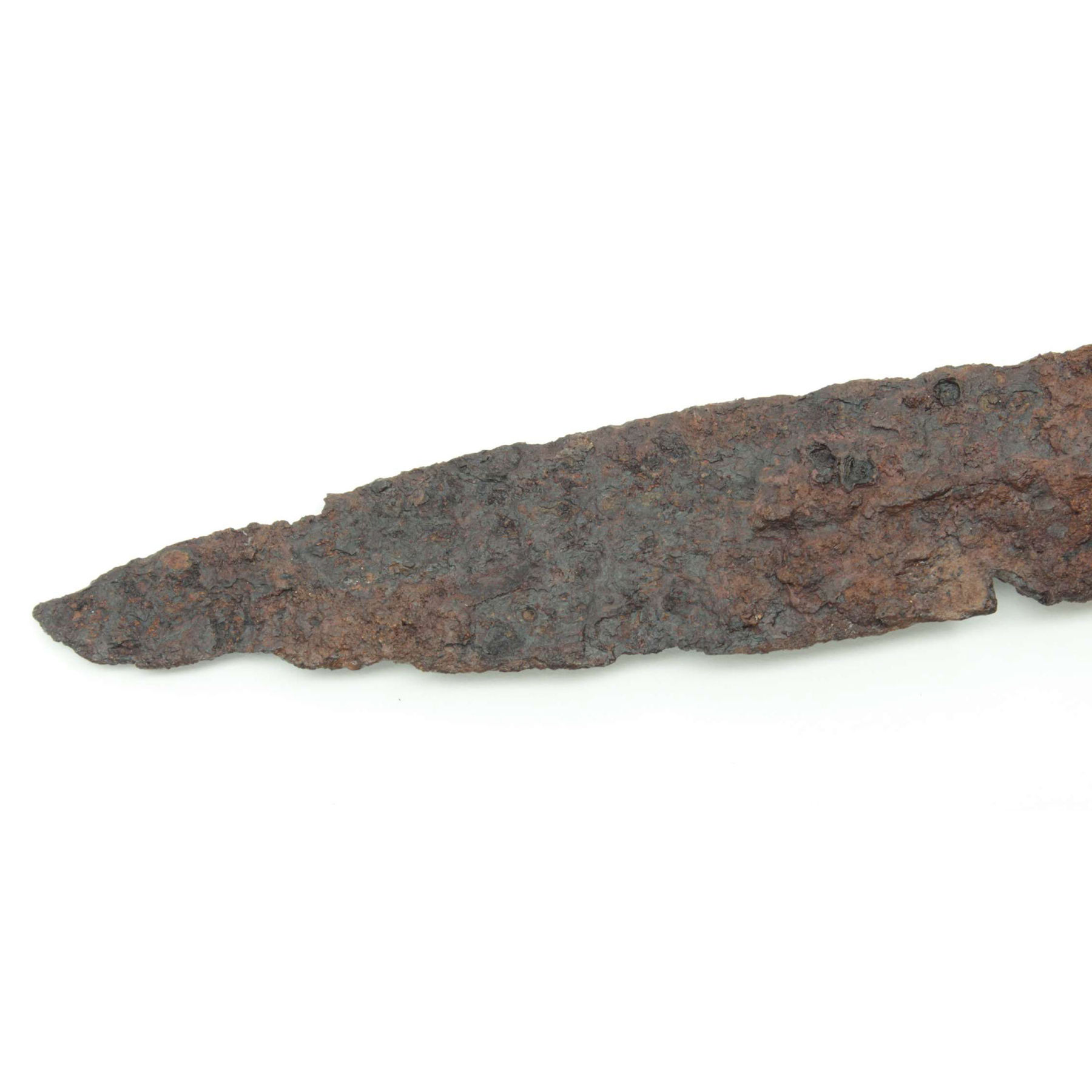
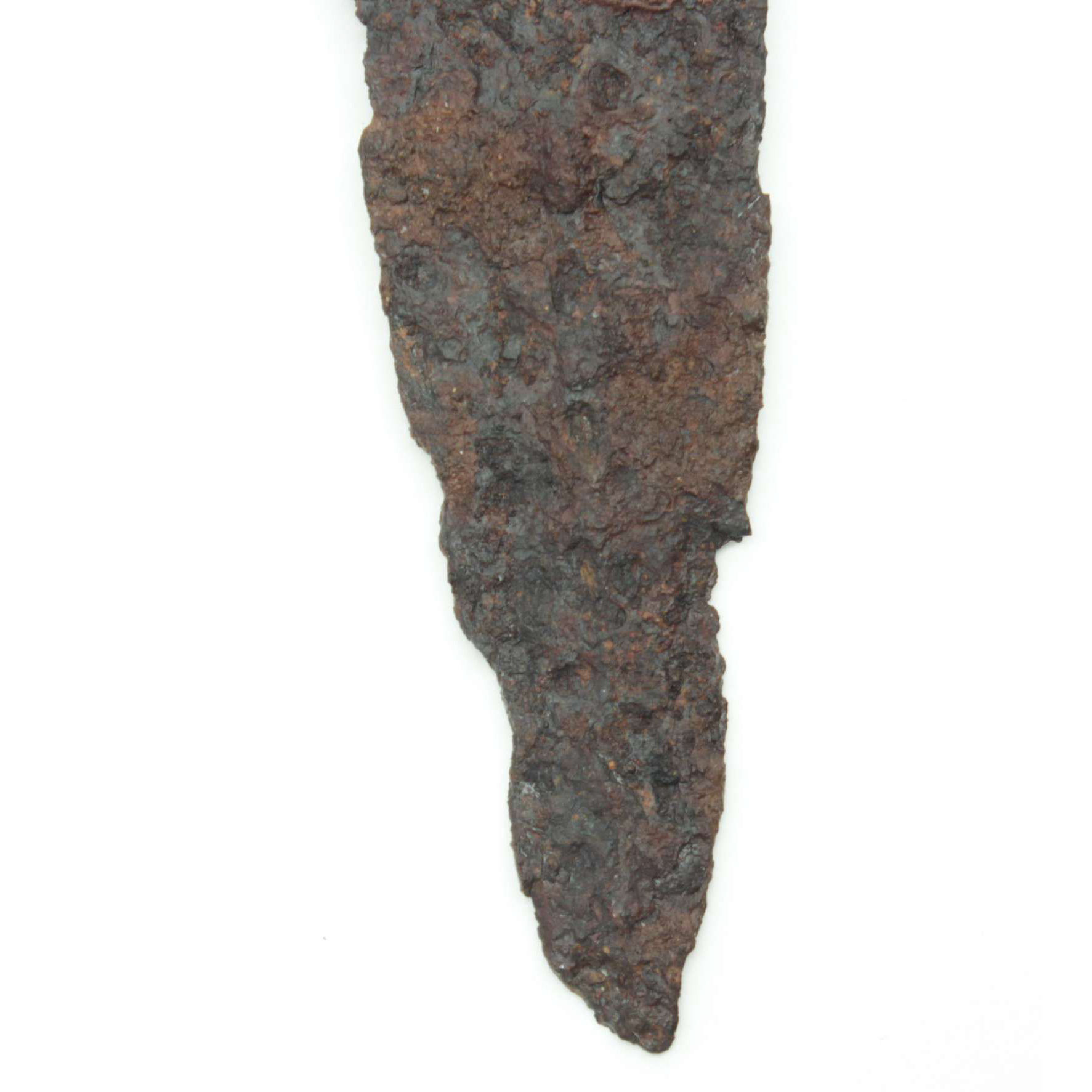
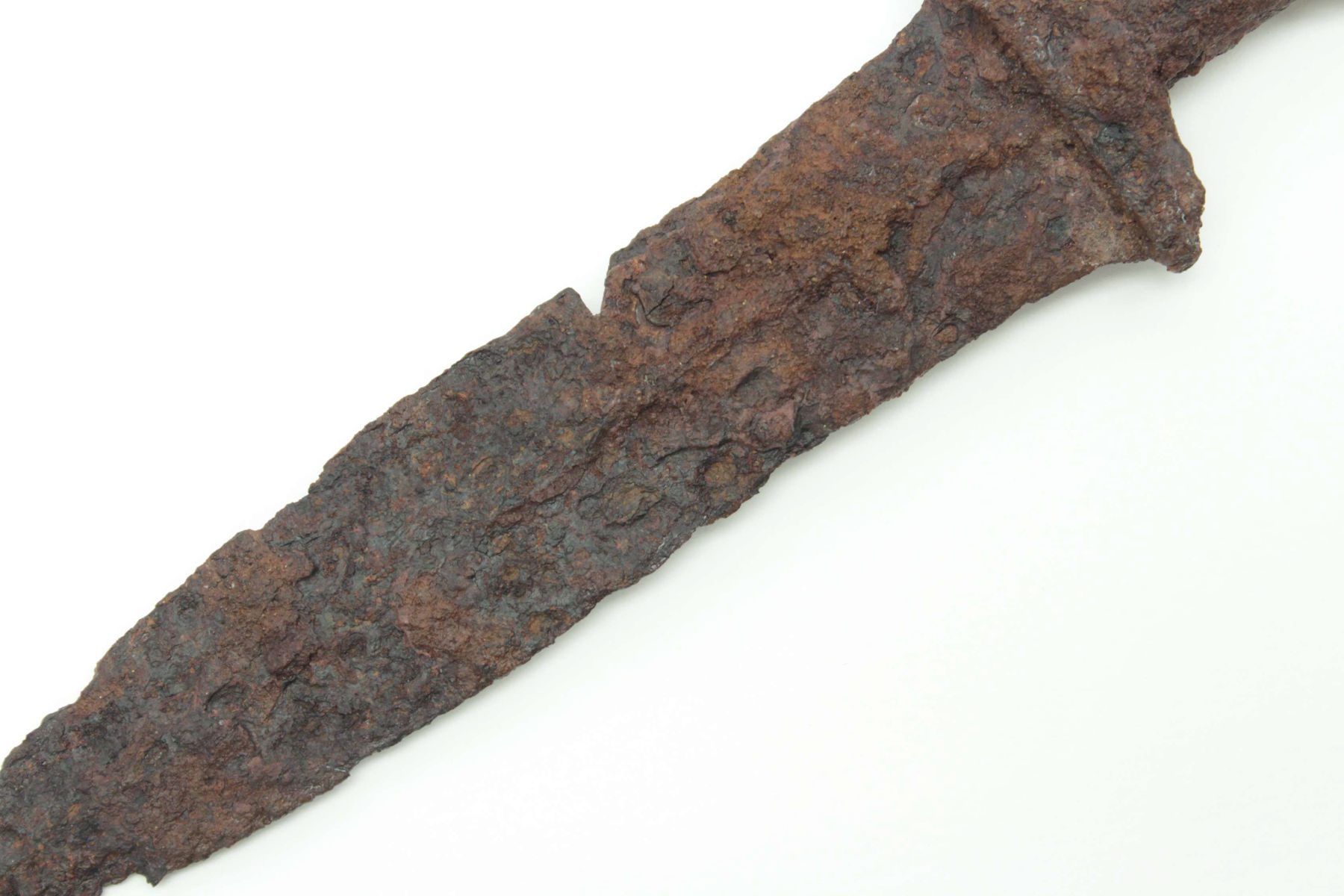
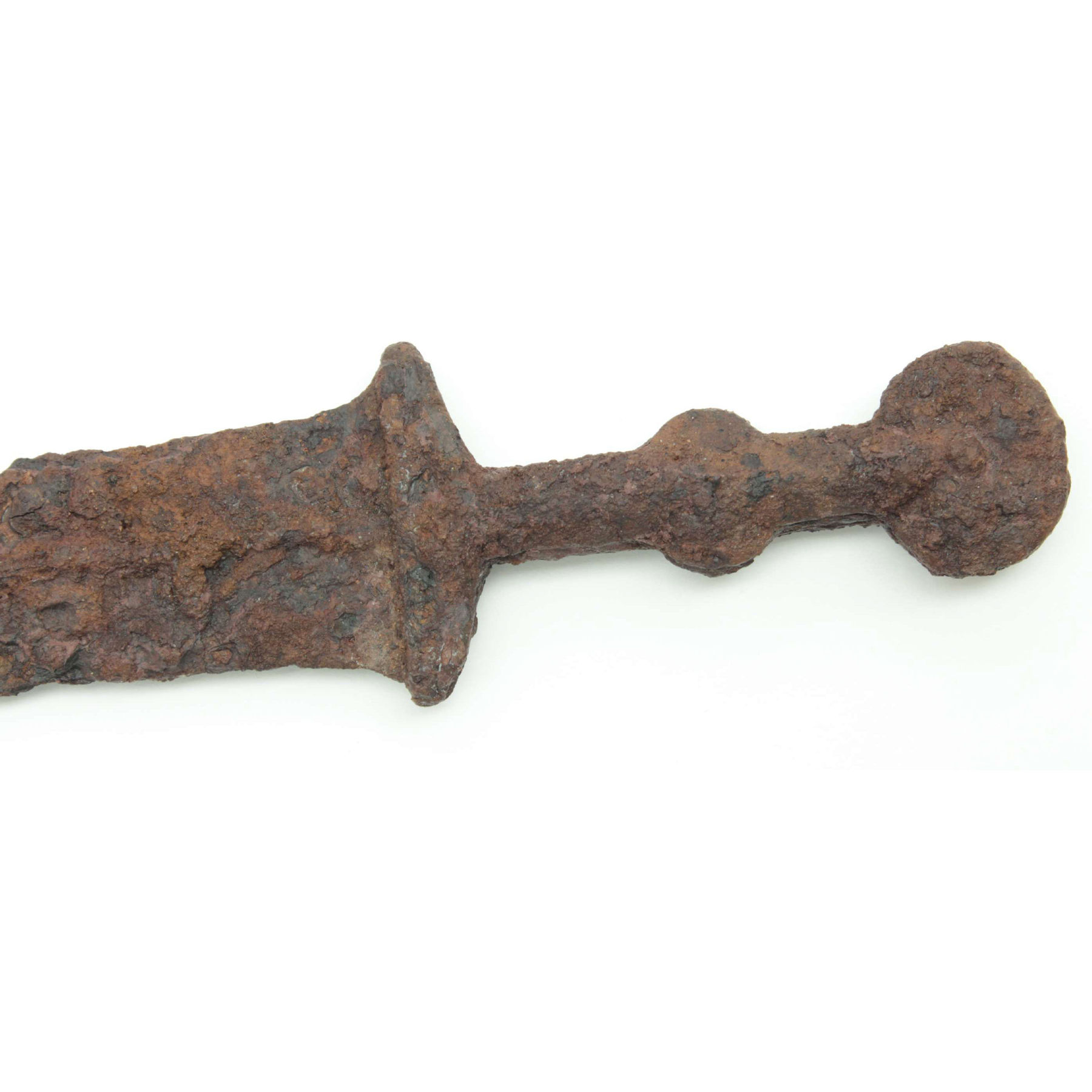
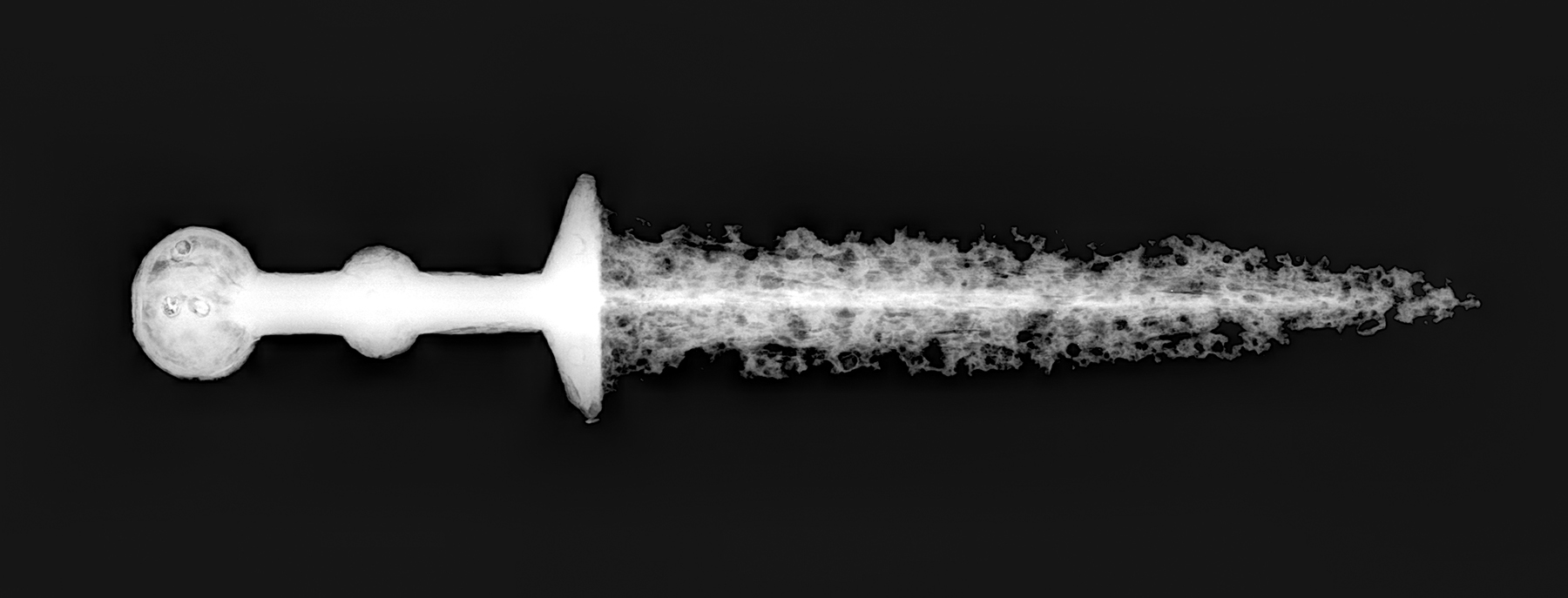
| ITEM | Dagger ‘Pugio’, Type Period I |
| MATERIAL | Iron |
| CULTURE | Roman |
| PERIOD | Republic, 1st Century B.C |
| DIMENSIONS | 300 mm x 60 mm x 15 mm |
| CONDITION | Good condition |
| PROVENANCE | Ex American art gallery, Ex Emeritus collection (USA), collected from the 1950’s to the 1980’s by a distinguished university professor who served as Department head, Dean and Vice President of a major university. |
| PARALLEL | SALIOLA, M., & CASPRINI, F. (2012). Pugio – Gladius brevis est: History and technology of the Roman battle dagger (BAR International Series 2404), p.12, Fig. A1 & B1 |
The origins of the Roman pugio, a short, broad dagger, are somewhat intertwined with the late Roman Republic and the period of transition into the Empire, as its shape is thought to derive from the daggers used by Iberian tribes. While archaeological evidence for the pugio in its standardized Roman form solidifies primarily in the late 1st century BCE—the end of the Republic—and the early Imperial period, the Romans were already familiar with the concept of a dedicated sidearm. The pugio served as an essential personal weapon for Roman soldiers, carried alongside the main gladius (sword) and providing a critical tool for close-quarters combat, often used for stabbing downward in a swift, lethal motion against a fallen or restrained enemy.
Characteristically, the pugio was defined by its wide, leaf-shaped blade and a prominent central ridge, designed for maximum rigidity and piercing power. The Republican and early Imperial versions share this core design but show stylistic and construction differences. Republican-era blades, or those immediately preceding the standardized Imperial forms, were generally more uniform and rugged. They featured an integrated tang that fitted into a simple hilt, often constructed from layers of wood or bone. Importantly, the pugio was a piece of military equipment, but it was also a badge of honor and status, especially for centurions and senior officers, a tradition that began to take root in the highly professionalized armies of the late Republic under figures like Marius and Caesar.
In the context of the Republic’s political upheaval, the pugio takes on a highly significant, and often infamous, symbolic role. It was the weapon of personal choice in the chaotic political landscape, famously used in acts of assassination and conspiracy. The most notorious instance is the assassination of Julius Caesar in 44 BCE, where the conspirators wielded daggers—almost certainly pugiones—to strike down the dictator on the floor of the Senate. This event cemented the dagger’s association not just with the battlefield, but with political violence and the defense of the Republic (as the assassins claimed) or its destruction (as Caesar’s followers believed). It remained a standard issue until the 3rd century CE, but its period of greatest historical and symbolic impact was arguably during the last tumultuous decades of the Roman Republic.