
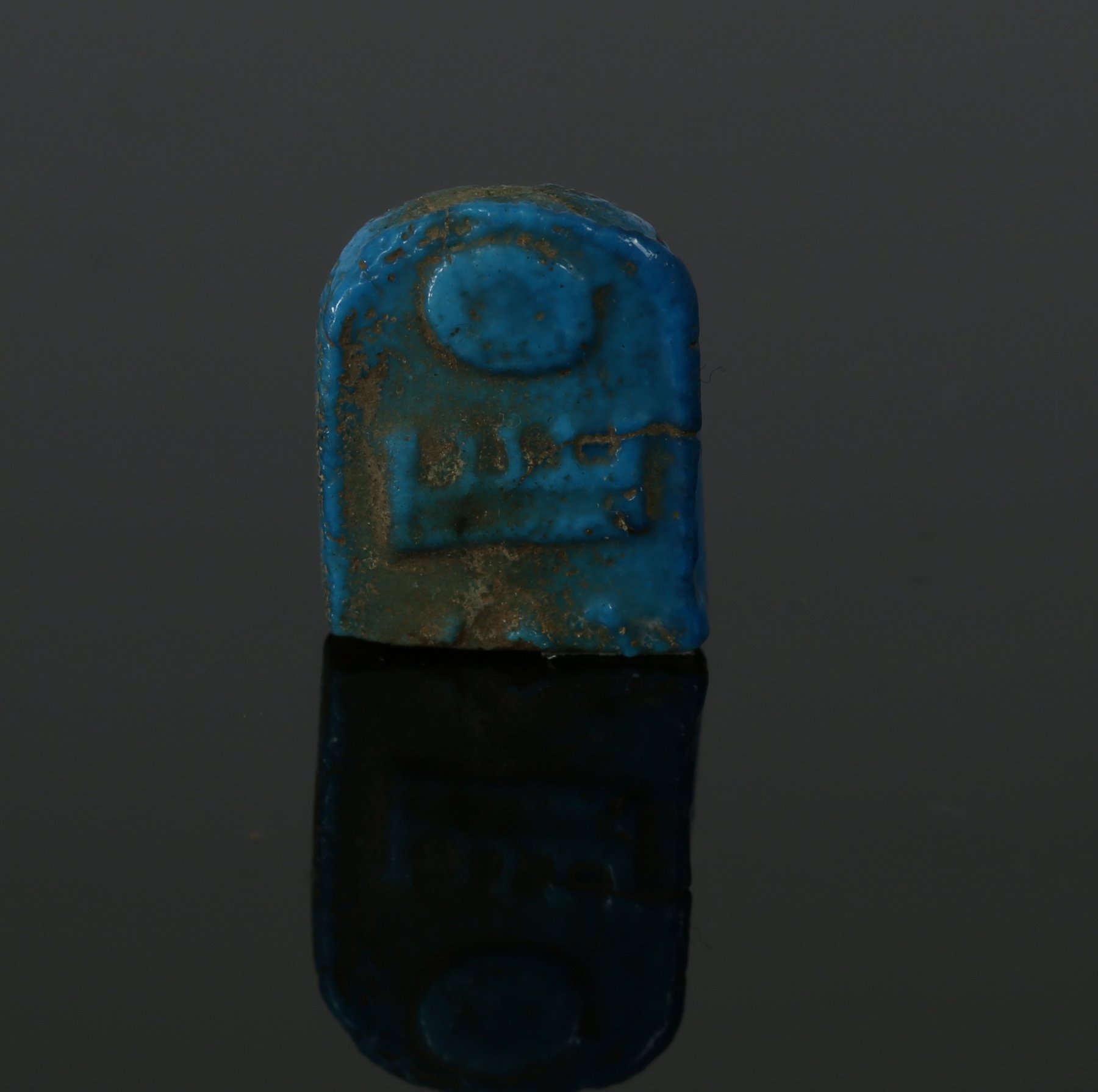
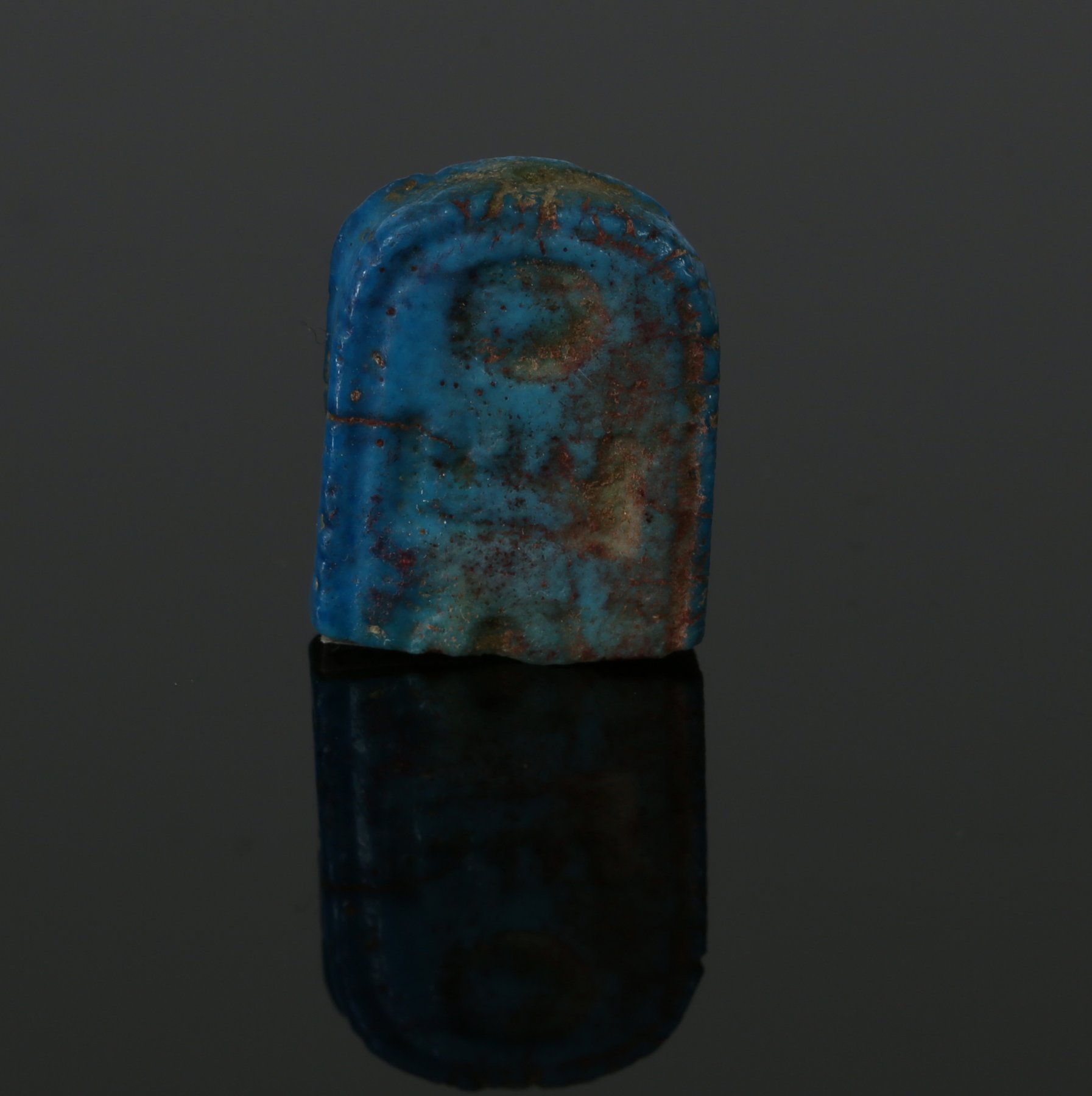
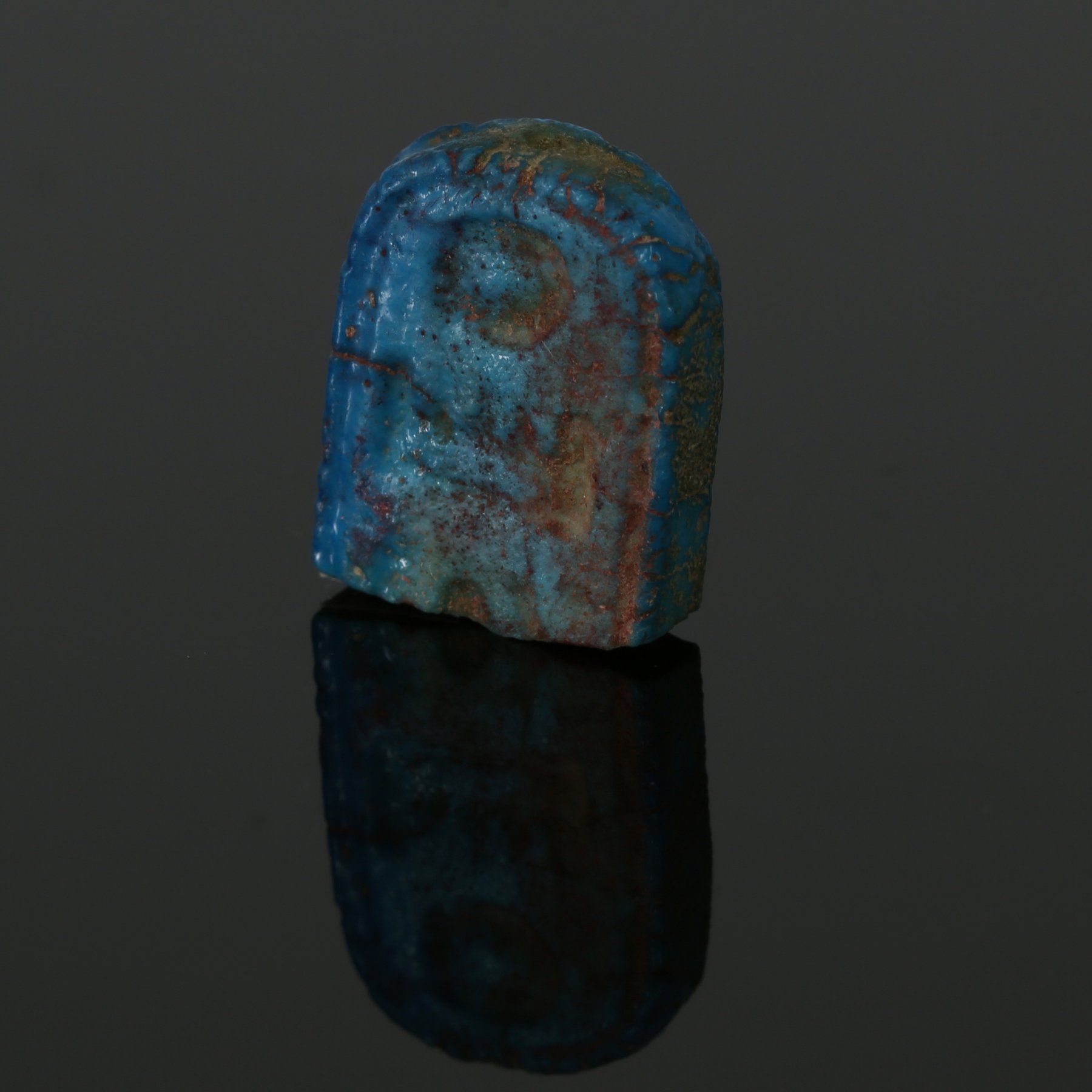
Description
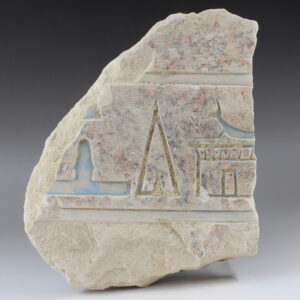
| ITEM | Spacer of Thutmosis III |
| MATERIAL | Faience |
| CULTURE | Egyptian |
| PERIOD | New Kingdom, 1550 – 1292 B.C, 18th dynasty |
| DIMENSIONS | 17 mm x 13 mm |
| CONDITION | Good condition |
| PROVENANCE | Ex Museum Exhibiton of the Arbeitsgruppe für Biblische Archäologie, Germany (Deaccession), Ex Private collection of Prince Saud bin Muhammad bin Ali bin Abdullah bin Jassim bin Muhammed Al Thani (1966-2014), who was Minister of Culture, Arts and Heritage of Qatar. |
Thutmose III, often hailed as the “Napoleon of Egypt,” was the sixth Pharaoh of the Eighteenth Dynasty and is remembered as one of the greatest military strategists in ancient history. While he technically ascended the throne as a child, his early reign was overshadowed by his stepmother and aunt, Hatshepsut, who served as regent and eventually declared herself Pharaoh. It was only after her death that Thutmose III assumed full sovereign power, embarking on a series of seventeen military campaigns that expanded the Egyptian Empire to its greatest territorial extent, stretching from the Euphrates River in Mesopotamia to the Fourth Cataract of the Nile in Nubia.
The hallmark of his military career was the Battle of Megiddo, where his daring decision to lead his army through a narrow, treacherous mountain pass caught his enemies by surprise and secured a decisive victory. This campaign showcased not only his tactical genius but also his administrative foresight; rather than merely looting conquered lands, he established a sophisticated system of vassalage. By taking the sons of local rulers to Egypt to be educated, he ensured the cultural “Egyptianization” of foreign elites and maintained long-term loyalty and stability across his vast frontiers.
Beyond the battlefield, Thutmose III was a prolific builder and a devout patron of the arts. He transformed the Temple of Karnak into a monumental chronicle of his reign, commissioning the magnificent Festival Hall and erecting several obelisks, including the one now known as “Cleopatra’s Needle” in London and New York. His tomb in the Valley of the Kings (KV34) is equally remarkable, featuring walls decorated with the Amduat, an ancient funerary text rendered in a unique, minimalist style that resembles a papyrus scroll. His legacy is that of a warrior-king who balanced the iron fist of conquest with the refined hand of a builder, cementing Egypt’s status as the superpower of the Bronze Age.