
Description
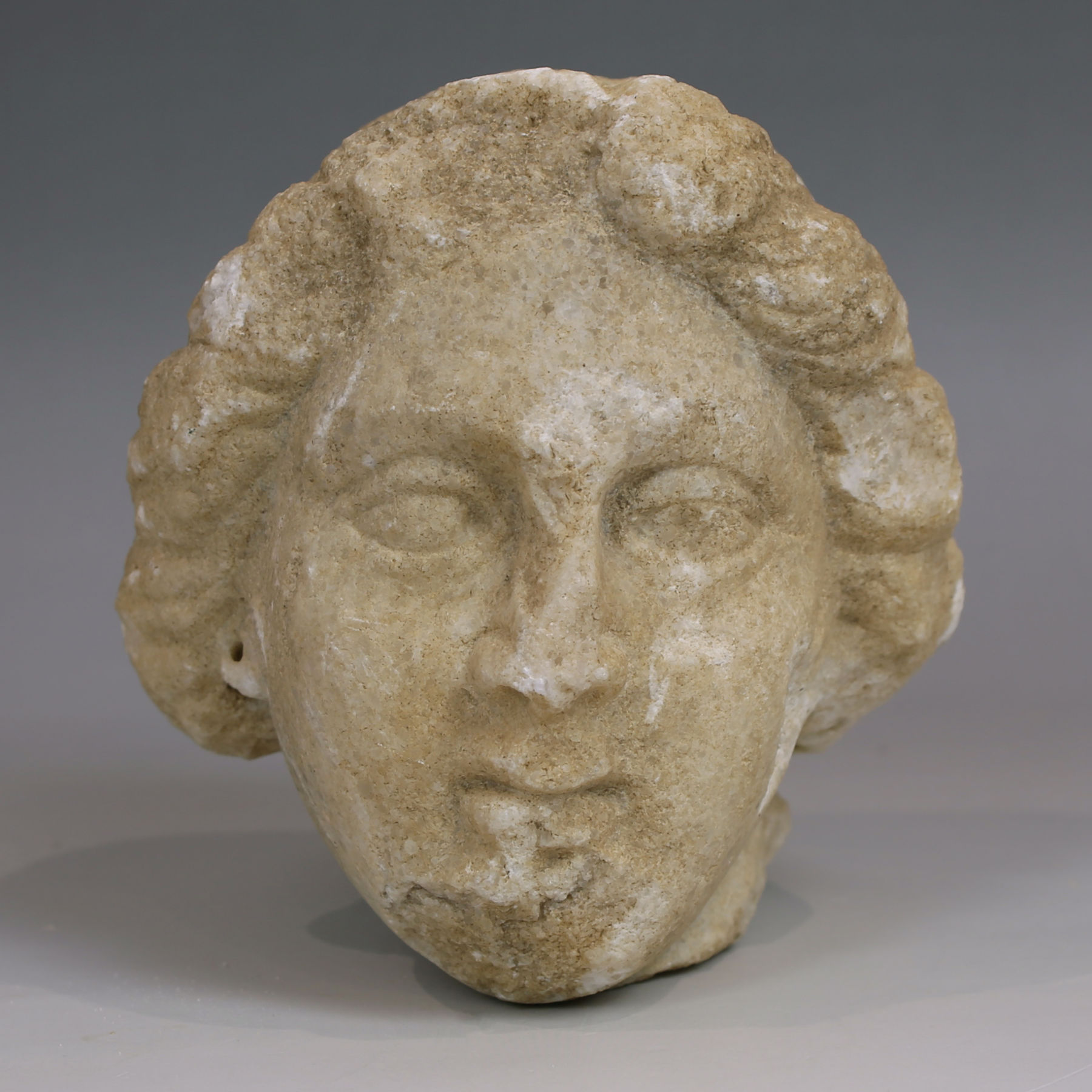
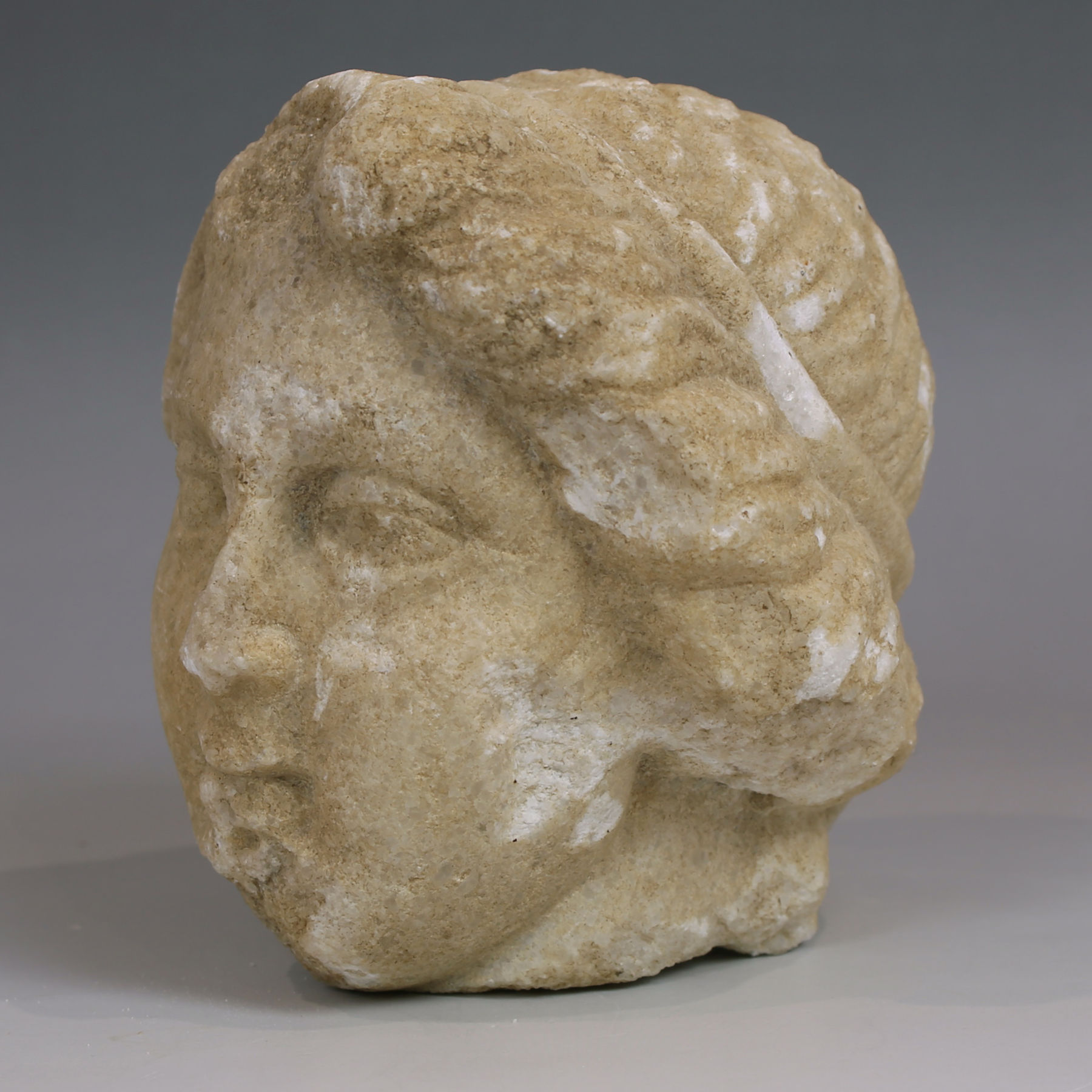
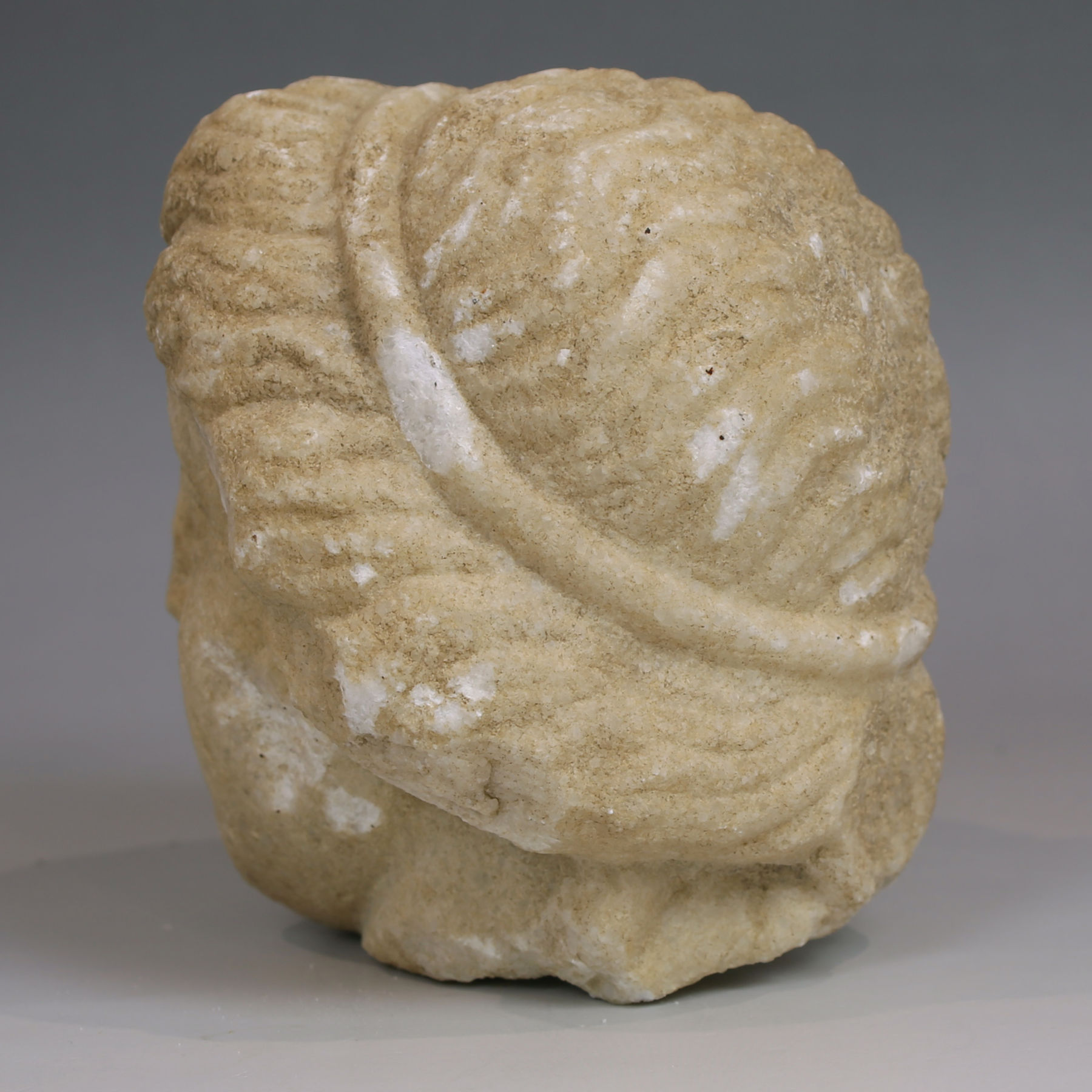
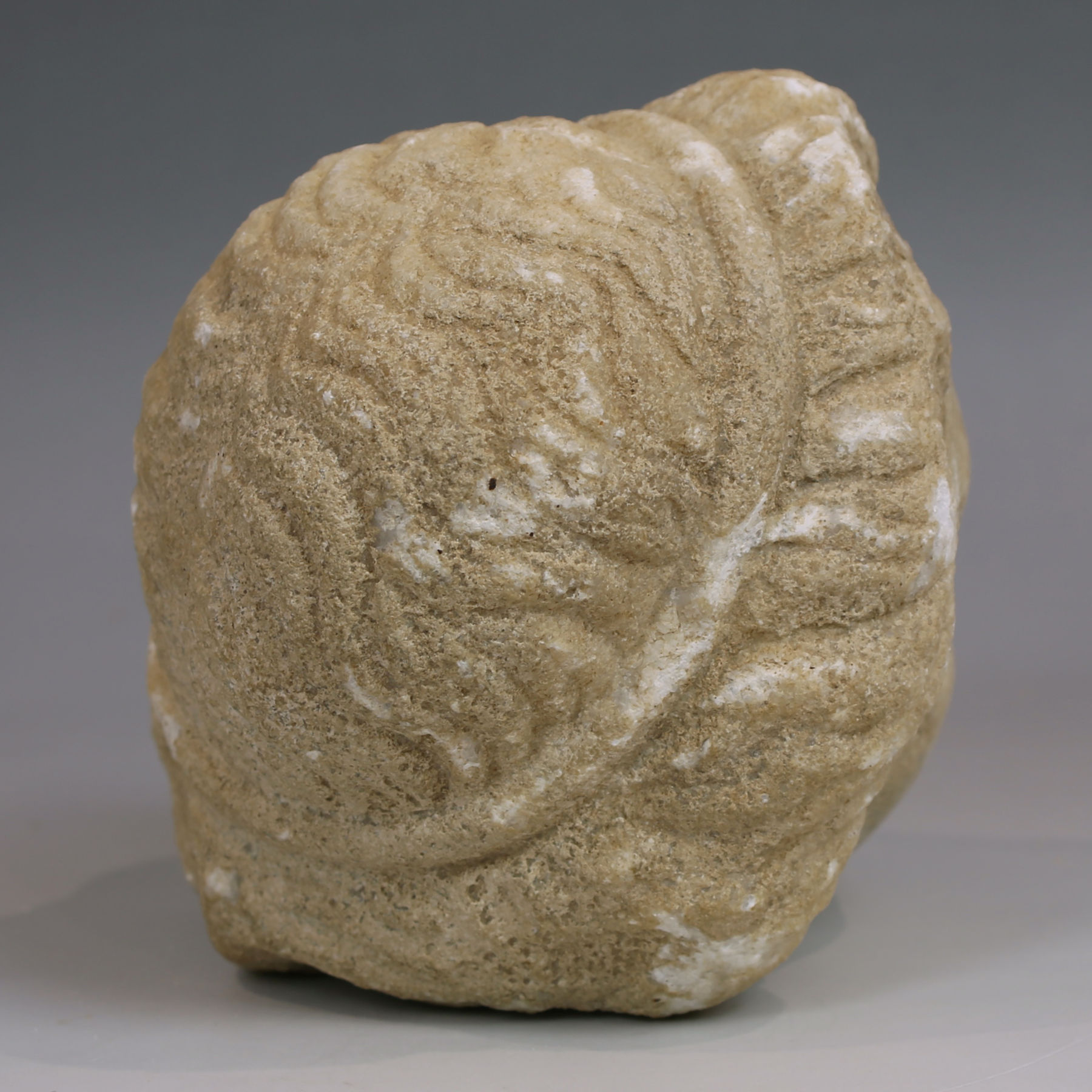
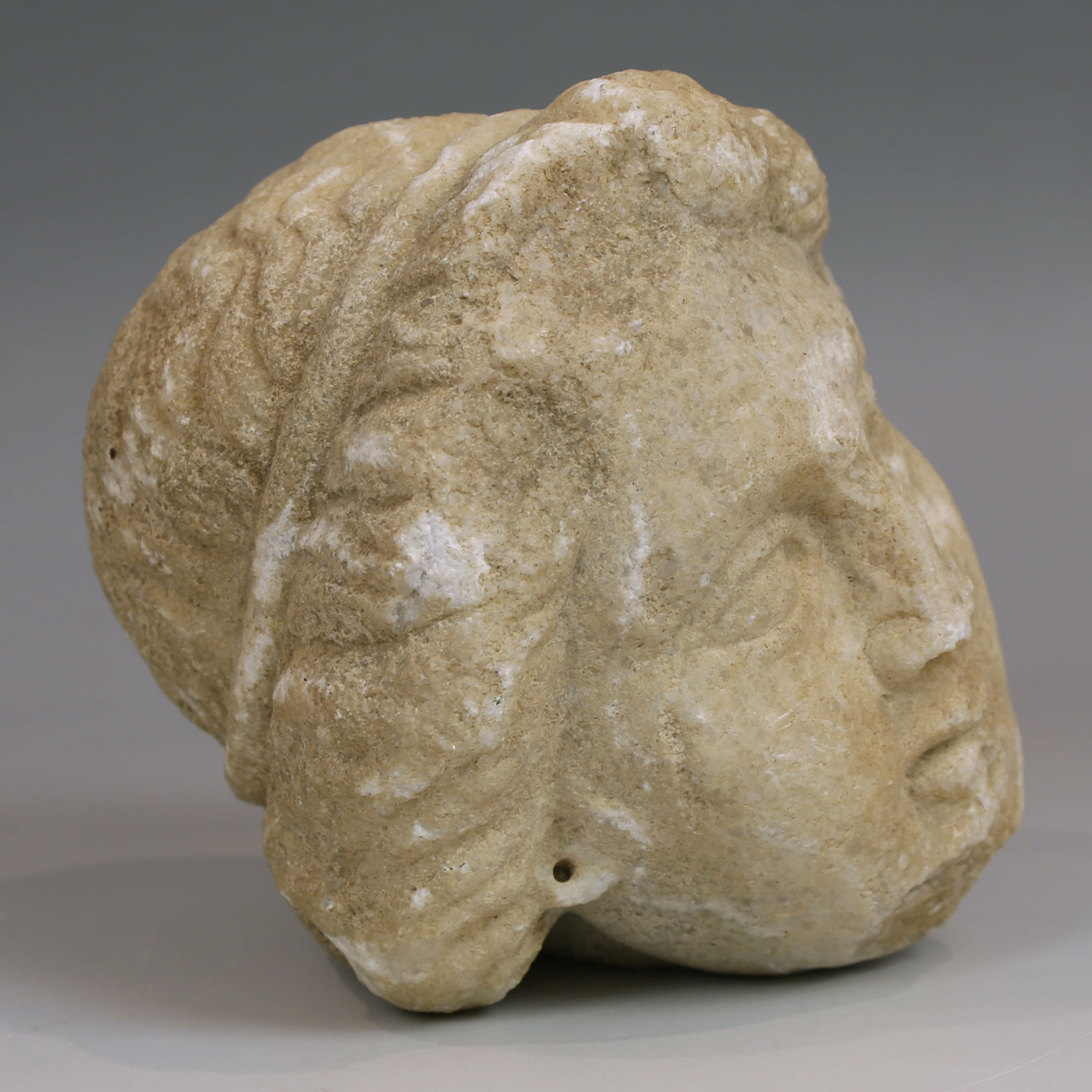
| ITEM | Head of a woman with tainia |
| MATERIAL | Marble |
| CULTURE | Late Hellenistic / Early Roman |
| PERIOD | 2nd – 1st Century B.C |
| DIMENSIONS | 104 mm x 102 mm x 96 mm |
| CONDITION | Good condition |
| PROVENANCE | Ex Dutch private collection, acquired before 2000s |
Roman female portrait heads often display refined hairstyles bound with a tainia, a narrow fillet or ribbon that encircles the head. The tainia was not only a decorative element but also a symbol of dignity and idealized beauty, commonly associated with divine or virtuous qualities. In Roman art, especially during the Imperial period, women of high status were frequently portrayed with such headbands, emphasizing their modesty, piety, or divine association. The tainia framed the elaborate coiffures characteristic of the Julio-Claudian and Antonine dynasties, highlighting both the technical mastery of the sculptor and the sitter’s social prestige.
There are also numerous examples, both Greek and Roman, of female heads—whether depicting goddesses, nymphs, or mortal women—that bear small holes in their earlobes for the attachment of actual metal earrings. This practice allowed sculptors to combine marble or bronze with precious materials, enhancing the lifelike and luxurious quality of the portrait. Greek Hellenistic works, such as representations of Aphrodite or Artemis, often included these perforations, and a notable example is a Hellenistic head of Aphrodite in the National Archaeological Museum of Athens, whose earlobes retain the tiny drill holes once used to secure gold ornaments.
In Roman portraiture, this feature became even more common, particularly in the representations of empresses and elite women, where jewelry served as an explicit symbol of status and refinement. Portraits of Faustina the Younger and Julia Domna, for instance, display such perforations, and some funerary busts in marble and terracotta were designed to hold removable earrings. These subtle details demonstrate how Roman artists sought to bridge the ideal and the real—transforming stone into an image of living splendor through the integration of authentic adornments.