
Description
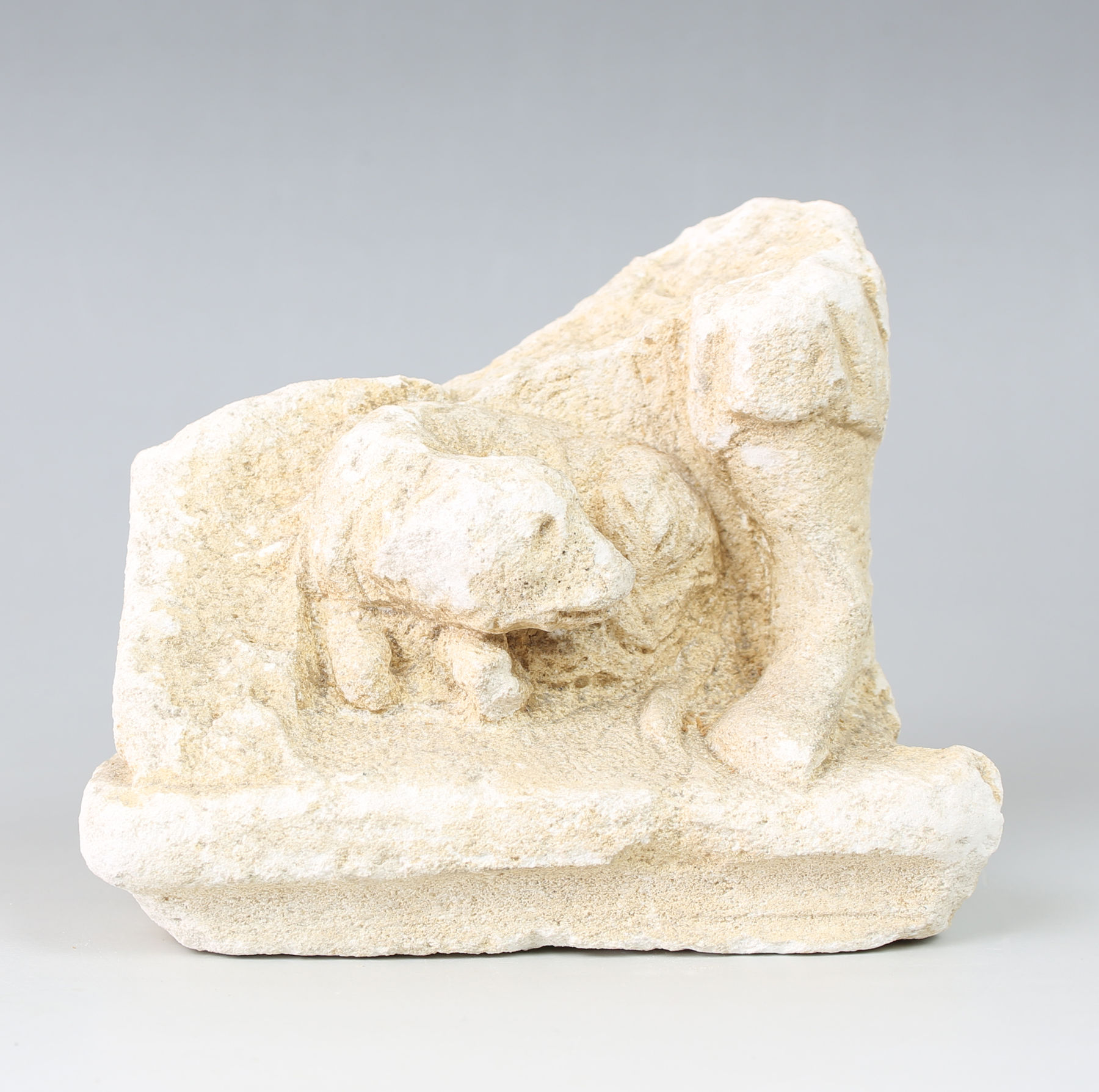
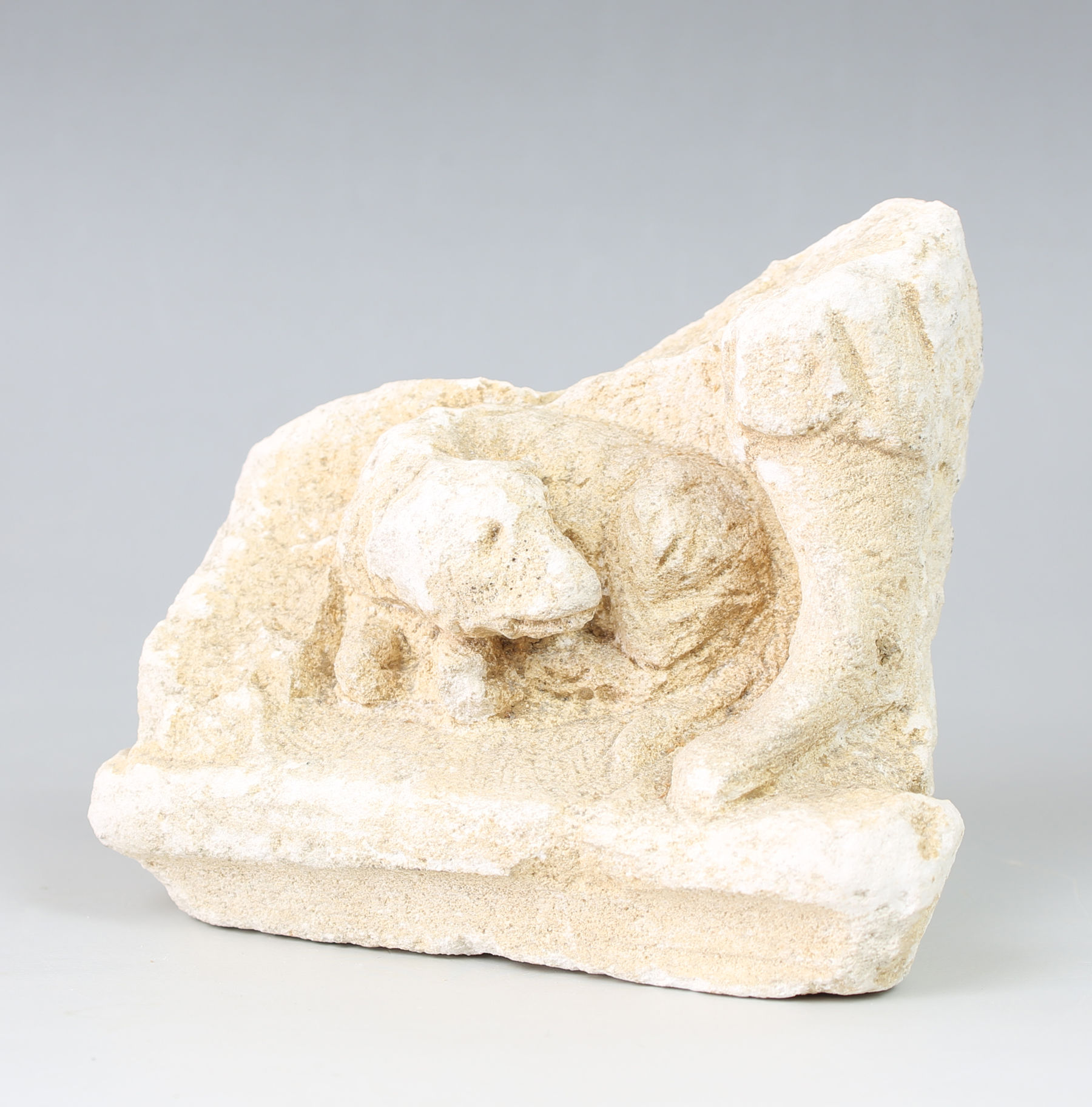
| ITEM | Fragment of a statuette with a leg and a dog |
| MATERIAL | Limestone |
| CULTURE | Roman |
| PERIOD | 2nd – 3rd Century A.D |
| DIMENSIONS | 100 mm x 115 mm x 65 mm |
| CONDITION | Good condition |
| PROVENANCE | Ex French private collection, acquired between 1970 – 1990 |
Dogs held an important place in Roman daily life, serving as companions, guardians, hunters, and even status symbols. Wealthy Romans often kept small lapdogs as pets, while larger breeds were prized for guarding villas, farms, and herds. Hunting dogs were used in venationes (hunts) and sometimes even in the arena. The Romans inherited much of their dog culture from the Greeks and Etruscans but developed their own appreciation for specific breeds, some of which are described by writers like Columella and Varro. Mosaics and frescoes frequently depict dogs, such as the famous “Cave Canem” (“Beware of the Dog”) mosaic from Pompeii, a reminder of their role as protectors of the home.
Dogs also had religious and symbolic roles in Roman society. They were associated with several deities, including Diana (goddess of the hunt) and Hecate (goddess of magic and the underworld). In certain festivals, such as the Robigalia, dogs were sacrificed to appease the god Robigus and protect crops from disease. They were also linked to funerary beliefs — sometimes buried with their owners or depicted on tomb reliefs, symbolizing loyalty and companionship that continued into the afterlife.