

Description
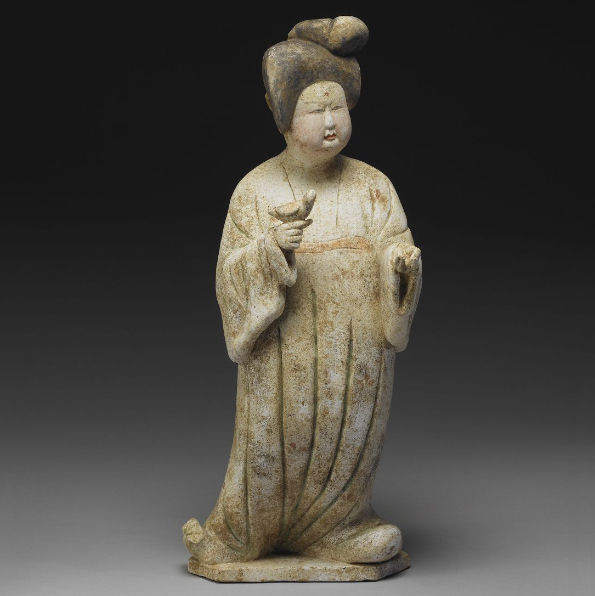
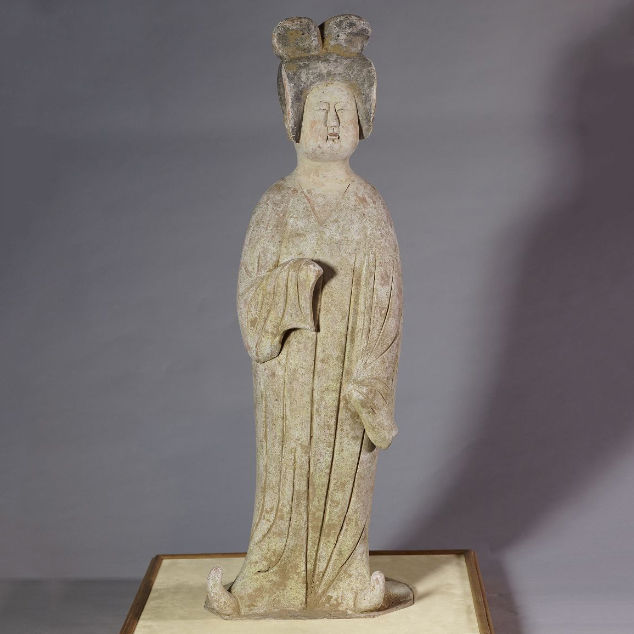
| ITEM | Statuette of a Fat Lady |
| MATERIAL | Pottery |
| CULTURE | Chinese, Tang Dynasty |
| PERIOD | 618 – 907 A.D |
| DIMENSIONS | 303 mm x 110 mm x 83 mm |
| CONDITION | Good condition. Includes Thermoluminescence test by QED Laboratory (Reference: QED1211/FC-0204) |
| PROVENANCE | Ex French private collection, from Toulouse, acquired in the 1980s |
During the Tang dynasty (618–907 CE), China experienced a period of extraordinary cultural prosperity, artistic refinement, and cosmopolitan openness. The ceramic figures known today as Fat Ladies—portrayals of court women with full, rounded faces and voluptuous bodies—reflect both the ideals of beauty of the time and the sophistication of Tang funerary art. These sculptures, often found in elite tombs, were created as mingqi (spirit objects) intended to accompany the deceased in the afterlife, ensuring comfort, elegance, and the continuation of social status beyond death.
The figures typically depict court attendants dressed in long flowing robes with layered garments, high-waisted skirts, and elaborate coiffures arranged in large chignons or wing-shaped buns. Their serene expressions, gently tilted heads, and subtle hand gestures convey grace and dignity. The robust physiques—so different from the slender forms admired in other periods—reflect the Tang aesthetic that associated fullness with beauty, wealth, and good fortune. This ideal was famously linked to the influence of the imperial concubine Yang Guifei, whose celebrated plumpness epitomized sensuality and refinement at the Tang court.
Technically, these sculptures were made of earthenware and often decorated with pigments or sancai (three-colored) lead glazes in amber, green, and cream tones. The use of such vivid glazes, combined with delicate modeling, created figures of striking realism and charm. Many examples show traces of painted cosmetics, such as red lips and rouged cheeks, further emphasizing their fashionable appearance and status as embodiments of worldly elegance.
Together, the Tang Fat Lady figures offer a vivid glimpse into the tastes, values, and daily life of the Tang elite. They reveal how notions of beauty were intertwined with social and moral ideals—expressing not only physical opulence but also the grandeur and confidence of a flourishing empire at the height of its artistic achievement.