
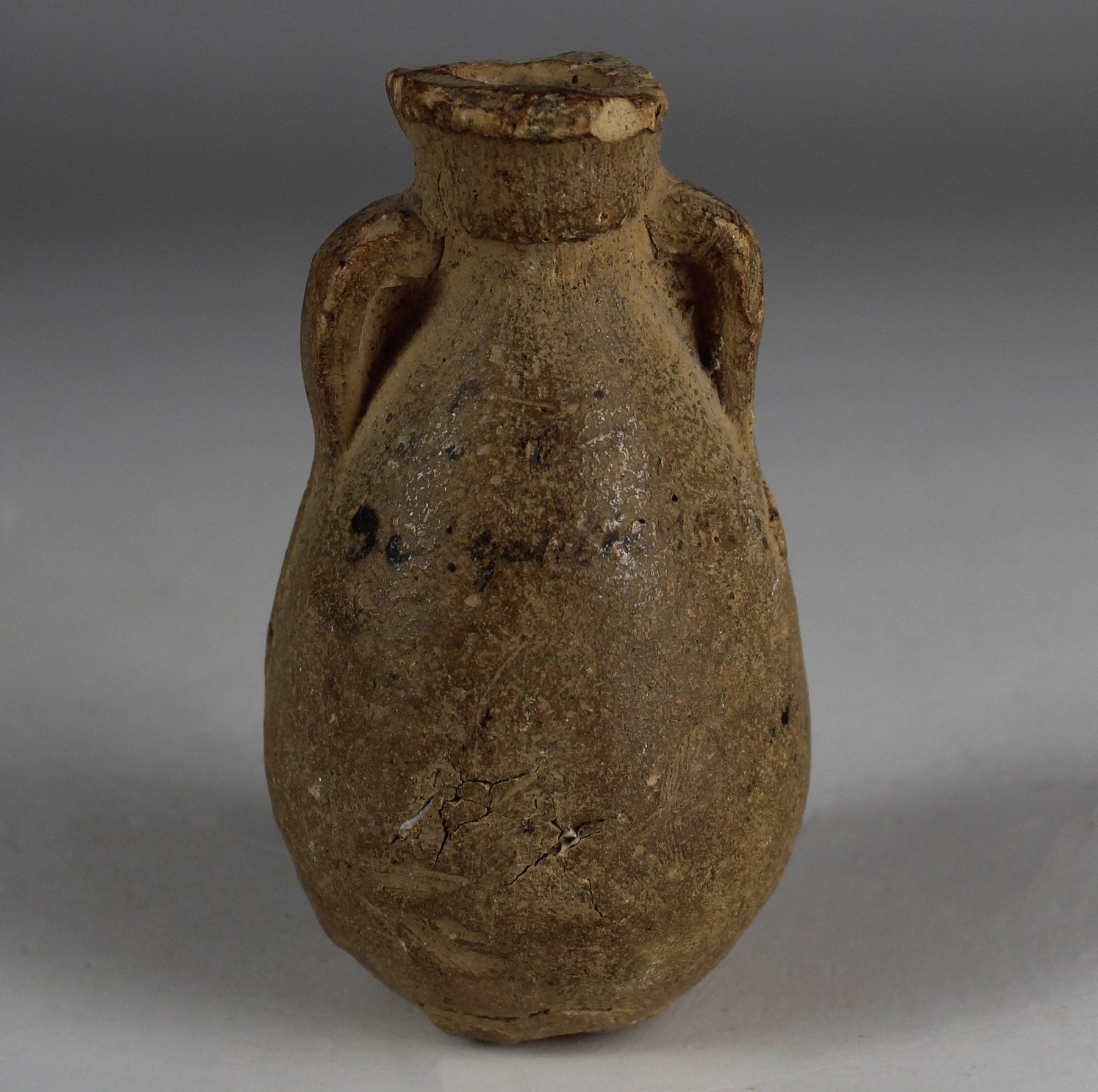
Description
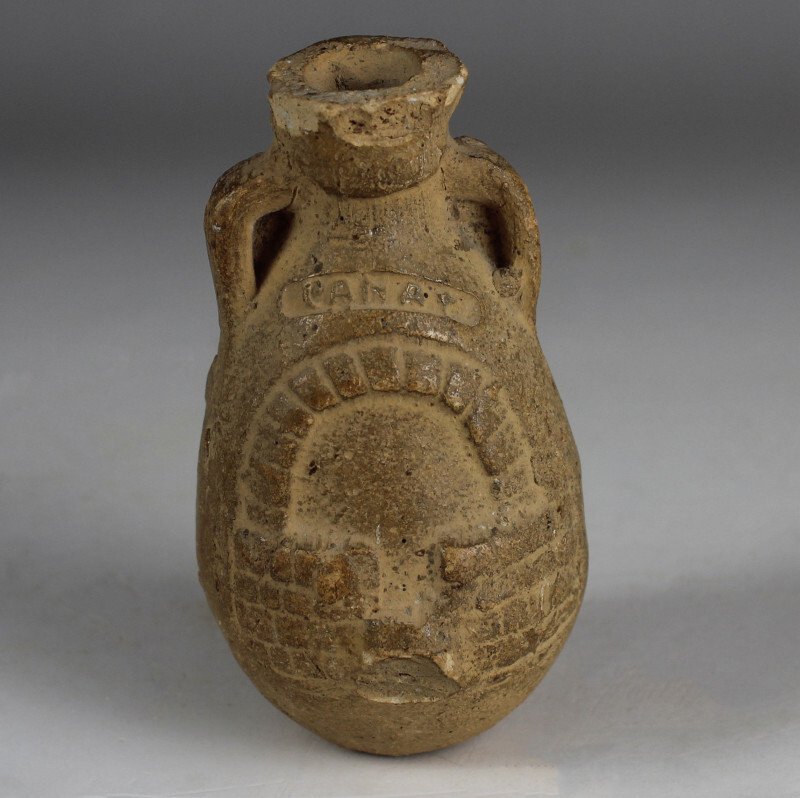
| ITEM | Flask with baker’s oven and inscription above ‘PANAT’ |
| MATERIAL | Pottery |
| CULTURE | Romano-Egyptian |
| PERIOD | 2nd – 1st Century B.C |
| DIMENSIONS | 69 mm x 37 mm |
| CONDITION | Good condition |
| PROVENANCE | Ex U.S Gallery, Ex American private collection, acquired before 2000s |
The Romano-Egyptian flask featuring a baker’s oven is a fascinating artifact that illustrates the intersection of daily life and religious symbolism in the late Roman period. Typically crafted from terracotta or faience, these vessels often depict a domed oven (furnus) with a baker actively tending to loaves of bread. The presence of the inscription ‘PANAT’ is likely a truncated reference to Panis (bread) or a specific Hellenized term related to the baking trade, signaling that the vessel was perhaps used to hold oils or offerings associated with the guild of bakers or household prosperity.
From an artistic perspective, these flasks represent the “Alexandrian” style, blending classical Roman realism with traditional Egyptian craft techniques. The relief work on the flask is not merely decorative; it serves as a visual narrative of the grain-to-bread cycle, which was the backbone of the Mediterranean economy. In the Greco-Roman Egyptian context, bread was often associated with the god Sarapis or the goddess Isis in her role as a provider, making such objects common in both domestic kitchens and local shrines as votive offerings for a successful harvest and a full larder.