
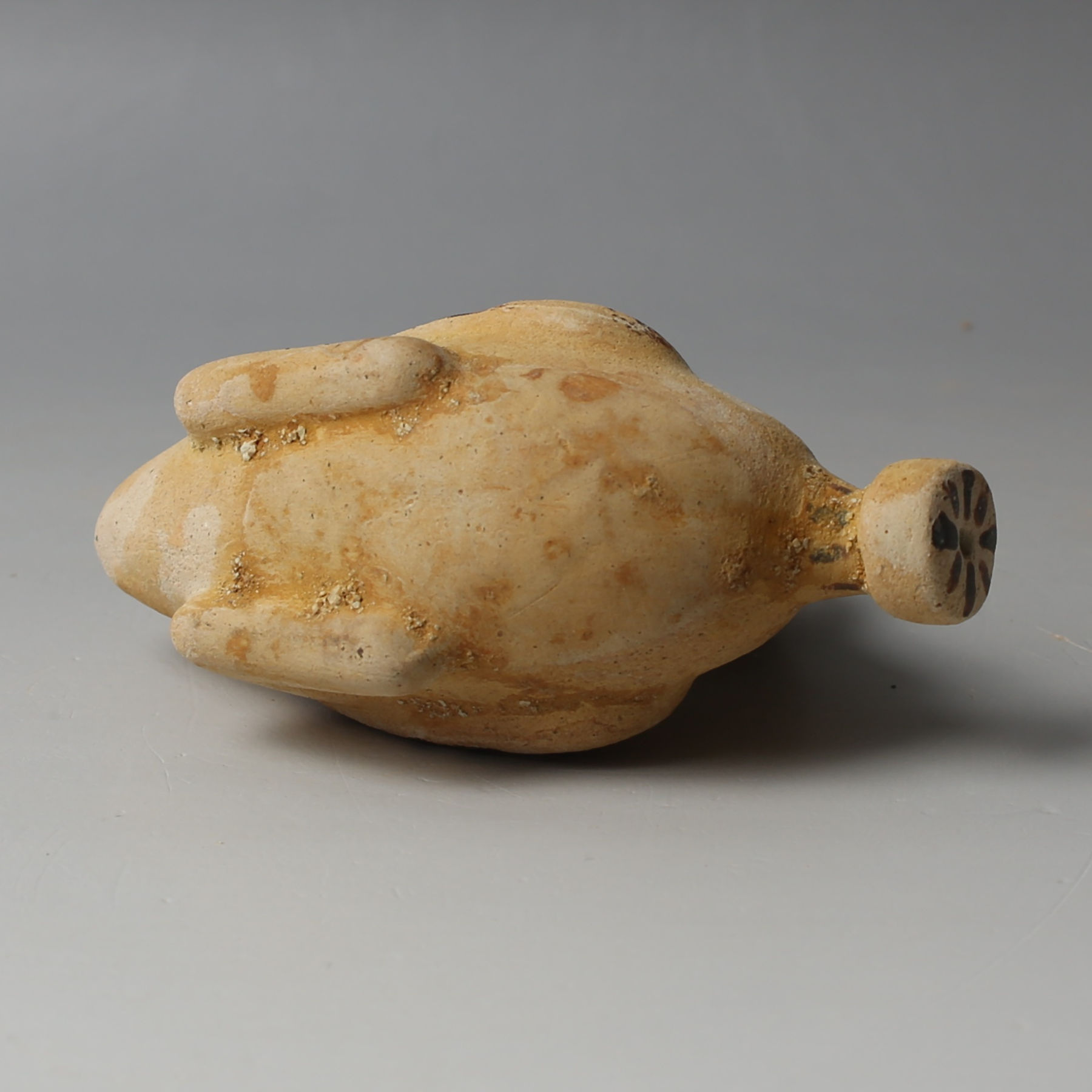
Description
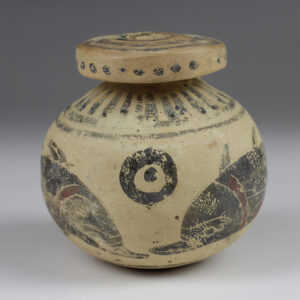
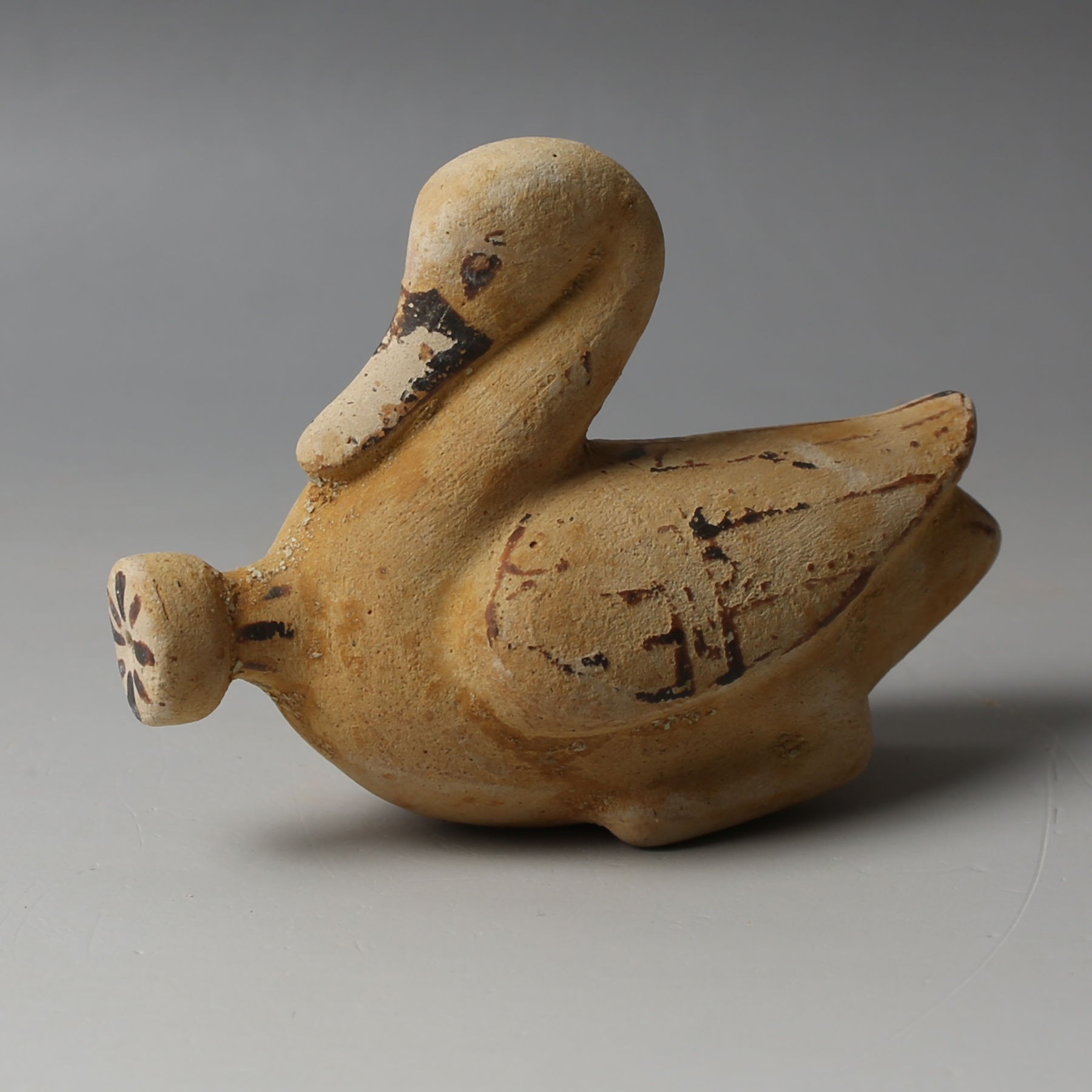
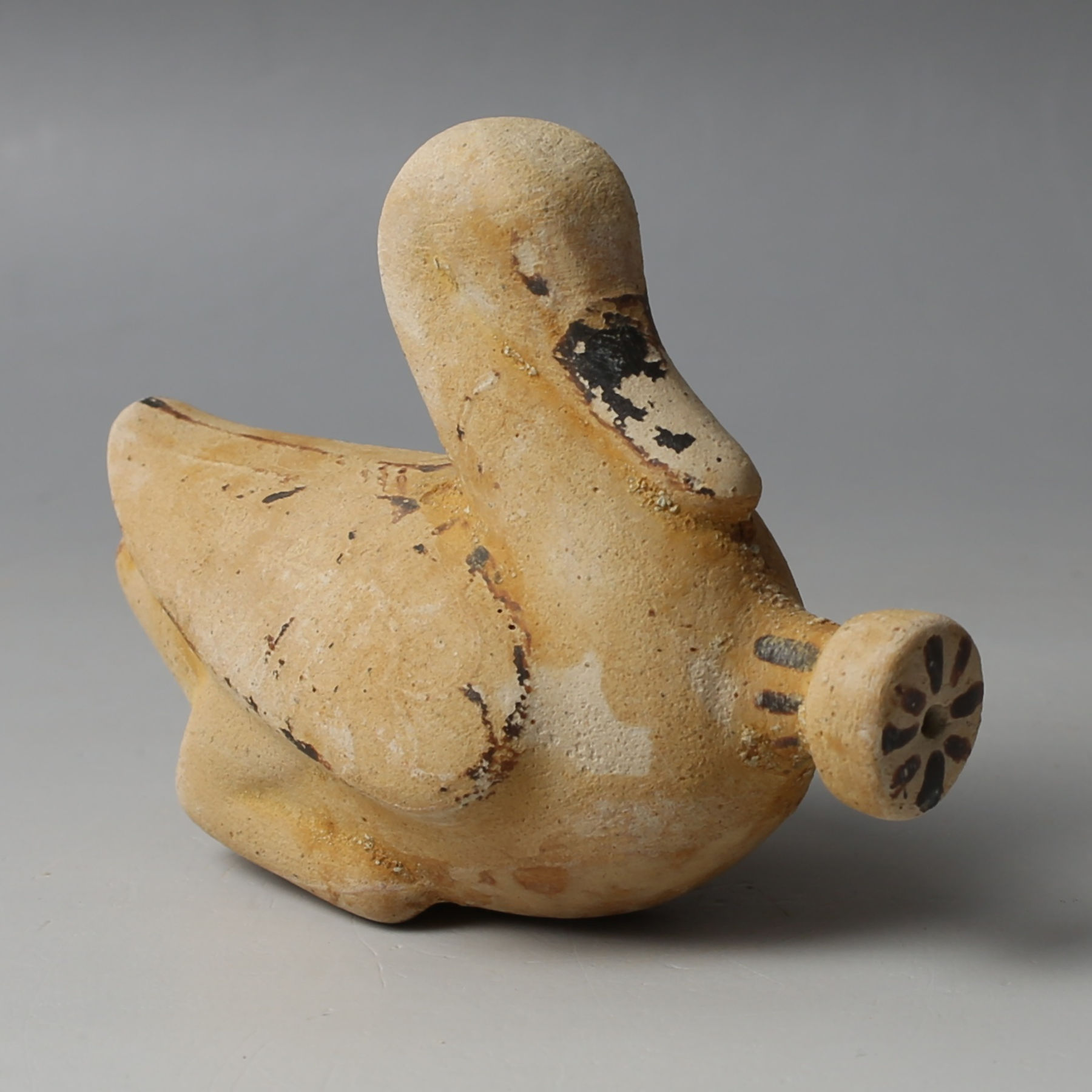
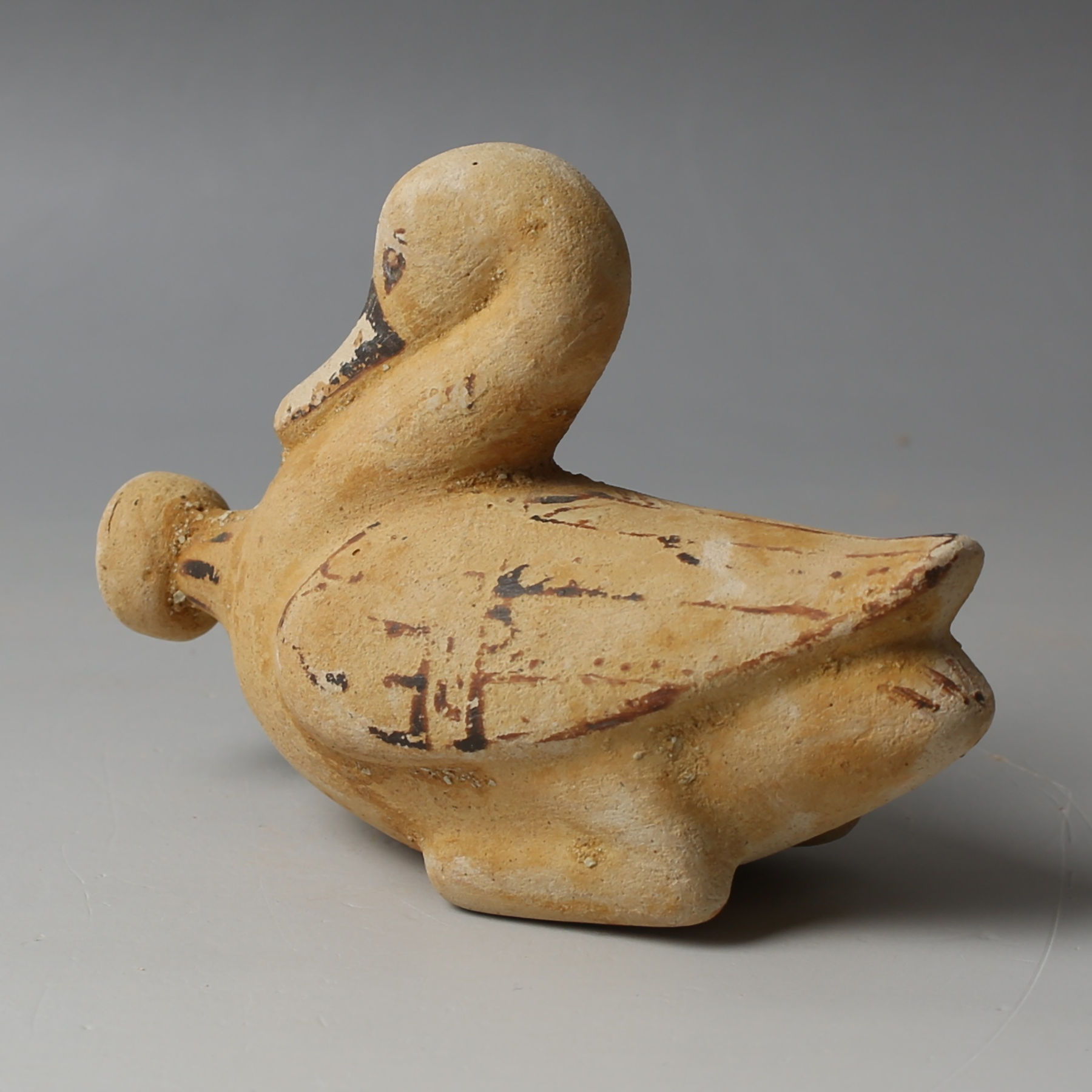
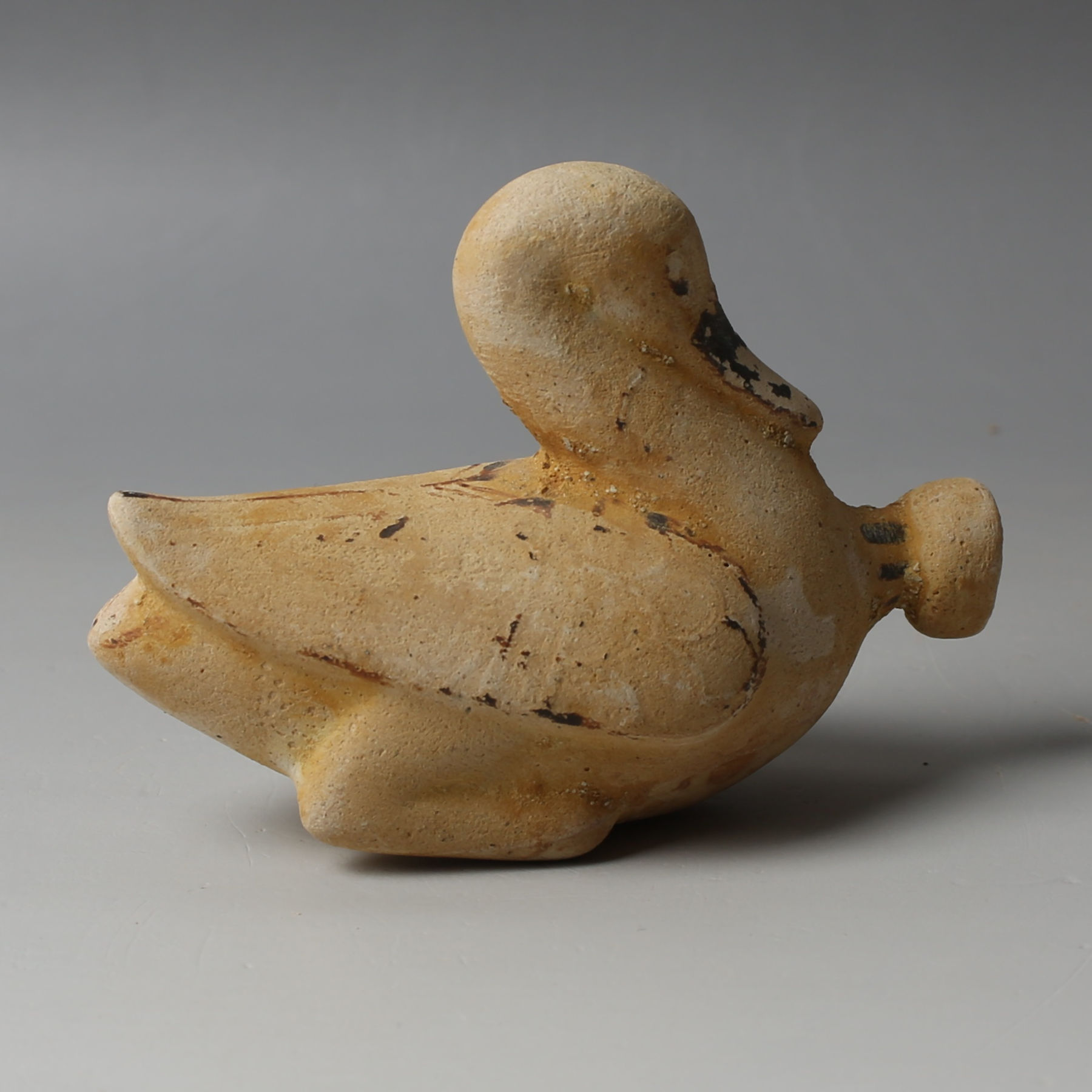
| ITEM | Aryballos in the shape of swan |
| MATERIAL | Pottery |
| CULTURE | Etrusco-Corinthian |
| PERIOD | 6th Century B.C |
| DIMENSIONS | 70 mm x 45 mm x 95 mm |
| CONDITION | Good condition |
| PROVENANCE | Ex Dutch private collection, collected before 1990s |
The Etrusco-Corinthian aryballos represents a fascinating artistic convergence that occurred in central Italy during the Orientalizing period, roughly spanning the late 7th to the early 6th century BCE. As Etruscan elites developed an intense fascination with Greek luxury goods, local potters in Etruria began to closely replicate and adapt Corinthian ceramic styles. The aryballos itself—a small, narrow-necked flask designed to hold precious perfumed oils and ointments—became a staple of this cross-cultural trade. While many retained a traditional spherical or piriform body decorated with painted friezes, Etruscan artisans frequently embraced plastic pottery, modeling the entire vessel into figurative or zoomorphic shapes to delight their wealthy patrons.
When fashioned into the shape of a swan, the aryballos perfectly merges functional design with naturalistic elegance. The bird’s plump, rounded body serves as the natural reservoir for the aromatic oils, while its elongated, gracefully arched neck forms the handle or supports the narrow spout. The surface treatment typically utilizes the iconic black-figure technique, where dark slips are applied to the light clay, and fine incisions are made to detail the delicate plumage of the wings, the curve of the beak, and the expressive contours of the eyes. This playful harmony between an everyday luxury item and a recognizable living creature highlights the creative sophistication of the workshops operating in ancient centers like Vulci and Tarquinia.
Beyond its aesthetic charm, a swan-shaped aryballos carried deep symbolic and social resonance in the ancient Mediterranean. In classical iconography, the swan was intimately linked to the divine realm, serving as a sacred companion to Apollo, the god of music and purification, and Aphrodite, the goddess of love and beauty—associations that naturally complemented the vessel’s role in personal grooming, athletics, and elite symposia. Deposited frequently in wealthy chamber tombs, these exquisite flasks accompanied the deceased into the afterlife, serving as a permanent testament to their refined tastes, high social status, and participation in a vast, interconnected Mediterranean luxury culture.