


Description
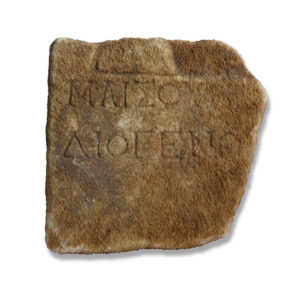
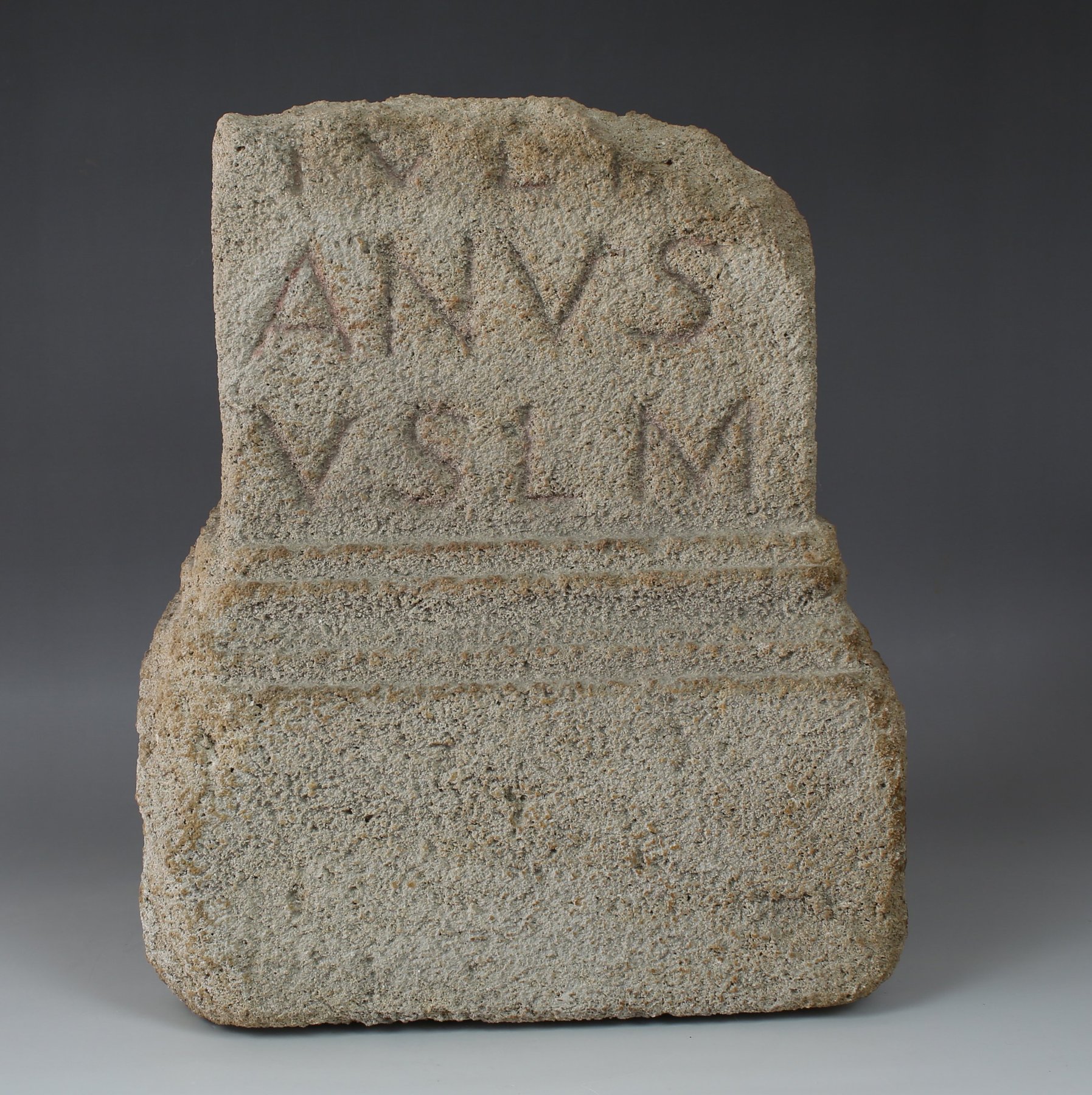
| ITEM | Votive ara with inscription ‘IVLI / ANVS / VSLM’ |
| MATERIAL | Stone |
| CULTURE | Roman |
| PERIOD | 2nd – 3rd Century A.D |
| DIMENSIONS | 290 mm x 235 mm x 125 mm |
| CONDITION | Good condition |
| PROVENANCE | Ex Austrian private collection, acquired between the 1970s and 1990s |
This stone votive altar (ara) represents a classic example of personal religious devotion from the Roman imperial period. Typically carved from limestone, sandstone, or marble, these miniature or medium-sized stone altars feature a molded cornice at the top—often shaped with bolster-like scrolls (pulvini) and a central focus (focus) for burning incense or small offerings—and a flat central die (dado) reserved for epigraphic text. The inscription IVLI / ANVS / VSLM records the name of the dedicator, Iulianus (Julian), followed by one of the most ubiquitous formulaic abbreviations in Roman epigraphy.
The abbreviation V·S·L·M stands for the Latin phrase Votum Solvit Libens Merito, translating to “fulfilled his vow willingly and deservedly.” In ancient Roman religion, the relationship between mortal supplicants and the gods operated on a contractual principle known as do ut des (“I give so that you might give”). A worshiper like Iulianus would make a formal vow (votum) to a deity, promising to erect an altar if the god granted a specific request—such as recovery from illness, safe travel, business success, or protection during military service. Once the favor was received, commissioning and dedicating the stone altar publicly discharged that spiritual debt.